 blog
blog
7 Ways to Mix Art History and Modern Decor
Table of Contents
- Why Art History Belongs in a Modern Home
- 1. Build a Cohesive Color Palette That Bridges Eras
- 2. Mix Art History Wall Art for Home With Contemporary Statement Pieces
- 5. Pair Vintage Furniture With Modern Seating and Lighting
- 6. Use Textiles and Texture to Soften Modern Lines
- 7. Source and Preserve Your Mixed-Era Collection
- A Note on the Psychology of Mixed-Era Rooms
- Frequently Asked Questions
Last Updated: October 2, 2026
Why Art History Belongs in a Modern Home
Vintage decor ranks among the top seven trends returning in 2026, according to 2026 home decor trend analysis. That shift explains why so many homeowners now search for 7 ways to mix art history and modern decor. This guide breaks down seven practical methods, from color palettes to gallery walls.
Mixing art history and modern decor means pairing pieces from earlier eras with clean, current furnishings so both feel intentional.
The payoff goes beyond looks. Art history gives modern interiors a sense of depth that new furniture alone cannot supply.
Here is what most guides get wrong: they treat old and new as opposites. They are not. They are layers.
1. Build a Cohesive Color Palette That Bridges Eras
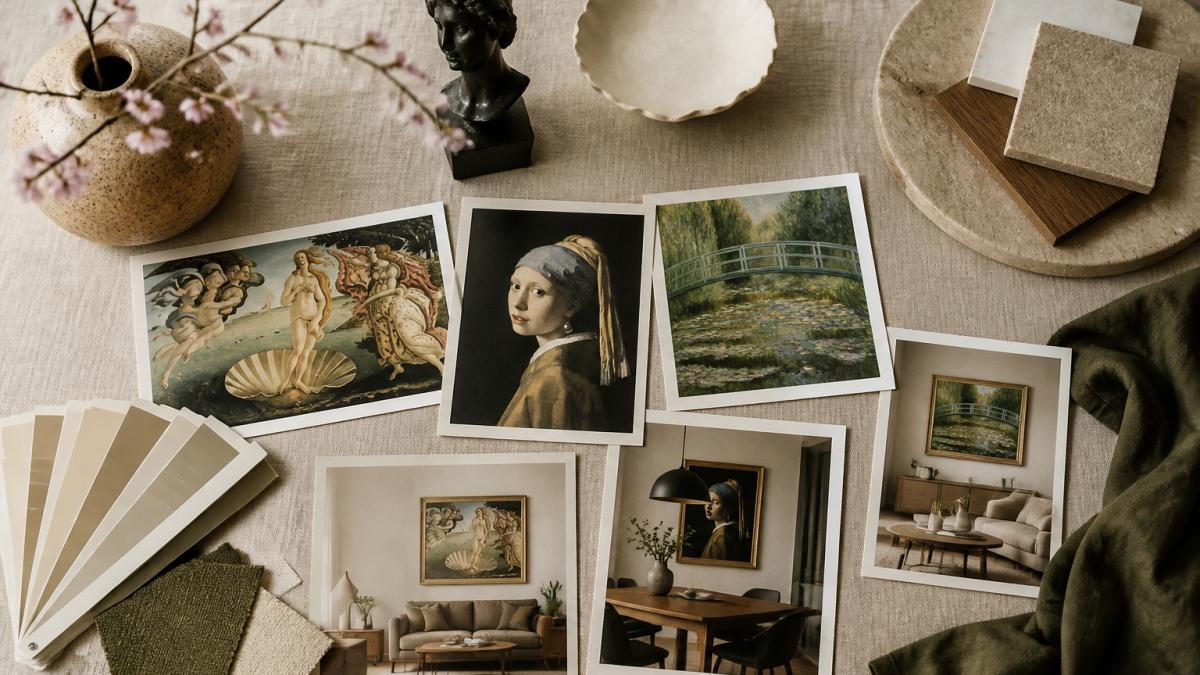
Start with color, because it is the fastest way to make old and new feel related. Pull two or three hues straight from your historic piece, then repeat them in modern textiles, paint, or ceramics.
Earth tones dominate 2026 art trends, per iCanvas trend report. That works in your favor. Muted greens, ochres, and warm browns appear in both antique landscapes and current design.
The 60-30-10 Split, Applied to Mixed Eras
Most designers build a room on a 60-30-10 ratio: 60 percent dominant color, 30 percent secondary, 10 percent accent. When you mix eras, the trick is to assign eras to the ratios rather than the colors.
- 60 percent, modern base. Walls, large upholstery, and rugs stay current and quiet. This is what keeps the room from reading as a period piece.
- 30 percent, historic mid-tone. A vintage wood tone, an aged brass, or a faded textile carries the era signal without shouting.
- 10 percent, the accent that ties both. A single saturated hue pulled from the historic artwork, repeated in a modern ceramic or pillow.
If you invert this, historic base, modern accent, the room tips toward museum. If you skip the 30 percent entirely, the historic piece looks orphaned.
Era-Specific Palette Pairings That Actually Work
Not every historic palette plays well with modern neutrals. A few pairings that hold up in practice:
- Dutch Golden Age still life (deep umber, black, cream) + warm white walls and camel leather. The dark painting reads as intentional against a light modern shell.
- Impressionist landscape (soft green, lavender, pale blue) + cool gray or greige modern sofa. The painting supplies the warmth the sofa lacks.
- Art Deco print (black, gold, emerald) + matte black metal and boucle. The gold becomes the bridge; the boucle keeps it from feeling theatrical.
- Mid-century abstract (rust, mustard, teal) + walnut and off-white. The most forgiving pairing for first-timers because the eras already share a palette.
A Common Mistake: Matching the Frame, Not the Room
A frequent pattern is pulling the palette from the frame rather than the artwork. A gilded frame on a cool-toned modern wall can look like a mistake even when the painting itself works. Pull color from the canvas, not the frame, and let the frame be a metal accent instead.
When to Break the Rule
A monochrome room can absorb one wildly colorful historic piece as its only accent, that is the 10 percent doing all the work. The failure mode is two competing historic palettes in one room. One era per space, one palette per era.
2. Mix Art History Wall Art for Home With Contemporary Statement Pieces
Art history wall art for home works best when it shares a wall with something bold and new. The contrast makes both pieces look deliberate.
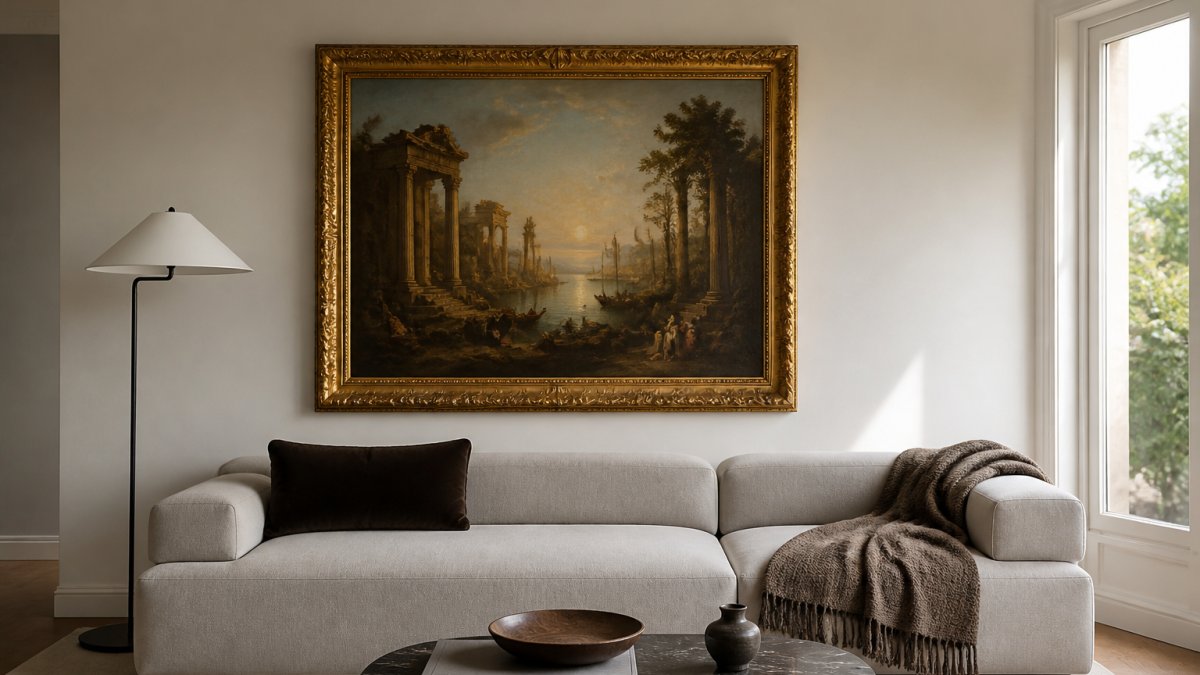
Hang a classical oil print beside an abstract canvas. Keep the spacing even. Let scale differ on purpose.
(/art-history-wall-art-for-home) prints are simple ones that let the artwork lead. Thin black metal, natural oak, and warm brass all work in modern rooms.Gilded frames are back in a big way. Style by Emily Henderson's 2026 trend report points to thick, sometimes matted gold frames as a way to warm up modern spaces and add soul.
A few rules that hold up:
- Match frame finish to your metal accents, not the era
- Use wide mats on small historic prints
- Skip ornate frames on busy walls
Frames are the bridge. Treat them that way.
5. Pair Vintage Furniture With Modern Seating and Lighting
Vintage furniture and modern seating can share a room if proportion stays consistent. A carved wood dresser next to a low modern sofa works when their heights differ clearly.
Lighting does the rest. A contemporary floor lamp beside an antique chair signals intention. So does a modern pendant over a vintage dining table.
6. Use Textiles and Texture to Soften Modern Lines
Texture softens the hard edges that modern furniture tends to have. Wool, linen, and chunky knits all add warmth without adding visual noise.
Layer a textured throw over a leather sofa. Add a woven rug under a glass table.
Designers now favor art that transforms a room through texture and storytelling, according to Sense Canvas 2026 trend analysis.
7. Source and Preserve Your Mixed-Era Collection
Sourcing well matters more than sourcing often. Buy fewer pieces and buy ones you can live with for years. This is the section most guides skip, they tell you how to style a mixed-era room but not where to find the pieces or how to keep them from degrading once they are on the wall.
Budget-Friendly Sourcing Strategies
You do not need an auction house. The strongest low-cost sources, roughly in order of yield:
- Estate sales. The first morning is priced for dealers; the last afternoon is priced to clear. Go late for furniture, early for smalls.
- Local flea markets and church rummage sales. Best for frames, prints, and small ceramics. Bring a tape measure and a magnet, a magnet that does not stick means brass or aluminum, not steel.
- Museum print shops and open-access archives. Many museums sell high-quality reproductions of public-domain works. The Metropolitan Museum of Art, the Art Institute of Chicago, and the National Gallery of Art all offer open-access image programs, which means you can print a public-domain work at a local shop for the cost of paper and ink.
- Library book sales. Oversized art books from the 1960s through the 1980s often contain plates worth framing. Check the copyright page, pre-1929 publications are in the public domain in the United States.
- Facebook Marketplace and OfferUp. Search misspellings ('vintage pictur,' 'antique fram') to surface listings other buyers miss.
Set a rule: one historic piece per room, then build around it. Two historic anchors in a small room almost always read as clutter.
Upcycling Without Ruining the Piece
Upcycling is fine on reproductions and damaged pieces; it is a mistake on anything with provenance. A few guidelines:
- Reframe, do not repaint. A new mat and frame can modernize a print without touching the artwork.
- Reupholster, do not refinish. New fabric on a vintage chair preserves the wood patina that gives the piece its age signal.
- Leave chips alone on ceramics. Visible repair lowers value; visible age raises it in a mixed-era room.
Maintenance and Preservation of Mixed-Media Collections
Mixed-media collections need light control and stable humidity. The practical mechanics:
- Light. Keep prints and works on paper out of direct sun. Ultraviolet light fades inks and yellows paper; the damage is cumulative and irreversible. Rotate pieces on bright walls every few months so no single work takes the full exposure.
- Glass and mats. Frame paper works with UV-filtering glass and acid-free mats. Standard cardboard mats are acidic and will burn a brown line into the paper over years, this is called mat burn, and it is permanent.
- Humidity. Aim for a stable indoor range rather than a specific number. Fluctuation does more damage than a steady slightly-high reading. Avoid hanging paper art on exterior walls or above radiators.
- Textiles. Wool and linen attract moths. Cedar blocks and periodic airing help; sealed plastic storage does not, because trapped moisture encourages mildew.
- Metals. Brass and bronze develop patina, which most collectors want. Do not polish antique brass to a mirror finish, you remove the age signal that made the piece worth buying.
A small investment in framing protects the piece for decades. That is what turns a print into an heirloom.
The One-Piece Rule
If you take nothing else from this section: buy one historic piece you love, spend the money to frame or restore it properly, and let modern decor do the rest. A single well-preserved antique outperforms five thrifted finds that are slowly falling apart.
A Note on the Psychology of Mixed-Era Rooms
Rooms that blend eras tend to feel more personal than single-style spaces. Designers warn that chasing trends alone can produce cookie-cutter interiors, per Real Simple design guidance.
That emotional layer is the real reason to try these 7 ways to mix art history and modern decor. A room with history in it feels lived in, not staged.
Frequently Asked Questions
What is the 3-5-7 rule in decorating?
The 3-5-7 rule is a guideline for arranging decor in odd-numbered groupings. It suggests using three items of similar size, five items of varying sizes, or seven items of mixed sizes and shapes. For gallery walls, this creates visual balance without symmetry. When mixing art history and modern decor, use the rule to combine a large historical print with two smaller contemporary pieces, or five varied prints across eras. Odd numbers naturally draw the eye and feel more organic than even pairings.
How do you balance traditional art with modern furniture?
Balance comes from contrasting visual weight. A heavy, ornate gold frame on a classical painting can anchor a sleek, low-profile modern sofa. Use the art as the focal point, then keep surrounding furniture and decor minimal. Repeat one color from the artwork in a modern cushion or rug to tie the eras together. According to 2026 trend reports, using gilded gold frames is a key method to warm up modern rooms and add soul. The goal is deliberate contrast, not competition.
What are the best frames for art history prints in a modern home?
The best frames depend on the era you're mixing. For a modern space, thick, matted frames in black, white, or natural wood create a clean border that lets the art breathe. Gilded gold frames add warmth and historical reference, especially for classical or Art Deco prints. A 2026 design trend highlights thick and sometimes matted frames as a way to bridge old and new. Choose a frame that echoes one material in the room, such as brass lighting or wood furniture, to create cohesion.
Can you combine different art eras in one gallery wall?
Yes, combining eras in a gallery wall is a core technique for a collected, layered look. Start with a unifying element: a consistent frame color, a shared color palette, or a repeating motif. Then vary the art styles, from Renaissance sketches to mid-century abstracts. Use gallery wall layout ideas like a grid for structure or a salon-style arrangement for a curated feel. The key is to let each piece tell its story while the overall composition feels intentional, not chaotic.
Most rooms fail at mixing eras because the pieces were bought one at a time, with no plan holding them together. RunwayandHeirloomArt solves that with curated print collections that already carry historical weight, from Art Deco prints to historic aviation artwork. Each piece arrives ready to pair with modern furniture instead of fighting it. Browse the RunwayandHeirloomArt collection and start building a room with a story.