 blog
blog
Buy Museum Quality Art Prints Online: 2026 Collector's Guide
Table of Contents
- What Defines Museum Quality Art Prints
- Giclée Print vs Archival Print: What's the Real Difference?
- The Best Paper for Art Prints and Why It Matters
- How to Frame Art for Longevity: Matting, Mounting, and UV Protection
- Museum Quality Art Prints Online: Pricing, Sizing, and Customization
- Authentication, Provenance, and Care for Your Fine Art Prints
- Frequently Asked Questions
Last Updated: September 24, 2026
What Defines Museum Quality Art Prints
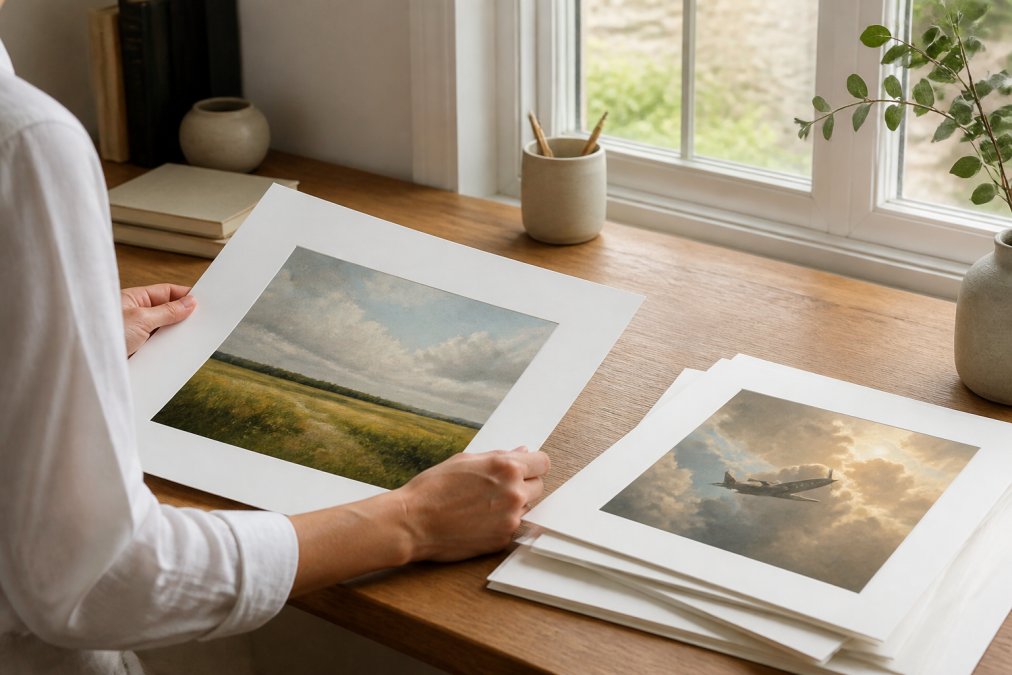
The global art print market was valued at $11.4 billion in 2025 and is projected to reach $20.8 billion by 2034, according to Dataintelo's Art Print Market Research Report 2034. If you want to buy museum quality art prints online, that growth matters: more sellers, more options, and more confusion about what "museum quality" actually means. At Runway & Heirloom, we believe artwork should tell a story, whether it recalls another era, reflects a lifelong passion, introduces a child to a world of imagination, or simply captures something that speaks to you.
The Three Pillars of Museum-Grade Prints
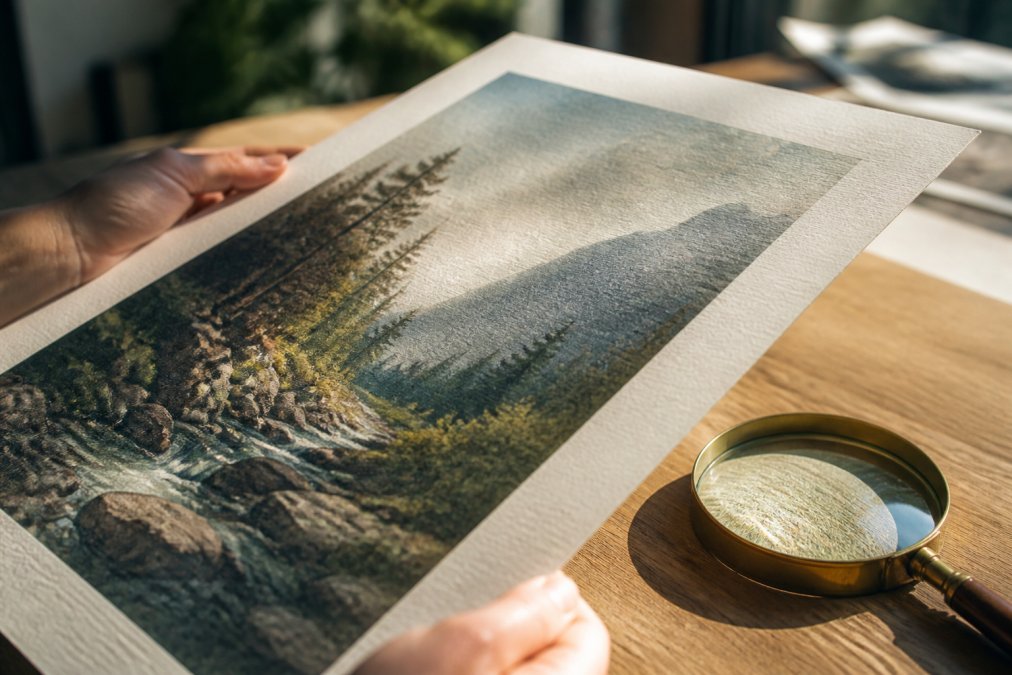
The Agency Art House (2026) defines museum-grade art through three pillars: institutional validation, historical rarity, and bulletproof provenance. For prints specifically, those pillars translate into:
- Archival materials: acid-free paper, pigment-based inks, and museum-grade canvas that resist fading
- Documented origin: clear reproduction rights and authorization from the source collection
- Verifiable quality: high-resolution capture of the original work, with color accuracy checked against the source
Giclée Print vs Archival Print: What's the Real Difference?
A giclée print is a specific printing method, while "archival print" describes a durability standard. Giclée refers to fine art inkjet printing using pigment-based inks on acid-free substrate. Archival is the outcome: a print that resists fading and yellowing for generations.
- What printing method was used?
- What inks and paper stock?
The Best Paper for Art Prints and Why It Matters
The best paper for art prints is acid-free, cotton-rag or alpha-cellulose stock with a matte or textured finish that holds pigment without glare. But "best" depends on the artwork and how you plan to display it. Understanding the substrate trade-offs is what separates a print that looks right for decades from one that looks flat or yellows within a few years.
Cotton Rag vs. Alpha-Cellulose vs. Wood Pulp
- Cotton rag (100% cotton fiber): The traditional fine-art standard. Long cotton fibers interlock to create a soft, absorbent surface that mimics watercolor and etching papers. Naturally acid-free and lignin-free, so it resists yellowing without chemical buffering. Best for reproductions of watercolors, pastels, and works with visible brushwork.
- Alpha-cellulose (purified wood pulp): A middle ground. The lignin and impurities that cause yellowing are removed, and the sheet is buffered with calcium carbonate to neutralize future acid exposure. Smoother and more uniform than cotton rag, which suits photographic reproductions and graphic works. Most "archival" papers sold online are alpha-cellulose.
- Standard wood pulp: What poster stock is made from. Contains lignin, which oxidizes and turns brown. Avoid for anything you intend to keep.
Paper Weight: What the Numbers Mean
Paper weight is measured in grams per square meter (gsm). The range you'll see on fine art listings:
- 180-200 gsm: Lightweight. Fine for small unframed prints, but prone to buckling when framed without a rigid backing.
- 230-260 gsm: The practical sweet spot for most framed prints. Holds flat, feels substantial, and accepts pigment ink without cockling.
- 300-320 gsm: Heavyweight, comparable to a stiff cardstock. Preferred for large-format prints and for collectors who handle prints without gloves.
- Above 350 gsm: Specialty stocks, often cotton rag. Excellent rigidity but can be difficult to hinge without stressing the sheet.
Surface Finish and Ink Interaction
Matte and textured surfaces absorb pigment ink into the paper coating, producing deeper blacks and a softer, painterly look. Gloss and satin surfaces sit the ink closer to the top, giving higher contrast and sharper detail, better for photography and graphic reproductions, but more prone to glare under direct lighting.
Match the paper to the artwork: cotton rag for painterly reproductions, alpha-cellulose for photographic and graphic works, and always confirm OBA-free and acid-free before you buy.
How to Frame Art for Longevity: Matting, Mounting, and UV Protection
To frame art for longevity, use acid-free matting, reversible mounting, and UV-filtering glazing. Each element protects the print from a different threat: acid migration, physical stress, and light damage.
A quick reference for framing decisions:
| Framing Element | Purpose | Best Choice | What to Avoid |
|---|---|---|---|
| Matting | Buffer against glass | Acid-free cotton mat | Standard cardboard mats |
| Mounting | Hold print in place | Reversible archival hinge | Dry-mount adhesive |
| Glazing | Block UV light | UV-filtering acrylic or glass | Untreated glass |
| Backing | Prevent moisture | Acid-free foam board | Corrugated cardboard |
Museum Quality Art Prints Online: Pricing, Sizing, and Customization
Pricing for museum quality art prints online depends on size, paper stock, framing, and whether the piece is a limited edition. Fine art prints currently offer a price differential of 10-100x compared to original works, with investment-grade prints often ranging from $3,000 to $15,000, according to Hedonism Gallery's 2026 analysis of fine art print investment. Entry-level collecting, by contrast, often starts under $1,000 through online platforms or directly from artists, per Art Meets Culture's guide to starting a collection in 2026.
Customizable Print Sizes and Frame Options
Customizable art print platforms now offer over 25 unique frame styles and 10+ size options, according to Museum Quality Art's product specifications. That range matters for two reasons: it lets you match a print to a specific wall, and it lets you match a frame to the room's existing style.
Authentication, Provenance, and Care for Your Fine Art Prints
Authentication and provenance are the two questions most online buyers forget to ask. Authentication confirms the print was produced with the rights holder's authorization. Provenance documents where it came from, who printed it, and when. Together they determine whether a print holds its value or becomes an anonymous poster the moment it leaves the tube.
What to Look For in a Certificate of Authenticity
A legitimate certificate of authenticity (COA) is more than a printed card. It should include:
- The title, artist, and original work's date
- The print's edition size and this print's number (e.g., "14 of 250")
- The printing method and materials (giclée, pigment ink, specific paper stock)
- The publisher or printmaker's name and contact information
- A signature, either the artist's, the estate's authorized signatory, or the publisher's authorized representative
- A date of production
Edition Numbering and What It Signals
Limited-edition prints are numbered as a fraction: the bottom number is the total edition size, the top is this print's place in the sequence. A "1/250" and a "250/250" are technically the same print, but early numbers sometimes carry a slight premium. More important is what the edition size tells you about scarcity. An edition of 25 is genuinely limited; an "edition" of 5,000 is a mass reproduction with a number stamped on it.
Verifying Museum and Estate Reproductions
For authorized museum reproductions, provenance is often built in. The Metropolitan Museum of Art's custom print program, for example, lets buyers select from hundreds of collection works with multiple sizing options, all produced under institutional authorization. 1000Museums follows a similar made-to-order model, producing museum-approved reproductions from thousands of artists.
- Check the source institution or estate. If the print claims to be an authorized reproduction, the rights holder's website should list the publisher as a licensee.
- Look for the printmaker's chop or stamp. Many fine-art printers emboss a blind stamp in the margin, a small raised mark that's difficult to counterfeit.
- Cross-check the edition size. If a seller claims "limited edition of 100" but you find the same image listed as an open edition elsewhere, the provenance is suspect.
- Ask for the COA before purchase. A seller who can't produce one before payment is unlikely to produce one after.
Care and Maintenance After Purchase
Once a print is on your wall, care is straightforward:
- Keep it out of direct sunlight, even with UV glazing
- Maintain indoor humidity between 40-60 percent
- Dust the frame with a dry microfiber cloth, never a wet one
- Store unframed prints flat, between acid-free tissue
- Avoid hanging above heat sources like radiators or fireplaces
- Inspect the COA and store it in a separate, dry location
Authentication is a paper trail, not a vibe. If a seller can't show you a COA with an edition number, a named publisher, and a signature before you pay, you're buying a poster, not a collectible print.
Frequently Asked Questions
What defines a museum quality art print?
Museum quality art prints use archival materials: acid-free paper, pigment-based inks, and museum-grade canvas. According to Jumper Maybach's 2026 collector's guide, these materials prevent the fading and yellowing common in mass-produced reproductions. The Agency Art House adds that institutional validation, historical rarity, and provenance also matter. Look for giclée printing, high-resolution files, and authorized reproductions from museum collections or established studios.
What is the difference between a giclée print and a standard art print?
A giclée print uses pigment-based inks and archival paper, producing gallery-quality color accuracy that lasts generations. Standard art prints typically use dye-based inks on acidic paper, which fade within years. The giclée process also offers higher resolution and wider color gamut. When you buy museum quality art prints online, verify the listing specifies giclée or archival pigment printing, not just 'high-quality print.'
How should I frame museum quality prints to ensure longevity?
Use acid-free matting and backing, UV-protective glass or acrylic, and archival mounting techniques. Avoid direct sunlight and humid areas. According to Jumper Maybach (2026), proper framing with acid-free materials and UV protection prevents fading and paper degradation. For how to frame art for longevity, choose a frame that allows the print to breathe and never dry-mount or glue the artwork directly to a backing board.
Where can I buy museum quality art prints online?
Museum-authorized retailers like 1000Museums and The Metropolitan Museum of Art Custom Prints offer verified reproductions. When you buy museum quality art prints online, check for acid-free paper, pigment-based inks, and provenance details. Runway & Heirloom Art offers curated collections including historic aviation prints and watercolor nursery art, each produced with archival standards. Always confirm the print's materials and authorized reproduction rights before purchasing.