 blog
blog
Is Vintage Art Decor Worth the Investment? A 2026 Guide
Table of Contents
- Vintage Art Decor as an Alternative Asset Class
- Pros and Cons of Investing in Vintage Art Decor
- How to Evaluate Vintage Art Value Before You Buy
- Vintage Art vs Contemporary Art Investment: Which Holds Up
- Best Practices for Framing Vintage Prints to Protect Value
- Liquidity, Maintenance, and Exit Strategy for Vintage Decor
- Conclusion: When Vintage Art Decor Makes Sense
- Frequently Asked Questions
Last Updated: September 29, 2026
Vintage Art Decor as an Alternative Asset Class
The global collectibles market hit $335.7 billion in 2026 and is on track to reach $535.5 billion by 2033, according to Grand View Research's Collectibles Market Report. That growth has more people asking whether vintage art decor is worth the investment. This guide breaks down what actually holds value, what doesn't, and how to tell the difference before you buy.
Vintage art decor is any decorative artwork, print, or object made in a prior era that carries aesthetic or historical appeal. It includes framed prints, lithographs, and mid-century wall pieces. Fine art, by contrast, means original works by recognized artists with documented provenance.
What Counts as Vintage Art Decor
Vintage decor covers a wide range. Common examples include:
- Mid-century lithographs and advertising prints
- Art Deco posters and geometric wall pieces
- Historic aviation and railroad prints
- Nursery and children's illustrations from past decades
Most of these pieces sell for modest sums. They add character to a room. Few of them appreciate like fine art.
Where Vintage Decor Differs from Fine Art
The two markets behave differently. Fine art trades through auction houses with appraisals, provenance records, and art indices. Vintage decor trades through thrift shops, estate sales, and online marketplaces.
A simple rule: fine art is bought for capital appreciation.
Pros and Cons of Investing in Vintage Art Decor
Vintage art decor offers real financial upside in narrow cases, but it is not a reliable investment for most buyers. Here is the honest breakdown.
Pros:
- Low entry cost compared to blue-chip art
- Tangible assets you can enjoy daily
- Metal lighting and decor prices rose nearly 31% since 2020 (Big Thrift Energy vintage lighting trends)
- Acts as an economic hedge against stock market swings
Cons:
- Weak liquidity; resale can take months
- No standardized art indices for most decor
- Preservation and insurance premiums add up
- Future demand is unpredictable
How to Evaluate Vintage Art Value Before You Buy
Evaluating vintage art value starts with four checks: the maker, the print method, the condition, and the provenance. Skip any one and you risk overpaying for a piece that will never resell. The harder question most guides skip is whether you are even looking at the right category of object.
First, Separate Decor from Investment-Grade Work
Most vintage art decor is mass-produced. A 1960s advertising lithograph printed in a run of 50,000 is decoration. An original signed etching from the same decade, numbered in an edition of 150, is a collectible. The two look similar on a wall and behave nothing alike at resale.
A practical filter:
- Edition size. Open editions (unlimited reprints) rarely appreciate. Numbered, limited editions hold value better.
- Signature and mark. A pencil signature, a publisher's blind stamp, or a printer's chop usually signals a controlled run.
- Original vs. reproduction. A reproduction of a famous poster is decor. A period-printed original is collectible.
- Maker recognition. Work by a named designer, studio, or artist with an auction record is investment-grade. Anonymous pieces are not.
The Four Core Checks
Run these in order:
- Identify the maker. A known name lifts value fast. Search the name against auction results, not retail listings, retail asks are not what buyers pay.
- Check the print method. Original lithographs, etchings, and screen prints beat modern digital reproductions. Hold the paper to light: a uniform dot pattern under magnification usually means offset or digital printing, not a hand-pulled print.
- Inspect condition. Foxing (brown age spots), fading, tears, and trimming cut value sharply. Compare the paper's color at the edges to the center, a visible border of darker paper means light damage.
- Ask for provenance. Auction records, gallery receipts, and exhibition labels prove history. A framed piece with no paper trail is priced as decor, not as a documented work.
Authenticating Without an Appraiser
You do not need a professional to catch most red flags. A few low-cost steps screen out the majority of misrepresented pieces:
- Blacklight the paper. Modern reprints fluoresce brightly under UV; older paper usually does not. Inconsistent glow across a sheet can signal a later reprint on aged stock.
- Check the frame and backing. Original period framing, old nails, and aged dust paper support an older date. Fresh foam board and modern hardware suggest a recent assembly.
- Look for a watermark or printer's mark. Many historic prints carry a publisher's mark in the margin. Its absence is not proof of a fake, but its presence is a strong positive signal.
- Compare against a known original. Museum collection databases and auction archives let you compare paper texture, margins, and print quality side by side.
Vintage Art vs Contemporary Art Investment: Which Holds Up
Vintage art decor and contemporary art investment serve different goals. Contemporary works by rising artists can appreciate fast, but they carry more market volatility. Vintage pieces are more stable, though they rarely spike in value.
Best Practices for Framing Vintage Prints to Protect Value
Framing vintage prints correctly protects both the artwork and its resale value. Poor framing causes fading, acid burn, and physical damage that can cut value in half.
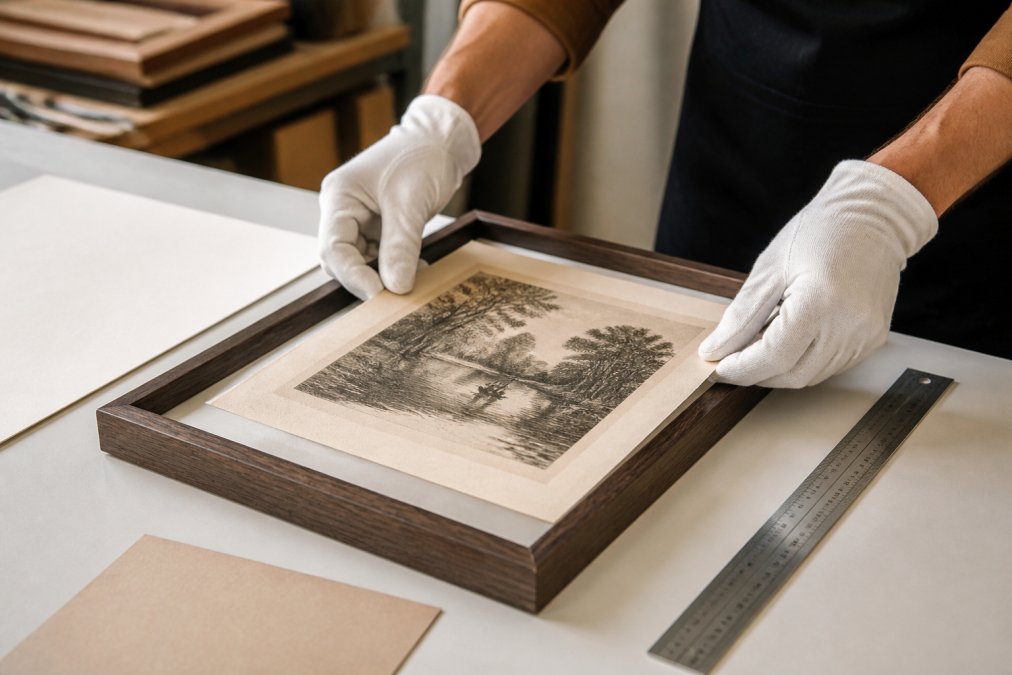
Follow these rules:
- Use acid-free matting and backing board
- Choose UV-filtering glass to block light damage
- Never trim the original paper
- Avoid dry mounting, which is permanent
- Keep the frame off direct sunlight
Liquidity, Maintenance, and Exit Strategy for Vintage Decor
Liquidity is the weakest point of vintage decor. Selling a print or a lamp can take weeks or months, and transaction costs eat into returns. Auction house fees, shipping, and insurance all reduce your net. Most guides stop there. The useful part is knowing which exit channel fits which piece, and what ownership actually costs before you sell.
The Real Cost of Holding
Budget for these line items before you buy, not after:
- Climate-controlled storage. Delicate paper and textiles need stable temperature and humidity. A dedicated unit or a dehumidified room adds ongoing cost.
- Professional cleaning. Every few years for textiles, metal, and wood. Skip it and condition degrades, which cuts resale value.
- Insurance. Higher-value pieces need scheduled coverage. Premiums scale with appraised value, so they rise as your collection grows.
- Restoration. Reversible conservation work (tear repair, deacidification, rebacking) is expensive but preserves value. Irreversible work (trimming, dry mounting, heavy retouching) destroys it.
- Framing and reframing. Archival framing is not cheap, and it is often the difference between a piece that resells and one that does not.
Choosing the Right Exit Channel
Where you sell matters as much as what you sell. Match the channel to the piece:
- Auction houses. Best for documented, higher-value pieces with a comparable sales record. Expect seller's commissions and buyer's premiums to compress your net. Reserve prices protect you but can scare off bidders.
- Estate and consignment sales. Good for mid-range decor with regional appeal. Faster than auction, but you give up control over pricing.
- Online marketplaces. Broad reach, low fees, but you compete against thousands of similar listings. Works best for recognizable names and well-photographed pieces.
- Private sales and dealer networks. Highest potential net for rare pieces, but slow and relationship-dependent. Dealers buy at wholesale, so expect a discount to retail.
- Specialty collector forums and clubs. Niche audiences pay premiums for the right piece. Requires patience and reputation.
A Simple Exit Framework
Before you buy, answer three questions:
- Who is the likely buyer in ten years? If you cannot name a category of buyer, treat the purchase as decoration.
- Which channel fits this piece? If no channel fits, liquidity is effectively zero.
- What is my net after fees, shipping, and holding costs? If the answer is negative, you are buying enjoyment, not an asset.
Conclusion: When Vintage Art Decor Makes Sense
Vintage art decor makes sense when you buy it for love, not for returns. The market is leveling in 2026, and the pieces that hold value tend to be the ones with real history behind them.
Frequently Asked Questions
Does vintage art decor appreciate in value over time?
It can, but not uniformly. Metal lighting fixtures, for example, have risen nearly 31% in price since 2020, according to Big Thrift Energy. The broader collectibles market is projected to grow at a 6.9% compound annual growth rate through 2033, per Grand View Research. Still, Stanford GSB researchers recommend buying paintings primarily for aesthetic enjoyment rather than as a primary financial vehicle. Treat appreciation as a possible bonus, not a guarantee.
How do you determine the authenticity of vintage art prints?
Start with provenance: ask for the print's history, any prior auction records, and original documentation. Check paper texture, ink smell, and print quality under a loupe. For limited editions, verify the edition number and artist signature. Professional appraisal from a qualified appraiser adds credibility and helps with insurance. If a seller cannot provide clear provenance, factor that uncertainty into what you are willing to pay.
Is vintage art a better investment than mass-produced modern decor?
Generally, yes, for resale potential. Mass-produced decor rarely holds value because supply is unlimited and designs repeat. Vintage pieces are finite, and demand from interior designers is rising: a 2026 1stDibs survey found designers increasingly favoring antiques and vintage over new production. That said, not every vintage item appreciates. Authentication, condition, and category demand all affect whether a piece holds or grows in value.
What factors influence the resale value of vintage-style art?
Key factors include provenance, condition, rarity, artist reputation, and current market trends. Artworks priced under $50,000 accounted for 61% of lots sold in spring 2026, up from 48% pre-pandemic, according to Bank of America Private Bank, showing strong demand in accessible price tiers. Framing quality, restoration history, and whether the piece fits an active collecting category also move resale value. Market timing matters too; the 2026 antique market has leveled out compared to 2025's extremes.