 ultimate-guide
Why Collect Military Aircraft Art: A 2026 Guide
Table of Contents
- The Enduring Allure of Military Aircraft Art
- WWII Aircraft Nose Art History: From Morale Booster to Collectible
- The Psychology of Collecting: Why We Connect with Aviation Art
- Investment vs. Sentimentality: What Drives Value in Aviation Art
- Authentication and Provenance: Buying with Confidence
- Vintage Aviation Wall Art for Home Office: Display and Preservation
- Why Collect Military Aircraft Art Today
- Frequently Asked Questions
Last Updated: September 26, 2026
The Enduring Allure of Military Aircraft Art
According to The National WWII Museum's research on wartime morale, nose art served as a critical morale booster for aircrews, providing a personal touch to the grim environment of war and fostering crew identity. That same impulse, decorating a machine of war with something deeply human, is why military aircraft art still captivates collectors today. This guide explores the history, psychology, and practical considerations behind the hobby, from authentic WWII nose art panels to signed lithographs that bring a story into your home.
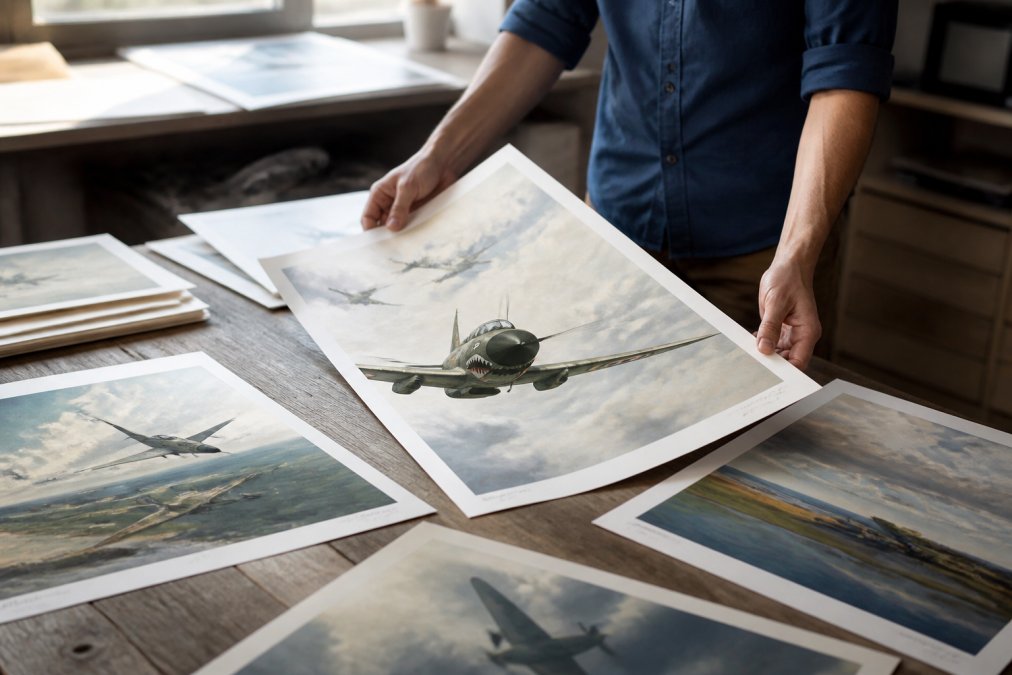
Military aircraft art is any creative work depicting or derived from combat aircraft, ranging from the painted nose art of WWII bombers to modern limited edition prints and framed aviation art. The category spans original artifacts, vintage aviation posters, and contemporary signed lithographs.
Below, we'll break down what actually drives collectors, how to spot authentic pieces, and why sentiment usually beats speculation.
WWII Aircraft Nose Art History: From Morale Booster to Collectible
Nose art began as personal expression under official tolerance. Leadership in the United States Army Air Forces permitted pilots and crews to paint personalized nose art on aircraft, and the result was a measurable lift in crew morale and a visual legacy that now defines the warbird community, according to The National WWII Museum.
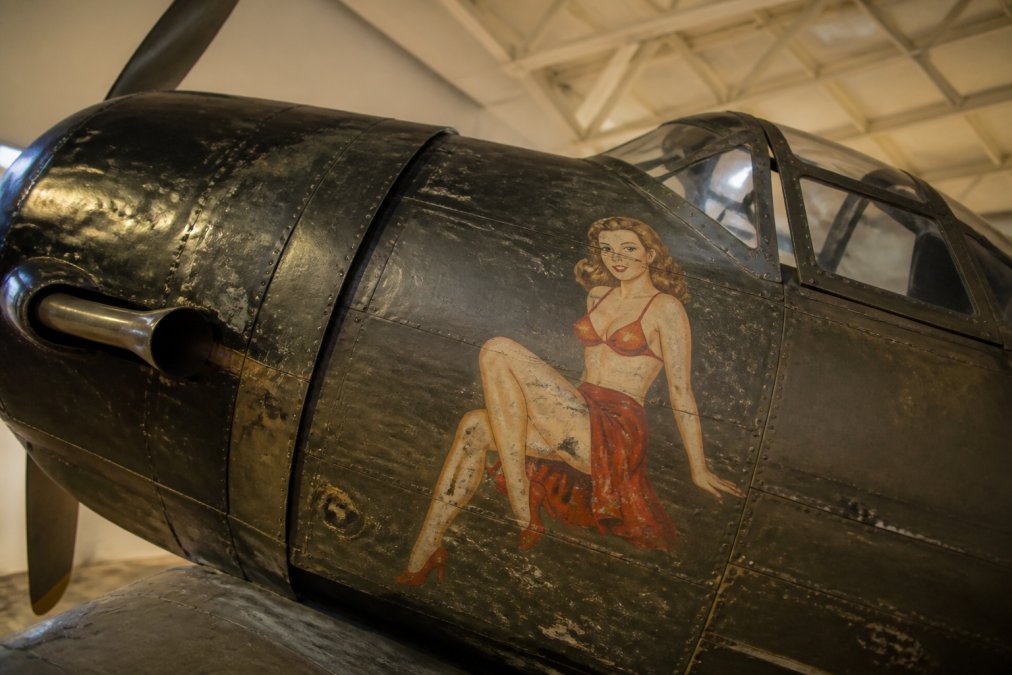
The tradition drew on older roots. During World War I, the American Expeditionary Forces deployed artists to document military technology, creating a comprehensive visual record that bridged technical advancement and historical documentation, as documented by the Smithsonian National Air and Space Museum. That documentary instinct evolved into the graphic silhouette and personalized aircraft markings collectors chase today.
The Psychology of Collecting: Why We Connect with Aviation Art
Collectors rarely buy aircraft imagery for the aircraft alone. They buy the human story attached to it: the crew, the era, the aircrew traditions that turned a machine into a character. This is the psychology of collecting in its purest form, and it explains why a weathered panel with a painted pin-up can outsell a technically superior but anonymous print.
A common mistake is treating aviation art like a stock portfolio. The value here is emotional and aesthetic first. When a piece speaks to a lifelong passion, that connection outlasts any market swing.
Investment vs. Sentimentality: What Drives Value in Aviation Art
Here's the contrarian truth: there is no objective investment standard for aviation art. The primary justification for acquisition should be personal aesthetic preference rather than financial speculation, a point collectors raise repeatedly on Kitmaker Network forums.
| Driver | What It Means | Best For |
|---|---|---|
| Sentiment | Personal connection to era or aircraft | Lifelong collectors |
| Aesthetics | Visual appeal and composition | Interior styling |
| Provenance | Documented history and signatures | Serious investors |
| Rarity | Limited edition or one-of-a-kind | Speculative buyers |
Autographed memorabilia sits at the intersection. Collectors prioritize prints signed by the specific military aviators who flew the aircraft depicted, since that signature adds historical provenance, according to Valor Studios. The signature doesn't guarantee a return, but it does anchor the piece to a real person.
Authentication and Provenance: Buying with Confidence
Provenance is the documented chain of ownership and origin that separates a genuine historical artifact from a decorative reproduction. For signed lithographs and vintage pieces, provenance is everything.
Start by identifying what you are actually looking at. The main categories behave very differently on the secondary market:
- Original nose art panels, painted directly on aircraft skin, usually aluminum, often removed during scrapping or restoration. One-of-a-kind, and the hardest to authenticate.
- Limited edition lithographs, numbered runs from a publisher, typically with a stated edition size and artist signature.
- Aviator-signed prints, a lithograph or giclée additionally signed by one or more pilots or crew who flew the depicted aircraft.
- Vintage posters and recruiting art, mass-produced, usually unsigned, valued more for design than provenance.
Each type has its own verification path.
For original panels: look for period-correct paint layers, rivet holes, and skin thickness consistent with the airframe. A panel that has been repainted or clear-coated loses both authenticity and value. Cross-check any claimed aircraft against unit histories and serial number records.
For signed prints: the signature is the value anchor, so verify it. Ask the seller for the signing event, the date, and any publisher certificate. Reputable publishers issue a certificate of authenticity (COA) with the edition number, artist, and signatories. A COA is not proof on its own, it is a starting point. Compare the signature against known examples from the same aviator, and be wary of prints where the signature is printed rather than hand-signed.
For edition size: a stated run of 500 with a hand-numbered print is normal. A print described as "limited" with no number, no COA, and no publisher is decorative, not collectible. That distinction changes what you should pay.
Ask these questions before buying:
- Who published it, in what year, and what was the stated edition size?
- Is the signature hand-signed, and can it be matched to known examples?
- Does the seller provide a COA, and does the COA name the signatories?
- For original panels, what aircraft and unit does the seller claim, and can that be verified?
- What is the return policy if authentication fails?
Without answers, treat the piece as decorative rather than collectible. That is not a dealbreaker, it just changes what you are paying for.
Vintage Aviation Wall Art for Home Office: Display and Preservation
Vintage aviation wall art for home office spaces works best when it is treated as a serious piece, not a poster. Light, humidity, and mounting choices determine whether a print survives decades or fades in five years.
Light is the enemy. Ultraviolet exposure fades inks and yellows paper faster than almost anything else. Keep framed aviation art away from direct sun, and specify UV-filtering glass or acrylic when framing. Standard glass blocks almost no UV; UV-filtering glazing blocks the large majority of it. For a piece you intend to keep, the upgrade is worth it.
Humidity and temperature. Paper and canvas expand and contract with moisture. Aim for a stable indoor environment, most preservation guidance points to roughly 45-55% relative humidity and temperatures in the comfortable human range. Avoid hanging pieces over radiators, near vents, or against exterior walls that sweat in winter. Basements and attics are the worst storage locations for the same reason.
Framing and mounting. The single most common mistake is dry-mounting or gluing a print to a backing board. That is irreversible and destroys value. Instead, ask for archival or conservation framing:
- Acid-free mat board and backing
- Reversible mounting (hinges or photo corners, never adhesive)
- A mat that keeps the artwork from touching the glazing
- Sealed backing to limit dust and insect exposure
Why Collect Military Aircraft Art Today
The reasons to collect military aircraft art today are the same reasons aircrews painted their planes in the 1940s: identity, memory, and the human need to mark something as ours. The difference is that you get to choose the story.
Frequently Asked Questions
What is the historical significance of WWII nose art?
WWII nose art was a morale booster that gave aircrews a sense of identity and personal expression amid the grim reality of war. According to The National WWII Museum, leadership permitted pilots and crews to paint personalized nose art on aircraft, which measurably improved crew morale and created a lasting visual legacy. These painted symbols became a defining element of military aviation history, bridging individual creativity with the collective martial spirit of the era.
Why do collectors value military aviation prints?
Collectors value military aviation prints for their historical provenance and aesthetic appeal. Autographed prints signed by the specific military aviators who flew the aircraft depicted add a direct connection to history, as noted by Valor Studios. Beyond the signature, the artistic composition and graphic silhouette of fighter aircraft capture a moment in time. The combination of historical preservation and personal storytelling makes these prints meaningful additions to any collection, whether displayed in a home office or a dedicated study.
Is military aircraft art considered a good investment?
There is no objective investment standard for aviation art, according to collector forums like Kitmaker Network. The primary justification for acquisition should be personal aesthetic preference rather than financial speculation. While limited edition prints and signed lithographs can appreciate, the market is subjective. Approach collecting as a way to engage with military heritage and visual storytelling, not as a guaranteed financial instrument. Buy what resonates with you first.
How do I start a collection of aviation-themed art?
Start by defining your focus: vintage aviation posters, formation studies, or autographed memorabilia. Visit galleries, online shops, and aviation museums to see different styles. Set a budget and prioritize pieces with clear provenance. Consider how you will display and preserve your collection, using archival framing and UV-protective glass to prevent fading. Runway & Heirloom Art offers a curated selection of historic aviation prints that can serve as a thoughtful starting point for new collectors.
Collecting military aircraft art rewards patience and personal taste more than speculation. If you want pieces chosen for their story and their craftsmanship, RunwayandHeirloomArt curates Historic Aviation Prints and Women in Aviation artwork designed to become part of a room's character. Explore the collection and find a piece that speaks to your own connection to flight.