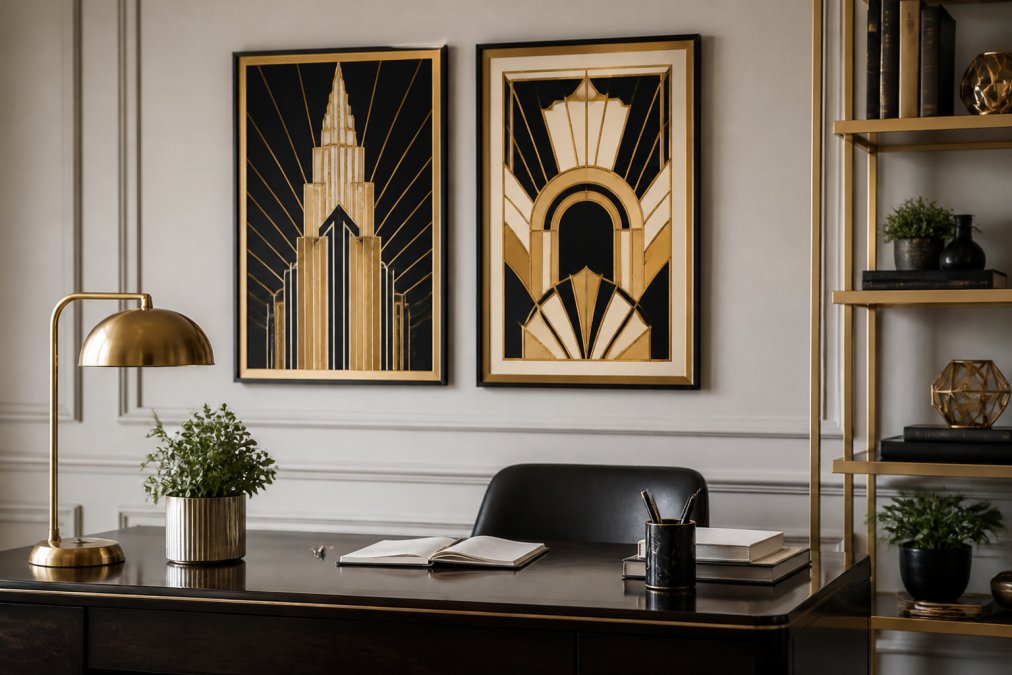
 ultimate-guide
Art Deco Wall Art: 2026 Trends & Styling Guide
Table of Contents
- What Defines Art Deco Wall Art
- Why Art Deco Is a 2026 Wall Art Trend
- How to Style Art Deco Prints in Modern Rooms
- Choosing the Right Color Palette and Frame
- Best Wall Art Placement Tips for Impact
- Authentic Vintage vs. Modern Reproductions
- Conclusion: Building Your Art Deco Collection
- Frequently Asked Questions
Last Updated: September 8, 2026
What Defines Art Deco Wall Art
Art deco wall art is a decorative style defined by geometric precision, symmetrical patterns, and bold color contrasts that originated in the 1920s aesthetic. The movement emerged from the 1925 Exposition Internationale des Arts Décoratifs in Paris and quickly became the visual language of optimism and modernity across architecture, fashion, and interior design (theinteriordesigninstitute.com).
The Chrysler Building stands as the definitive architectural case study, with its use of African marble and intricate geometric detailing establishing the style's foundational principles (EXTERNAL_LINK: The Interior Design Institute's analysis of Art Deco architecture | theinteriordesigninstitute.com). When translated to wall decor, these same elements appear as sunburst motifs, stepped arches, chevron patterns, and stylized floral imagery rendered in metallic accents and high-contrast palettes.
What separates authentic art deco wall art from generic geometric prints is the underlying sense of ornamental design and vintage glamour. The style deliberately fuses formal and cultural influences across scales, which makes it difficult to pin down with rigid characteristics (EXTERNAL_LINK: In Situ Journal's examination of Art Deco classification | insitujournal.org). Look for visual balance, simplified silhouettes, and that unmistakable sense of timeless sophistication that defined the Jazz Age.
Why Art Deco Is a 2026 Wall Art Trend
The broader wall art market is valued at approximately $70.94 billion in 2026 and is projected to reach $145.49 billion by 2034, reflecting a compound annual growth rate of 9.39% (EXTERNAL_LINK: Fortune Business Insights wall art market report | fortunebusinessinsights.com). Within that growth, Art Deco has re-emerged as a dominant style preference, not as a nostalgia play but as a response to current design cravings.
Today's interiors lean toward tactile textures, oversized statements, and warm, grounding earth-tone palettes featuring terracotta, sand, rust, and ochre (EXTERNAL_LINK: PosterScape's 2026 wall art trend analysis | posterscape.com). Art Deco's inherent geometry pairs effortlessly with these warmer tones, offering structure without feeling cold or institutional. The style's revival also aligns with a broader shift toward intentional, oversized wall art that anchors a room rather than merely filling empty space.
Search behavior confirms the momentum. Pinterest recorded 4,000 searches for "Art Deco wall art" within a single three-day window, signaling sustained consumer appetite for the aesthetic (pinterest.com). This isn't a fleeting micro-trend; it reflects a genuine cultural pull toward the decorative arts and the confidence of a bygone era.
How to Style Art Deco Prints in Modern Rooms
The most common mistake is treating art deco wall art as a period piece that belongs only in faithfully restored interiors. In practice, the style shines brightest when it contrasts with contemporary settings. A single framed geometric print can transform a minimalist living room from stark to sophisticated.
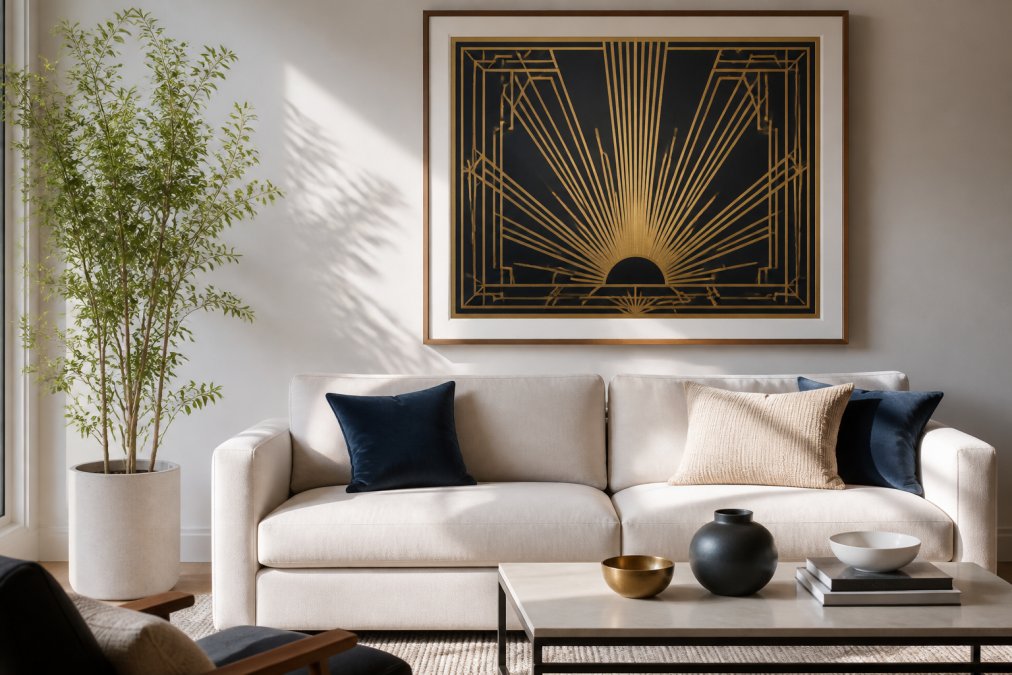
Start with scale. Oversized pieces command attention and become the room's focal point, while a curated gallery wall of smaller prints builds layered visual interest. The key is intentionality: art deco wall art should feel deliberate, not accidental.
Room-by-Room Styling Logic
Living rooms are the most forgiving space for art deco prints because they typically have the most surface area. Hang a single oversized piece above the sofa, centered on the wall, and let it anchor the seating arrangement. If your sofa is neutral, linen, wool, or cotton in gray, beige, or white, a high-contrast print with gold or brass accents will add the warmth the room lacks. If your sofa is already a jewel tone, choose a print with a black or white base to avoid competing with the upholstery. The bottom edge of the frame should sit 6 to 10 inches above the sofa back, and the piece should occupy roughly two-thirds of the sofa's width.
Home offices benefit from a different approach. Art deco's geometric precision creates a sense of order that supports focused work, but the placement should be behind or beside your monitor, not directly in your peripheral vision where it becomes a distraction. A pair of matching prints flanking a window or bookshelf creates symmetry that reinforces the style's core principle. For smaller offices, a single 18-by-24-inch print above a credenza or sideboard provides visual interest without overwhelming the space.
Dining rooms are the ideal setting for a gallery wall of smaller prints. The repetition of geometric motifs across multiple frames creates a rhythm that complements the formality of the space. Arrange three to five prints in a grid or stepped pattern, keeping consistent spacing between frames, 2 to 3 inches is standard. Mix black-and-white prints with metallic-accented pieces to add depth without sacrificing cohesion.
Lighting: The Missing Variable
Art deco wall art is designed to be seen under warm, directional light. The metallic inks and foils used in many prints are reflective by nature; they catch light and cast subtle shadows that change the piece's appearance throughout the day. Most practitioners find that a brass or bronze picture light mounted above the frame provides the most flattering illumination. Position the light so it hits the print at a 30-degree angle, which minimizes glare while maximizing the metallic shimmer. Avoid cool-toned LED spotlights, which wash out gold and brass accents and make the print feel flat. If you are using recessed lighting, install a dimmer switch so you can control the intensity, art deco prints look best under moderate light, not full brightness.
Mixing Art Deco With Other Styles
Art deco wall art does not demand an all-or-nothing commitment. It coexists comfortably with mid-century modern furniture, where both styles share an appreciation for clean lines and organic curves. It also provides an unexpected counterpoint to industrial or Scandinavian interiors, injecting warmth and ornamental detail into otherwise utilitarian spaces.
A practical approach is the 80/20 rule: keep 80% of your decor in your dominant style and use art deco pieces as the 20% that adds personality. This prevents the room from feeling like a museum installation while still capturing the aesthetic's distinctive appeal. For a more integrated look, pair an art deco print with a single piece of furniture that shares its geometric language, a stepped-arch bookshelf, a sunburst mirror, or a chevron-patterned rug. This creates a visual dialogue between the art and the room without requiring a full redesign.
Choosing the Right Color Palette and Frame
Art deco's classic palette centers on bold color contrasts: black and white with gold accents, deep emerald paired with brass, or navy blue offset by silver. For 2026, however, the trend leans toward warmer interpretations. Terracotta, sand, rust, ochre, and dusty tones now appear in decorative wall art with increasing frequency, softening the style's high-contrast reputation while retaining its visual balance (EXTERNAL_LINK: Extra Large Wall Art's 2026 trend report | extralargewallart.com).
When selecting a frame, consider the print's dominant metallic accent. Gold-leaf frames complement sunburst and geometric designs, while silver or chrome suits more simplified, monochromatic pieces. Black frames offer a safe, versatile foundation that works across most palettes. For a more contemporary feel, consider floating frames that allow the print to appear suspended within the wall.
The restoration of the Bottleworks Hotel demonstrates how Art Deco elements can be preserved and integrated into modern experience design rather than simply replicated (EXTERNAL_LINK: Lindenwood University's case study on the Bottleworks Hotel | digitalcommons.lindenwood.edu) (digitalcommons.lindenwood.edu). Apply the same principle at home: honor the style's heritage while adapting it to your space.
Best Wall Art Placement Tips for Impact
Placement determines whether your art deco wall art elevates a room or gets lost in it. The center of a piece should sit at eye level, approximately 57 to 60 inches from the floor, which aligns with standard gallery height. This rule holds for living rooms, bedrooms, and hallways alike.
For oversized statement pieces, allow generous breathing room on either side. A common error is cramming a large print into a tight wall where it competes with furniture or architectural features. Measure the wall space first and select a piece that occupies roughly two-thirds to three-quarters of the available width for optimal visual balance.
Above a sofa or console table, hang the artwork so its bottom edge sits 6 to 10 inches above the furniture's back. This creates a connected composition rather than a disconnected image floating awkwardly up the wall. In dining rooms and home offices, position art where it becomes a natural conversation point during gatherings or a source of inspiration during focused work.
Authentic Vintage vs. Modern Reproductions
Collectors face a genuine choice between sourcing authentic vintage pieces and investing in modern reproductions. Authentic art deco wall art from the 1920s and 1930s carries historical weight and potential investment value, but it comes with challenges: condition issues, limited availability, and often substantial cost. Original posters and prints from the era are true artifacts of the decorative arts movement.
Modern reproductions offer distinct advantages. They provide access to the aesthetic at accessible price points, allow for consistent sizing across a collection, and often use archival-quality printing that resists fading better than some original materials. Digital download formats have expanded these options considerably, enabling immediate access to high-quality artistic decor without shipping concerns.
When choosing between the two, consider your primary motivation. If you value provenance and authenticity above all, pursue vintage through reputable dealers and auction houses. If your goal is to capture the style's aesthetic appeal within a cohesive modern interior, high-quality reproductions deliver the visual impact without the preservation responsibilities. Many collectors blend both approaches, anchoring a room with one authentic piece while filling out the composition with well-crafted reproductions.
Conclusion: Building Your Art Deco Collection
Building a meaningful art deco wall art collection is less about accumulating pieces and more about curating with intention. Start with one anchor piece that speaks to you, then build outward by considering how each addition interacts with your existing space, color palette, and furniture. Artwork should tell a story, whether it recalls another era or simply captures something that resonates personally.
At Runway & Heirloom Art, we believe prints should become part of your space's narrative rather than merely decorate it. Our curated collection of art deco prints and art-history-inspired pieces is designed for digital download, giving you instant access to high-quality decor that reflects your individual style. Explore our art deco prints to find a piece that adds character and enduring appeal to your home.
Whether you are drawn to the geometric precision of the 1920s or the warmer, more intentional interpretations trending in 2026, art deco wall art offers a versatile foundation for personal expression. The challenge is choosing pieces that feel authentic to your space rather than merely fashionable. Runway & Heirloom Art helps you meet that challenge with prints that combine history, imagination, and individual style, available as instant digital downloads for effortless customization. Get started with Runway & Heirloom Art and discover wall decor that becomes part of your story.
Frequently Asked Questions
What are the defining characteristics of Art Deco wall art?
Art deco wall art is defined by geometric precision, symmetrical patterns, and bold color contrasts. Look for stylized imagery like sunbursts, fan shapes, and architectural motifs, often accented with metallic gold, silver, or brass. The style emerged from the 1920s aesthetic and conveys vintage glamour. Many pieces feature high-contrast palettes, such as black and white paired with a jewel tone, creating a look of timeless sophistication that anchors a modern interior design.
How do I incorporate Art Deco wall art into a modern home?
Start by choosing one or two statement pieces that use a color from your existing room. A large canvas print with geometric patterns works well as a focal point above a sofa or bed. For a subtler look, select a piece with a warm, grounding palette like terracotta or ochre that fits current art deco interior design trends. Avoid matching every piece; instead, let the art introduce the vintage glamour while your furniture remains contemporary.
Is Art Deco wall art considered a timeless design choice?
Yes, art deco wall art has proven remarkably enduring. Its emphasis on geometric abstraction and ornamental design allows it to pair with many styles, from minimalist to eclectic. The style has seen several revivals since its origin in the 1920s, and it remains a popular choice for adding character to spaces. Its focus on craftsmanship and luxurious materials makes it feel less like a passing fad and more like a classic artistic movement.
What is the 2/3 rule for wall art placement?
The 2/3 rule suggests that the width of your wall art should be approximately two-thirds the width of the furniture it hangs above. For example, a 72-inch sofa should pair with a piece of art that is around 48 inches wide. This proportion creates visual balance and prevents the art from feeling lost or overwhelming. This is one of the most reliable best wall art placement tips for creating a cohesive and professionally styled room.