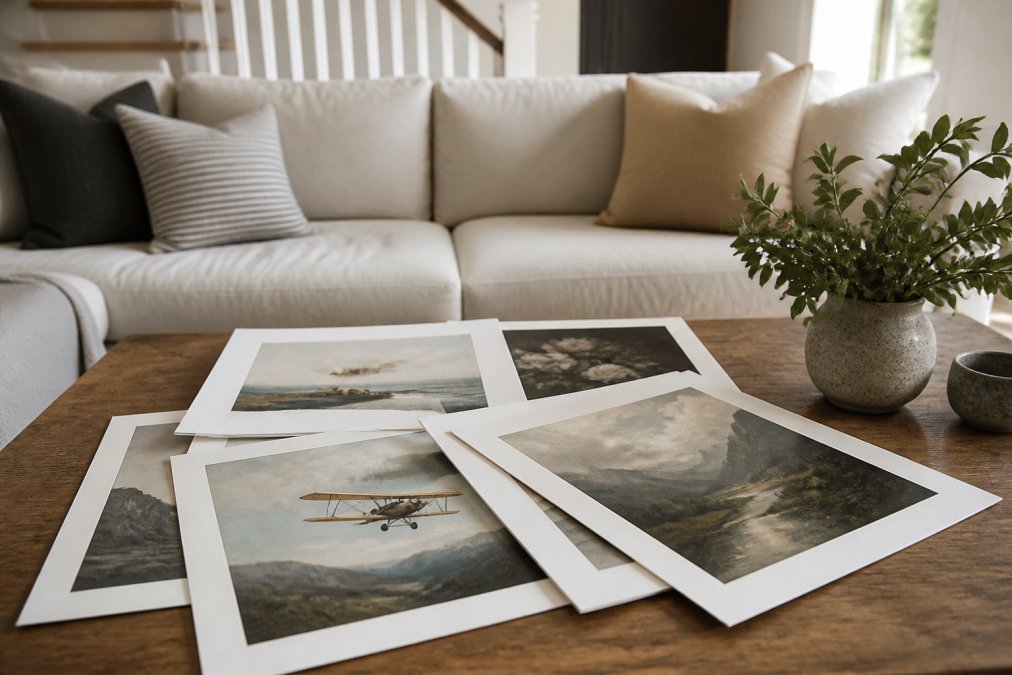
 listicle
Best Archival Prints for Living Room: 2026 Guide
Table of Contents
- What Makes Archival Prints Worth the Investment
- Archival Quality Giclée Prints: The Foundation of Longevity
- Top Archival Print Styles for Living Rooms
- How to Frame Archival Art Prints for Maximum Protection
- Living Room Wall Art Layout Ideas: Creating Visual Balance
- Preserving Your Archival Prints: UV Damage and Environmental Factors
- Sustainable and Eco-Friendly Archival Print Options
- Affordable vs. Investment Archival Prints: What You're Paying For
- Frequently Asked Questions
Last Updated: September 1, 2026
What Makes Archival Prints Worth the Investment
Investing in archival prints means owning art that outlasts trends and fading. According to How to Preserve Art Prints: The Collector's Guide to Archival Longevity, archival art prints typically last 100-200 years before visible fading occurs when produced with proper materials and displayed thoughtfully.
True archival quality depends on three elements working together: pigment-based inks, acid-free substrates, and proper framing. "Archival" isn't a regulated term, anyone can claim it, but genuine archival quality requires a complete system. If one element fails, the print's lifespan drops dramatically.
The wall art segment accounts for 75% of the wall decor market in the U.S., valued at $15.6 billion in 2024 and expected to reach $28.2 billion by 2029. This growth reflects homeowners becoming more intentional about what they hang on their walls, investing in fewer pieces that feel meaningful and built to last.
At RunwayandHeirloomArt, we believe the best archival prints combine longevity with aesthetic intention. Whether you're drawn to nature-inspired landscapes, abstract minimalism, or art-history-inspired pieces, the foundation must be sound.
Archival Quality Giclée Prints: The Foundation of Longevity
Giclée printing is the gold standard for fine art reproduction, using museum-quality inkjet technology with precise color reproduction and pigment-based inks that resist fading far longer than dye-based alternatives.
Pigment-Based Inks vs. Dye-Based Alternatives
Pigment-based inks are the cornerstone of archival prints. These solid particles suspended in carrier fluid sit on the paper surface and don't break down chemically over time. According to Wilhelm Imaging Research, pigment-based prints using systems like Epson UltraChrome and Canon LUCIA on acid-free cotton rag papers can last 200-400 years under proper conditions.
Dye-based inks dissolve into paper fibers and fade rapidly, especially with light exposure, humidity, and UV radiation. For a living room with natural light and daily use, dye-based prints are a poor choice.
The practical difference: a pigment-based archival print will outlast your furniture and home. A dye-based print shows visible color shift within 5-10 years, particularly in reds, magentas, and cyans.
Acid-Free and Cotton Rag Papers
Paper matters as much as ink. Acid-free paper is non-negotiable for archival longevity. Acidic paper yellows and becomes brittle over time, a process accelerated by light, heat, and humidity.
Cotton rag papers, made from 100% cotton fibers rather than wood pulp, represent the highest tier of archival quality. Hahnemühle Photo Rag series, for example, is OBA-free with verified archival life of 150+ years under optimal storage. These papers have natural warmth and texture that enhance fine art reproduction, especially for watercolor-style and nature-inspired artwork.
Paper weight also affects quality and durability. Archival prints typically use 200-310 GSM paper. Heavier papers feel more substantial, resist creasing, and better protect the print surface.
68% of online art shoppers incorrectly assume that archival paper alone guarantees a 100-year lifespan, according to Artist's Guide to Archival Printing: Preserving Your Vision. The truth: archival paper is essential but not sufficient. You need the complete system.
Top Archival Print Styles for Living Rooms
The best archival prints combine technical longevity with aesthetic appeal. Current trends favor intentional pieces that will feel right five years from now.
Nature-Inspired and Landscape Prints
Nature-inspired and landscape artwork dominates living room choices. Neutral, nature-inspired art, including minimalist botanicals and earthy landscapes, is the most popular style and works across modern, transitional, and traditional interiors.
These pieces create calm and openness, exactly what most people want from a living room. They pair easily with existing furniture, work with multiple color palettes, and age gracefully. A landscape from 2026 won't feel dated in 2036 the way trendy graphics might.
When selecting landscape archival prints, look for earthy, muted palettes. Warm browns, olive greens, clay pinks, and soft neutrals like beige, taupe, and gold are leading colors in 2026 wall art and complement modern interiors.
Abstract and Minimalist Designs
Abstract and minimalist prints offer flexibility, they can anchor a room or provide supporting visual interest depending on scale and placement. The key is intentionality. A minimalist print with clean lines works well in spaces with strong design elements. An abstract piece with layered textures and muted colors can ground sparse rooms.
Textured and dimensional artwork is gaining popularity in 2026. Layered, tactile designs add depth and movement. For archival prints, this means selecting papers with natural texture, matte finishes, and subtle grain.
Art History and Contemporary Reproductions
Art-history-inspired reproductions offer cultural weight and timelessness. A print inspired by Art Deco design works as well in 2026 as it did in 2006 and will in 2046. These pieces rarely feel dated and serve as conversation starters.
How to Frame Archival Art Prints for Maximum Protection
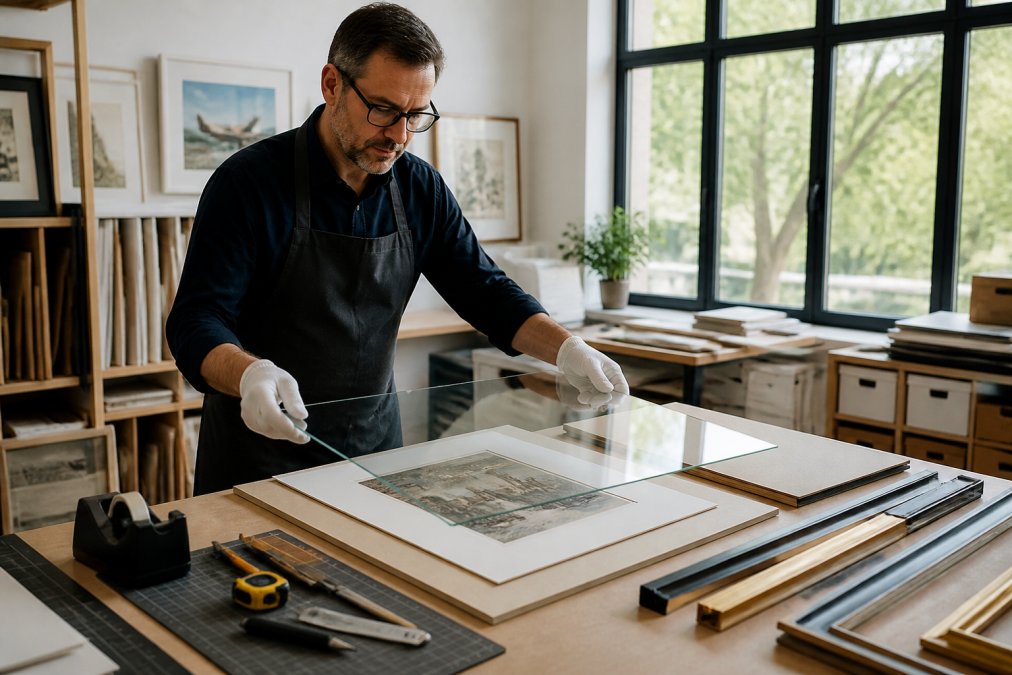
Framing is where many people make costly mistakes. Even museum-quality archival prints degrade rapidly if framed improperly. The frame is a protective system, not just aesthetic.
UV-Protective Glass and Glazing
UV-protective glass is non-negotiable for living room displays. Standard glass blocks only 0-5% of UV radiation. UV-protective glass blocks 99%, preventing fading that occurs even in indirect light.
Museum-quality UV glass is heavier and more expensive than acrylic but superior in every way, it blocks UV, reduces glare, and provides exceptional clarity. For archival prints you plan to keep for decades, museum glass is the better investment.
Glazing should always be non-reflective and acid-free. Reflective glazing creates glare that obscures detail. Acid-free glazing prevents chemical breakdown when acidic materials contact the print.
Matting and Mounting Best Practices
The mat creates visual separation and protects the print from direct glass contact. Never allow prints to touch glass directly; condensation and temperature fluctuations can cause sticking or mold.
Use acid-free, lignin-free mat board. Lignin breaks down over time and yellows, damaging prints. Acid-free boards resist degradation. Use 4-ply or thicker mat board for living room displays.
Mount prints with acid-free mounting tape or archival hinging methods that allow slight movement without tearing. Never use rubber cement, spray adhesive, or tape, these break down and damage prints.
When ordering prints online, specify archival framing and provide the printer with your paper type and ink system preferences.
Living Room Wall Art Layout Ideas: Creating Visual Balance
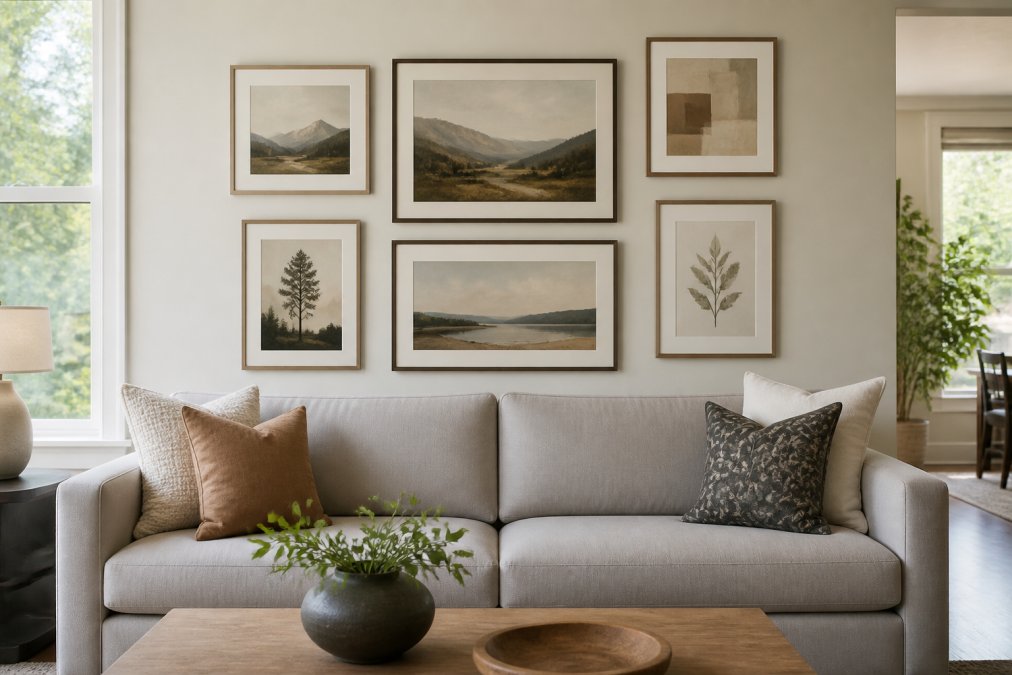
How you arrange archival prints matters as much as what you choose. The right layout creates visual balance and intentionality.
Gallery Wall Arrangements
A gallery wall is a collection of framed prints arranged to create a unified statement. Balance symmetry with variation, too much symmetry feels stiff; too much variation feels chaotic.
Lay out frames on the floor before hanging. Arrange in a grid (symmetrical), salon-style cluster (asymmetrical but balanced), or linear arrangement. For living rooms, salon-style arrangements with varying frame sizes feel most contemporary.
Aim for 2-3 inches between frames for cohesion. Choose prints sharing a common color family or mostly neutral tones with one accent color for visual harmony.
Statement Pieces and Focal Points
A single oversized statement piece can be more powerful than a collection of smaller prints. Oversized pieces remain popular for creating impact in living spaces.
A statement piece should be at least 36 inches wide; 60-80 inches can anchor an entire room. Position it at eye level (57-60 inches from floor to frame center) with breathing room around it.
Personal taste drives decorating decisions for 84% of homeowners. Your statement piece should reflect something meaningful to you. Art-history-inspired prints, aviation artwork, or nature-inspired pieces connecting to your interests will feel authentic and age better than generic trendy prints.
Preserving Your Archival Prints: UV Damage and Environmental Factors
Longevity claims for archival prints often come from accelerated aging tests under controlled conditions that rarely match real-world display environments. A print in a bright room ages differently than one in a gallery or dark storage.
The three main threats are light (especially UV radiation), humidity, and temperature fluctuation. You can't eliminate these entirely in a living room, but you can minimize them.
Keep prints away from direct sunlight. Even UV-protective glass doesn't block 100% of light. Over decades, indirect exposure causes subtle fading. Use window treatments to filter direct rays if necessary.
Maintain stable humidity between 30-50%. Excessive humidity encourages mold and degradation; too-dry conditions make paper brittle. Temperature should remain stable, ideally 60-70 degrees Fahrenheit. Avoid hanging prints near heating vents or air conditioning units where temperature fluctuates dramatically.
Clean glass and frames regularly with a soft, dry cloth. Never use water or cleaning solutions on prints.
Sustainable and Eco-Friendly Archival Print Options
Sustainability is driving purchasing decisions. Buyers increasingly favor archival giclee prints on responsibly sourced materials, indicating growing interest in sustainable, long-lasting art.
Giclee prints on recycled paper and textured cotton canvas are trending. These reduce environmental impact without sacrificing archival quality. Recycled paper, when acid-free and properly processed, offers the same longevity as virgin paper.
Look for vendors using eco-friendly inks and papers certified by the Forest Stewardship Council or similar bodies. Ask about printing waste management and carbon offset practices.
RunwayandHeirloomArt offers sustainable options including watercolor art prints on eco-friendly substrates. Choosing sustainable archival prints invests in longevity while reducing environmental impact.
Affordable vs. Investment Archival Prints: What You're Paying For
Archival print prices depend on artist, edition size, paper quality, ink system, and hand-finishing.
Entry-level archival prints are usually print-on-demand giclee on quality paper with pigment-based inks. They're affordable, accessible, and genuinely archival. The trade-off: they're not limited editions.
Mid-range prints often include limited editions, hand-finishing, or established artists. Paper quality is higher and framing recommendations more specific.
Investment-grade prints are typically limited editions, hand-signed by artists, or museum-quality reproductions. These are purchased expecting appreciation or heirloom status.
The average annual U.S. home décor spending is $2,752. A collection of 3-5 quality archival prints, properly framed, typically costs $300-800, less than 10% of annual spending.
You're paying for longevity and intentionality. A $50 archival print lasting 150 years costs less per year than a $20 print fading in five years.
| Print Type | Price Range | Archival Life | Best For | Sustainability |
|---|---|---|---|---|
| Print-on-Demand Giclee | Pricing depends on quantity, dates, and delivery | 150+ years | Budget-conscious buyers | Variable |
| Limited Edition Giclee | Pricing depends on quantity, dates, and delivery | 200+ years | Collectors, hand-finished details | High |
| Museum Reproductions | Pricing depends on quantity, dates, and delivery | 200+ years | Art history enthusiasts | Depends on vendor |
| Investment-Grade Prints | Pricing depends on quantity, dates, and delivery | 200+ years | Collectors, heirlooms | Premium |
| Sustainable/Eco-Friendly | Pricing depends on quantity, dates, and delivery | 150+ years | Environmentally conscious buyers | High |
Choosing the best archival prints for your living room means balancing aesthetics, longevity, and budget. Start with the technical foundation, pigment-based inks and acid-free cotton rag paper, then layer in your personal taste through style, color, and subject matter. Frame properly, protect from UV damage, and your prints will outlive your living room itself.
RunwayandHeirloomArt specializes in curated archival prints combining artistic intention with technical longevity. Whether you're drawn to nature-inspired landscapes, aviation artwork, or art-history-inspired pieces, our collection uses the same archival standards museums employ. Start with one statement piece or small gallery arrangement and build from there. Your living room will be richer for it.
=== FAQ ANSWERS (audit these too, same rules) ===
[1] Q: What makes an art print considered 'archival'? A: An archival print requires three integrated components: pigment-based inks (not dye-based), acid-free paper or cotton rag substrate, and proper framing with UV-protective glass. The term 'archival' refers to the print's ability to resist fading and deterioration. Archival prints using pigment-based inks on acid-free cotton rag papers can last 100 to 200 years under normal display conditions, or 200 to 400 years with optimal storage. However, 68% of online art shoppers incorrectly assume that archival paper alone guarantees longevity, all three elements must work together.
[2] Q: How do I choose the right size archival print for my living room wall? A: Use the 2/3 rule: your artwork should occupy approximately two-thirds of the wall space above furniture like a sofa or console table. For a standard 8-foot wall, a 48-inch-wide print works well as a statement piece. Measure your wall and furniture first, then select prints proportional to that space. Oversized pieces remain popular for creating impact in open-plan living areas.
[3] Q: What is the difference between giclée and standard digital prints? A: Giclée prints use fine-art inkjet technology with pigment-based inks that spray microscopic droplets onto premium paper, creating superior color accuracy and detail. Standard digital prints typically use dye-based inks on lower-quality paper, resulting in faster fading and less color depth. Giclée prints, when produced on acid-free cotton rag paper with archival pigment inks, offer museum-quality longevity and vibrant color gamut that standard prints cannot match. The investment in true giclée archival prints means your living room art will retain its visual impact for decades.
[4] Q: How should I care for archival prints in a living room setting? A: Position framed archival prints away from direct sunlight, which accelerates fading even with UV-protective glass. Avoid high-humidity areas like kitchens or bathrooms where moisture can compromise paper integrity. Dust frames gently with a soft cloth; never clean the glass with harsh chemicals. Maintain room temperature between 65-75°F and humidity between 30-50% for optimal preservation. Archival prints are fade-resistant, but environmental factors like heat and humidity still affect longevity. Proper framing with UV-blocking glass and acid-free matting protects against these conditions.
[5] Q: Why should I invest in archival prints instead of cheaper alternatives? A: Archival prints represent a long-term investment in home decor that actually appreciates in value and longevity. The average annual household spend on home decor is $2,752, and archival prints provide lasting quality that budget alternatives cannot match. Beyond investment potential, archival prints won't fade, yellow, or deteriorate like cheaper prints. You're paying for pigment-based inks, museum-grade paper, lightfastness, and the assurance that your living room art will remain vibrant for 100+ years.
Frequently Asked Questions
Q: What makes an art print considered 'archival'?
A: An archival print requires three integrated components: pigment-based inks (not dye-based), acid-free paper or cotton rag substrate, and proper framing with UV-protective glass. The term 'archival' refers to the print's ability to resist fading and deterioration. Archival prints using pigment-based inks on acid-free cotton rag papers can last 100 to 200 years under normal display conditions, or 200 to 400 years with optimal storage. However, 68% of online art shoppers incorrectly assume that archival paper alone guarantees longevity, all three elements must work together.
Q: How do I choose the right size archival print for my living room wall?
A: Use the 2/3 rule: your artwork should occupy approximately two-thirds of the wall space above furniture like a sofa or console table. For a standard 8-foot wall, a 48-inch-wide print works well as a statement piece. Measure your wall and furniture first, then select prints proportional to that space. Oversized pieces remain popular for creating impact in open-plan living areas.
Q: What is the difference between giclée and standard digital prints?
A: Giclée prints use fine-art inkjet technology with pigment-based inks that spray microscopic droplets onto premium paper, creating superior color accuracy and detail. Standard digital prints typically use dye-based inks on lower-quality paper, resulting in faster fading and less color depth. Giclée prints, when produced on acid-free cotton rag paper with archival pigment inks, offer museum-quality longevity and vibrant color gamut that standard prints cannot match. The investment in true giclée archival prints means your living room art will retain its visual impact for decades.
Q: How should I care for archival prints in a living room setting?
A: Position framed archival prints away from direct sunlight, which accelerates fading even with UV-protective glass. Avoid high-humidity areas like kitchens or bathrooms where moisture can compromise paper integrity. Dust frames gently with a soft cloth; never clean the glass with harsh chemicals. Maintain room temperature between 65-75°F and humidity between 30-50% for optimal preservation. Archival prints are fade-resistant, but environmental factors like heat and humidity still affect longevity. Proper framing with UV-blocking glass and acid-free matting protects against these conditions.
Q: Why should I invest in archival prints instead of cheaper alternatives?
A: Archival prints represent a long-term investment in home decor that actually appreciates in value and longevity. The average annual household spend on home decor is $2,752, and archival prints provide lasting quality that budget alternatives cannot match. Beyond investment potential, archival prints won't fade, yellow, or deteriorate like cheaper prints. You're paying for pigment-based inks, museum-grade paper, lightfastness, and the assurance that your living room art will remain vibrant for 100+ years.
This article was written using GrandRanker