 ultimate-guide
The History of Squadron Insignia in Aviation Art
Last Updated: November 13, 2026
Quick Summary
Squadron insignia began in early military aviation as painted emblems that identified a specific unit, grew from informal pilot-made markings into recognized unit identity during World War I, and later became documented heritage. Naval aviation recorded its emblems as unit property, while national insignia identified the country and squadron insignia identified the unit within that force.
- No complete official listing of early squadron emblems was ever compiled, so the tradition grew informally.
- World War I turned scattered personal markings into recognizable unit identity, often designed by pilots and ground crew.
- Naval aviation treated squadron emblems as unit property to be documented, not just painted and forgotten.
- National insignia identify the country of origin, while squadron insignia identify the unit within that force.
- Nose art belongs to the crew, while the unit emblem belongs to the squadron rather than the individuals.
Table of Contents
- How Squadron Insignia Took Root in Early Military Aviation
- World War I and the Birth of Unit Identity in Aviation Art
- Navy Squadron Logos and the Rise of Official Insignia Records
- U.S. Navy Aircraft Insignia WWII: Standardization and the Bureau of Aeronautics
- WWII Aircraft Insignia and the Golden Age of Nose Art
- Reading Military Aircraft Insignia: Symbols, Mascots, and Design Language
- Choosing Historic Aviation Prints for a Personal Collection
- Frequently Asked Questions
How Squadron Insignia Took Root in Early Military Aviation
Squadron insignia is the painted or embroidered emblem that identifies a specific military aviation unit, and its story begins before aircraft carried weapons. The history of squadron insignia in aviation art traces back to the earliest days of military flight, when units needed a way to mark their machines and their people as belonging to something.
The first military aviation units formed in the years before World War I, and almost immediately aircrew began personalizing their aircraft.
Early unit identity borrowed from older military customs: regiments had colors, coats of arms, and mascots, and aviation units adopted the same instinct. A painted symbol on a fuselage also did practical work, helping ground crews and fellow pilots recognize a machine at a distance before radio made identification easy.
That practical need is the throughline of this entire history. Squadron insignia in aviation art began as identification, became morale, and ended up as heritage.
World War I and the Birth of Unit Identity in Aviation Art
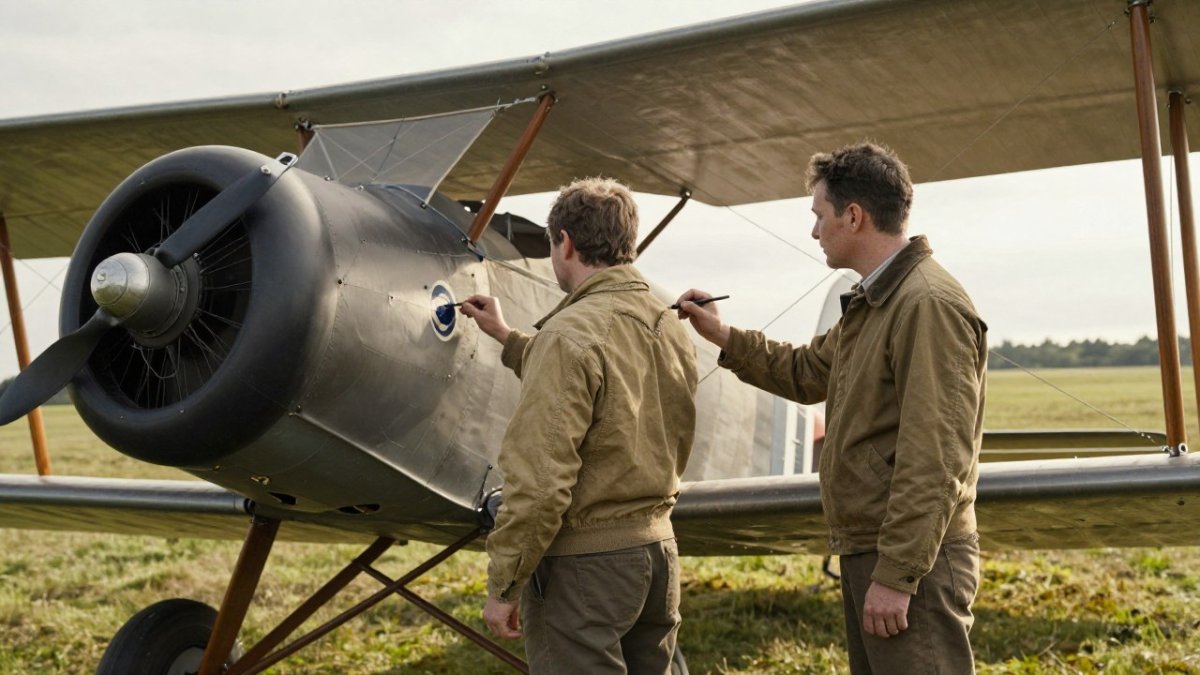
World War I turned scattered personal markings into recognizable unit identity. Squadrons on both sides developed emblems, and the aircraft of the era became canvases for mascots, animals, and geometric devices that told you at a glance whose pilots these were.
What most guides miss is how much of this design work came from pilots and ground crew rather than any official art department. A squadron would adopt a symbol, paint it on its aircraft, and only later see it formalized, producing early aviation art that feels personal in a way later official insignia rarely does.
The symbols chosen in this period set patterns that persisted for decades:
- Animals, often chosen for speed, aggression, or a unit nickname
- Family crests and heraldic devices, echoing older military tradition
- Geometric shapes and bold color schemes, easy to paint and easy to spot
- Mascots and cartoon figures, carrying a squadron's sense of humor
The artists behind these early emblems were frequently the same people who flew and maintained the aircraft. Readers drawn to that creative lineage may enjoy our guide to 10 famous aviation artists to follow in 2026, which follows the painters and illustrators who carried this tradition forward.
Navy Squadron Logos and the Rise of Official Insignia Records
Navy squadron logos occupy a distinct place in this history because naval aviation moved earlier and more deliberately toward recording its emblems.
The Naval History and Heritage Command's naval aviation history program maintains squadron insignia material precisely because these emblems function as unit records.
The approval chain. A squadron proposed a design, often through its commanding officer, and the proposal moved up the chain of command.
The heraldic rules. Naval aviation borrowed from older military heraldry without adopting a formal college of arms. The practical rules were about legibility and distinctiveness: strong silhouettes, limited colors, and avoidance of complex detail that would blur on a patch or a fuselage.
The recordkeeping. Once approved, an emblem entered the unit's documentation, which is why squadron insignia can often be dated and attributed more reliably than informal nose art.
The layered system. What emerged was not a single official art program but a layered one: official insignia with documented approval, and unofficial decoration that lived alongside it on the same airframe.
That layering is where terminology matters and where most casual readers get confused.
Watch out: a painted emblem on a period aircraft is not proof of official approval. The records, not the paint, are what establish status, and a photograph alone rarely settles the question.
U.S. Navy Aircraft Insignia WWII: Standardization and the Bureau of Aeronautics
U.S. Navy aircraft insignia in WWII reflected a system that had matured. The Bureau of Aeronautics, the Navy's aviation material and policy authority, oversaw standards governing how aircraft were marked and how unit emblems fit into a broader identification scheme.
The critical distinction here is between national insignia and squadron insignia. National insignia, the star and bar markings on U.S. military aircraft, identify the country of origin. Squadron insignia identify the unit within that force.
What standardization controlled. National markings were governed by specification: size, placement, contrast, and the exact form of the star and associated bars. These rules existed for recognition, and they changed during the war as identification problems emerged in different theaters.
What standardization left open. Squadron emblems were not held to the same specification. A unit emblem had to be recognizable and appropriate, but its size, exact placement, and painting style varied by unit, by aircraft type, and by the skill of whoever held the brush.
Why the two systems coexisted. They answered different questions. National insignia answered "friend or foe?" Squadron insignia answered "whose plane is this?" A single airframe carried both because both questions mattered, and the marking scheme had to serve recognition at a distance and unit identity up close at the same time.
This is one of the gap topics most histories skip.
Standardization did not eliminate personality; it gave personality a defined space to live in, and the boundary between the specified and the personal makes a period aircraft photograph readable as a document rather than just an image.
National insignia specifications changed during the war, so a marking that looks wrong for the period may simply belong to a different phase of it.
WWII Aircraft Insignia and the Golden Age of Nose Art
WWII aircraft insignia and nose art are often talked about as one phenomenon. They are related, but not the same, and separating them sharpens how you read any period aircraft photograph.
Nose art is the personalized decoration painted on the forward fuselage of a military aircraft, typically by or for the crew, and it is distinct from the unit emblem, which belongs to the squadron rather than the individuals. Both flourished in WWII, and both relied on the same visual language of mascots, animals, and cartoon figures. The difference is ownership.
The golden age of nose art came from a specific set of conditions: large crews with strong group identity, aircraft that served as homes as much as machines, and a culture that tolerated personal expression on government equipment. The American Society of Aviation Artists, whose juried exhibitions continue to celebrate this tradition, represents the artistic lineage that grew from it.
For collectors, the practical lesson is provenance. A print showing a squadron emblem and a print showing nose art are telling two different stories, and knowing which is which changes what the piece means.
Reading Military Aircraft Insignia: Symbols, Mascots, and Design Language
Military aircraft insignia reward close reading once you know the vocabulary. The recurring imagery falls into recognizable families, and each family carries meaning a trained eye can decode.
Start with mascots. Animals dominate: panthers, eagles, bulldogs, and birds of prey, usually chosen to project a squadron's self-image. Then look at heraldry, where family crests and shields signal lineage and tradition. Finally, examine typography and layout, since lettering style and emblem placement often date a design more precisely than the symbol itself.
A useful framework for reading any emblem:
| Element | What It Usually Signals | What to Check |
|---|---|---|
| Animal mascot | Unit nickname or self-image | Whether the animal matches the squadron name |
| Heraldic shield | Tradition and lineage | Crest shapes borrowed from older units |
| Color scheme | Visual identity and visibility | Whether colors match period paint standards |
| Typography | Era and design fashion | Lettering style against known period examples |
| Placement | Official vs. informal status | Position relative to national markings |
Once you can read these elements, vintage aircraft illustrations stop looking like decoration and start reading like documents. Our guide to appreciating the appeal of vintage aircraft illustrations goes deeper into that shift in how you look at them.
Choosing Historic Aviation Prints for a Personal Collection
Historic aviation prints let you own a piece of this history in a form that fits a study, office, or living room. Choosing well comes down to three things: what the image depicts, how it was produced, and whether it will last.
Historic aviation prints are built around exactly this kind of subject matter, and a few practical filters help any new collector before buying anything.
Start with subject clarity. Know whether the print shows a squadron emblem, nose art, national insignia, or a broader scene. Each carries different historical weight.
Then check production. Limited edition prints are typically produced in a stated run with the artist's involvement, which is why buyers ask whether limited edition aviation prints are worth it. The answer depends on run size, artist, and documentation.
Then think about display. A print that suits a study may not suit a living room, and styling aviation art prints well matters as much as choosing them well. Our guide on why to collect military aircraft art covers the collecting side in depth.
- Confirm what the image depicts and which era it comes from
- Check the print run and whether documentation is included
- Match the piece to the room and lighting where it will hang
- Ask about paper and ink quality if longevity matters to you
Watch out: the most common mistake is buying a striking image without confirming what it shows. A dramatic aircraft scene and a documented squadron emblem are different collectibles, and a seller who cannot tell you which is which is a reason to pause.
The history of squadron insignia in aviation art is really a story about identity: units marking themselves as belonging to something, and artists turning that instinct into a visual language that outlasted the wars that produced it.
Frequently Asked Questions
When did military aircraft squadrons begin using insignia?
Squadron insignia appeared during World War I, when pilots and ground crews began painting personal and unit emblems on their aircraft to build morale and distinguish one unit from another. The practice spread across the French, British, German, and American air services. Early designs were informal and hand-painted, often drawn from family crests, animals, and mascots. Formal approval and recordkeeping came later, especially in naval aviation, where each squadron's emblem was eventually submitted and cataloged.
What is the difference between squadron insignia and aircraft nose art?
Squadron insignia is an official or semi-official emblem representing an entire unit, such as a Navy squadron logo or a bomb group patch. Nose art is personal decoration painted on an individual aircraft, often by crew members, and usually reflects the plane's nickname rather than the unit. Both are forms of aviation art, but insignia signals unit identity while nose art signals personal expression. Some aircraft carried both, with the squadron emblem on the fuselage and nose art near the cockpit.
How did U.S. Navy aircraft insignia change during World War II?
U.S. Navy aircraft insignia WWII went through several changes, most notably the national marking on the aircraft itself, which was revised during the conflict to reduce identification confusion. Squadron emblems also became more standardized as the Bureau of Aeronautics reviewed and recorded designs. These shifts make period photographs and prints useful for dating an aircraft or identifying its unit.
Where can I find vintage aircraft posters and historic aviation prints?
Museum shops, aviation heritage organizations, and specialty art studios are common sources for vintage aircraft posters and reproduction prints. Look for sellers who describe the source of the original artwork. Runway & Heirloom Art offers a Historic Aviation Prints collection for buyers who want a curated option.