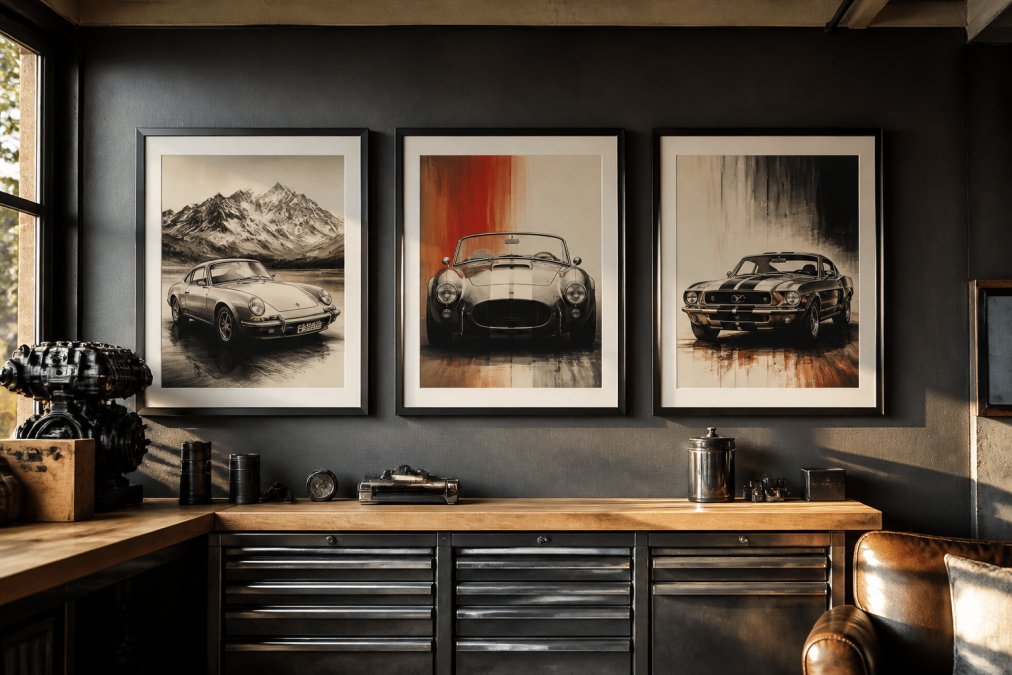
 listicle
Classic Car Prints for Man Cave: Design Ideas
Table of Contents
- Why Classic Car Prints Transform a Man Cave
- Vintage Automotive Prints and Muscle Car Wall Art
- Racing and Motorsport Imagery for Automotive Enthusiasts
- How to Frame Car Posters for Maximum Impact
- Automotive Gallery Wall Ideas and Wall Arrangement
- Authenticity, Preservation, and Lasting Value
- Interior Design Integration and Garage Aesthetics
- Conclusion
- Frequently Asked Questions
Last Updated: September 18, 2026
Why Classic Car Prints Transform a Man Cave
Classic car prints for man cave spaces do more than fill wall space, they anchor a room's personality and tell the story of what matters to you. Whether you're drawn to the aggressive curves of muscle cars, the timeless elegance of vintage roadsters, or the raw speed of racing legends, the right automotive art transforms a garage or study into a reflection of your passion.
The shift toward curated automotive imagery has gained momentum in recent years. Fine Art Canvas research on multi-era automotive collections documents how enthusiasts are increasingly moving beyond single-era displays toward collections spanning six different periods, from 1950s tail-fin Cadillacs to 1980s Ferraris and contemporary supercars. This layered approach creates visual depth and tells a richer automotive narrative than a single iconic image alone.
Classic car prints are statements about who you are. RunwayandHeirloomArt's curated collection combines historical authenticity with artistic craftsmanship, offering distinctive and enduring automotive art.
Vintage Automotive Prints and Muscle Car Wall Art
Muscle cars from the 1960s and 1970s represent raw power distilled into steel and chrome. A well-chosen muscle car print becomes the focal point of any man cave.
Muscle car prints capture automotive rebellion and character: aggressive stance, muscular lines, and raw attitude. A 1970 Dodge Challenger or 1969 Chevelle SS print displays more than a vehicle, it displays a piece of automotive history.
RunwayandHeirloomArt's Classic Cars collection features watercolor prints that capture a vehicle's spirit rather than specifications, making classic car prints feel like fine art rather than merchandise.
Racing and Motorsport Imagery for Automotive Enthusiasts
Racing imagery captures competition, precision, and the human element of motorsport. A Formula 1 car at Monaco or vintage Le Mans racer tells the story of speed pushed to its limit.
The best racing prints feature multiple elements: the vehicle, the driver, the environment, and often the sense of motion itself. A print showing a race car mid-corner with spectators in the background creates narrative depth. Artovelo's analysis of motorsport art trends notes that enthusiasts increasingly seek prints capturing specific moments in racing history, iconic wins, legendary drivers, or pivotal races, rather than generic motorsport imagery.
Racing scenes work well in mixed-era galleries. Pair a 1960s Formula 1 car with a modern MotoGP motorcycle to celebrate speed's evolution and create visual contrast.
How to Frame Car Posters for Maximum Impact
Frame Material and Garage Durability
Glass, Acrylic, and UV Protection
Mat Selection and Acid-Free Standards
Frame Finishes and Aesthetic Coordination
Hanging Hardware and Wall Preparation
Automotive Gallery Wall Ideas and Wall Arrangement
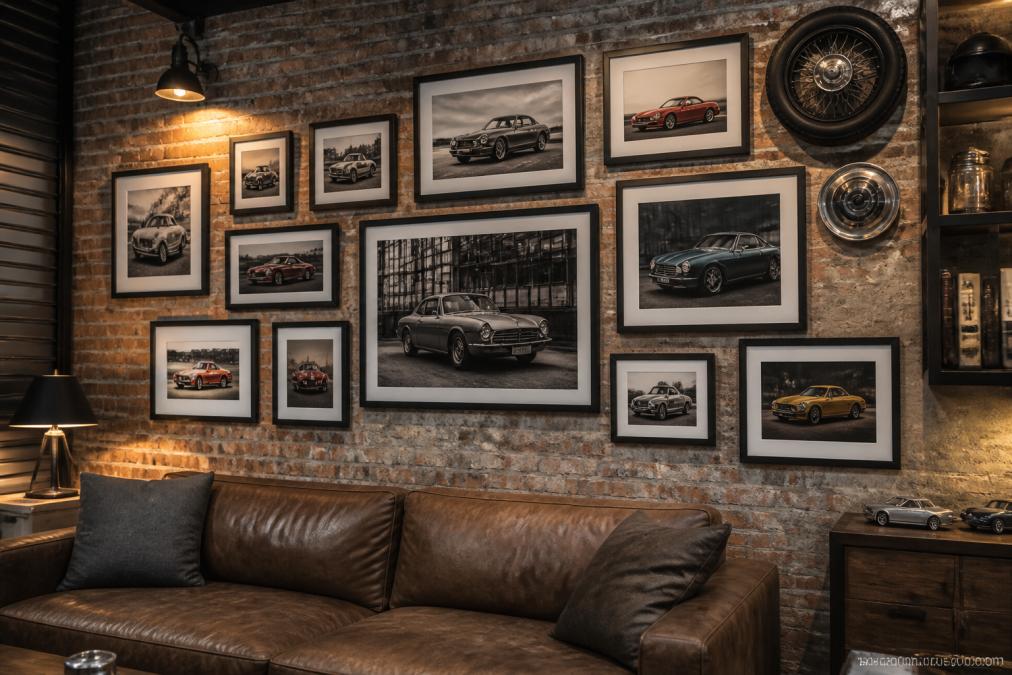
A gallery wall transforms individual prints into a unified statement. The key to successful arrangement is balancing symmetry with personality, structured enough to feel intentional, loose enough to feel authentic.
Authenticity, Preservation, and Lasting Value
Identifying Authentic Prints vs. Mass-Market Reproductions
Humidity and Moisture Management in Garage Spaces
UV Light Exposure and Color Preservation
Temperature Stability and Material Expansion
Cleaning and Maintenance Protocols
Long-Term Value and Investment Perspective
Interior Design Integration and Garage Aesthetics
Classic car prints are part of a larger space narrative. Consider color, lighting, furniture, and relationships to other elements.
The supporting keyword "automotive gallery wall ideas" encompasses the broader design challenge: creating a space that feels intentional and personal. Your gallery wall should reflect not just your taste in cars, but your design sensibility and the way you want to spend time in that space.
Conclusion
Building a man cave centered on classic car prints transforms a functional space into a personal gallery. The prints you choose become conversation starters, mood setters, and daily reminders of what you're passionate about. Whether you're drawn to muscle cars, racing history, or vintage automotive design, thoughtful curation and proper presentation elevate these prints from decoration to art.
Artovelo's research on 3D displays and authentic automotive aesthetics confirms that enthusiasts increasingly value prints that feel like genuine art rather than mass-produced merchandise. At RunwayandHeirloomArt, our Classic Cars collection delivers exactly that, watercolor prints and fine art reproductions created with the same care and intention as any gallery piece. Start with one statement print, build your gallery thoughtfully, and watch your space transform into something that feels unmistakably yours.
Frequently Asked Questions
How do you display classic car prints in a man cave?
Classic car prints work best when arranged intentionally rather than scattered randomly. Thoughtful arrangement and lighting can highlight automotive imagery and create depth.
What are the best types of frames for vintage car prints?
Vintage car prints benefit from frames that complement their era without overwhelming them. Consider framing to ensure longevity and preserve the automotive artwork's visual impact.
How do I choose the right size wall art for a garage or man cave?
Size depends on wall space and viewing distance. Consider how prints relate to existing automotive memorabilia, tools, and furniture. Oversized prints create impact in open spaces, while smaller pieces work better in compact man caves or offices.
How do I arrange multiple car prints on a single wall?
Start with a focal point, your largest or most striking automotive print, then build around it. Sketching your layout on paper first, then marking positions on the wall before hanging can prevent mistakes and ensure your gallery wall feels intentional rather than random.