 listicle
How to Choose Nursery Design Trends That Last
Last Updated: October 27, 2026
Quick Summary
The latest nursery design trends move away from cool gray and stark beige toward warm, earthy palettes, color-drenched walls, and expressive rooms grounded in softness and simplicity. Nursery design in 2026 mixes soft neutrals and pastels with richer accents like olive, rust, and chocolate brown.
- Warm, earthy palettes are replacing cool gray and stark beige in nurseries.
- Color washing means using one tone across walls, trim, and ceiling for a cocoon effect.
- Choose a single hero pattern and keep everything else in the room quiet.
- Pick one base, one accent, and one metal or wood tone, then repeat two of the three.
- Leave one wall relatively open so the room can be rearranged without repainting.
Table of Contents
- Nursery Design Trends Worth Following Right Now
- Nursery Color Trends: Soft Neutrals, Pastels, and Richer Tones
- Wallpaper, Prints, and Pattern Without the Clutter
- Nursery Wall Art Ideas That Carry the Room
- Gender-Neutral Nursery Ideas and Playful Motifs
- Nursery Ideas That Grow With Baby: Furniture, Layout, and Budget
- What to Ignore Before You Buy a Single Print
- Start With One Wall and One Story
- Frequently Asked Questions
Nursery Design Trends Worth Following Right Now
Nursery design is shifting away from the cool gray and stark beige that dominated for years, and toward rooms that feel warmer, more personal, and more expressive. Nursery design can include earthy browns, color-drenched walls, and rooms that tell a story rather than follow a theme. Below, we break down what is worth adopting and what to skip.
Warm Palettes Replacing Cool Gray
Brown is back, and it is not the muddy brown of a decade ago. 2026 nursery decor trend predictions point to warm, earthy palettes replacing cool gray and stark beige, alongside color-drenched rooms where walls, trim, and ceiling share one tone. In practice, this means a room feels wrapped rather than boxed in. Pair a warm wall with cream and rust accents and the space reads calm instead of cold.
Expressive Rooms Without Heavy Themes
The other big shift is toward rooms that feel personal without being literal. Pehr's 2026 nursery trends report describes parents moving away from heavily themed rooms toward design that stays expressive but grounded in softness and simplicity. A single strong motif, repeated with restraint, does more than a room covered in matching characters.
Nursery Color Trends: Soft Neutrals, Pastels, and Richer Tones
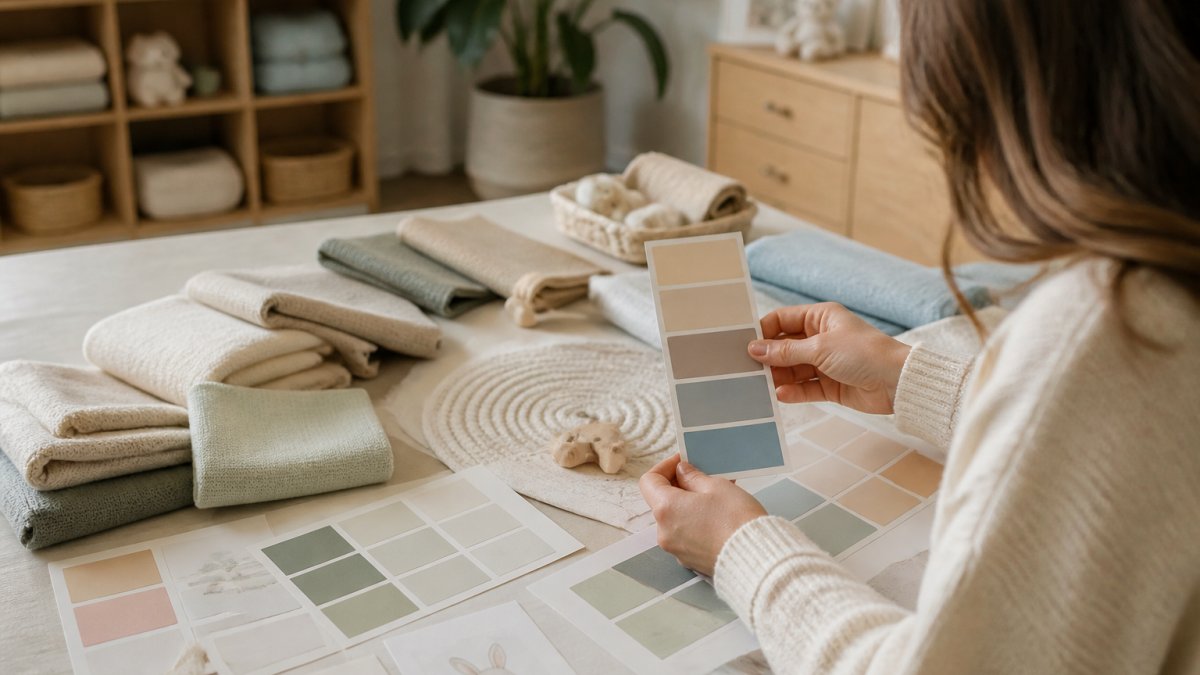
Nursery color trends in 2026 run on two tracks at once: soft neutrals and pastels for calm, and richer tones for character. The mistake most parents make is choosing one track and abandoning the other. The rooms that photograph well and live well mix both, letting a deep olive or terracotta accent sit against a soft cream base.
- Soft neutrals: oatmeal, warm white, mushroom, and sand as the base
- Pastels with warmth: peach, butter yellow, and sage rather than icy blue and pink
- Richer tones: olive, rust, and chocolate brown as accents
- Color washing: one tone across walls and trim for a cocoon effect
Paint Safety Before Paint Color
Before you fall in love with a swatch, check what is in the can.
Making Richer Tones Work in a Small Room
A deep olive or terracotta accent wall can make a small room feel intentional rather than cramped if you follow two rules: keep the ceiling and trim light, and repeat the accent color at least twice (a print, a rug, a pillow) so it reads as a choice rather than an accident. Color washing, one tone across walls, trim, and ceiling, is the exception: it works best in rooms with good natural light, because a single dark tone in a dim room reads as a cave.
Renter-Friendly Color
If you cannot paint, removable wallpaper and large framed prints carry the color story instead. Choose a removable wallpaper with a stated adhesive type and test a small patch on an inconspicuous wall first; some adhesives pull paint on removal. A washable rug in the accent color does the same job with zero wall risk.
A Palette You Can Verify
If you are building a palette and want art that matches it, our guide to art for nursery color palettes walks through specific pairings. The practical test: pick one base, one accent, and one metal or wood tone, then check that every print and textile in the room uses at least two of the three. That constraint keeps a two-track palette from turning into a mismatch.
Wallpaper, Prints, and Pattern Without the Clutter
Pattern works best in a nursery when it has one clear home. Choose a single hero pattern, such as a wallpaper or a striped accent wall, and keep everything else quiet. Two competing patterns in a small room read as noise, not personality. A common mistake is layering a busy wallpaper with a busy rug and a busy crib skirt, then wondering why the room feels restless.
Stripes, Murals, and Artful Feature Walls
Stripes are the most forgiving pattern for a nursery because they add height and structure without demanding matching accessories. Murals and hand-painted feature walls carry more risk: they are expensive to change and can date quickly. A removable mural or a large framed print gives you the artful wall effect with an exit strategy. 2026 nursery design direction guide lists biophilic elements and versatile pieces among the directions shaping rooms now, and both argue for flexible wall treatments over permanent paint.
Nursery Wall Art Ideas That Carry the Room
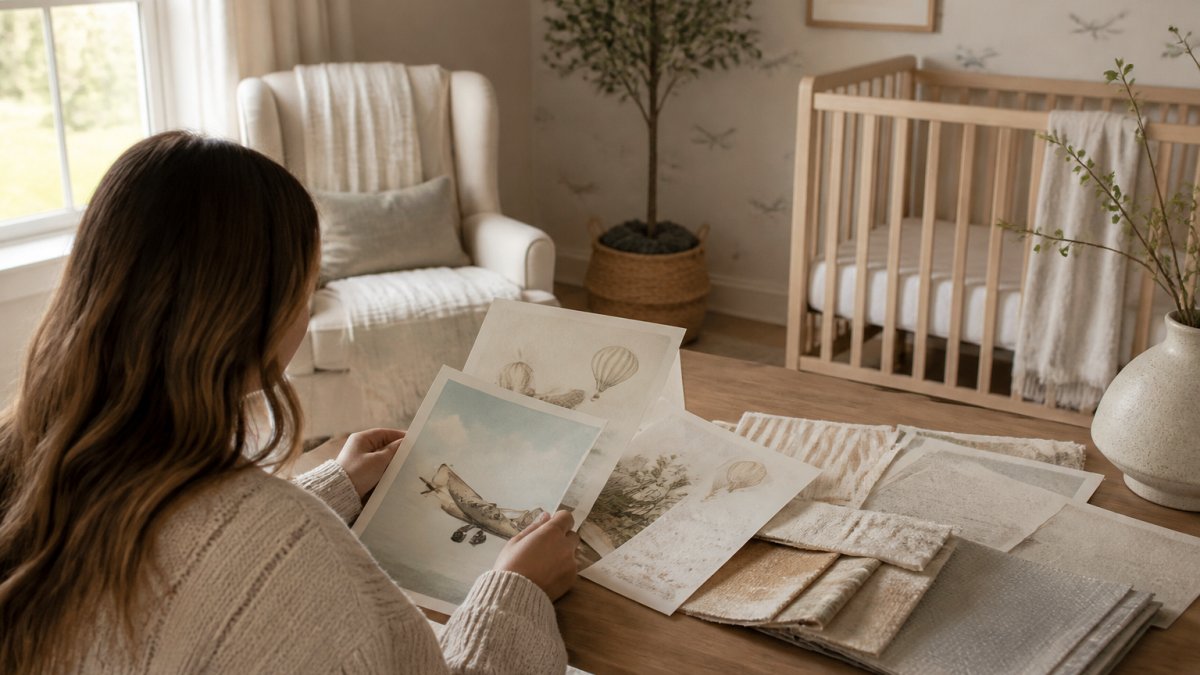
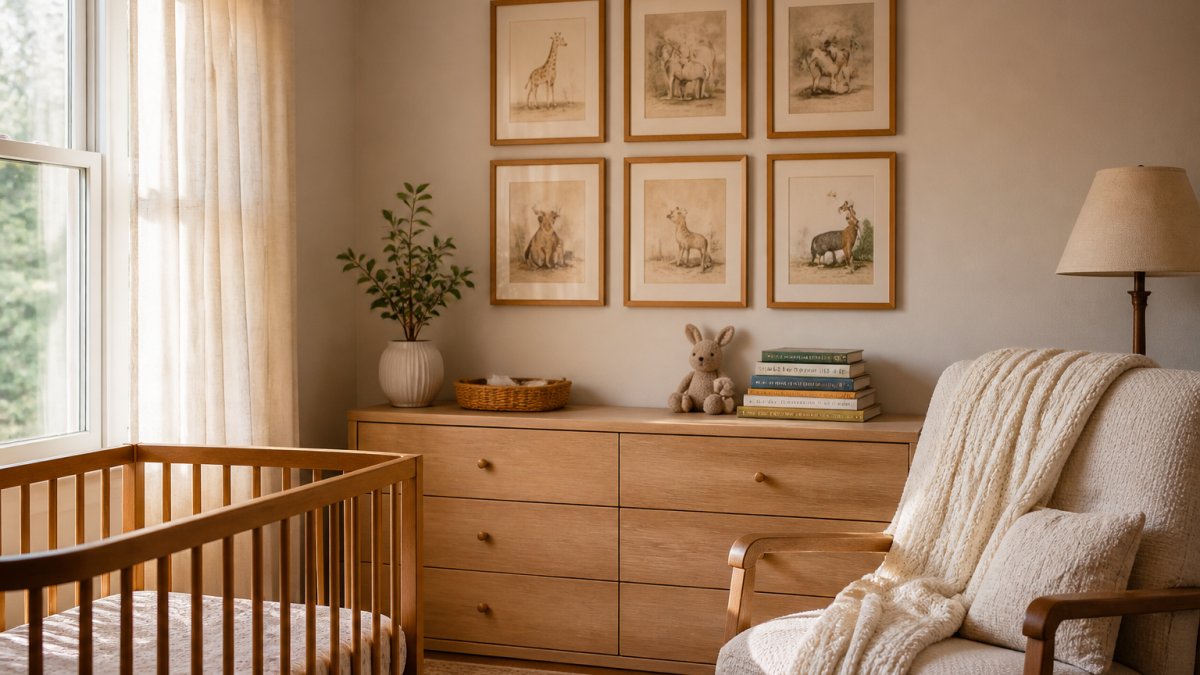
Nursery wall art ideas work best when the art does a job the furniture cannot: it carries the room's story. A gallery of three to five framed prints above a dresser anchors the space and gives the eye somewhere to land. Scale matters more than quantity. For practical guidance on printable nursery wall art and how to print it well, see our full guide.
Gender-Neutral Nursery Ideas and Playful Motifs
Gender-neutral nursery ideas have moved past gray-and-white into rooms with real personality. The strongest approach is to choose motifs tied to curiosity rather than gender: animals, vehicles, weather, and storybook scenes all age well.
Animals, Teddy Bears, and Whimsical Themes
Animal motifs and teddy bears can be playful themes. They are easy to scale back as a child grows. Whimsical themes, such as hot air balloons or storybook landscapes, work when they are limited to one wall or one gallery rather than spread across the whole room.
Nursery Ideas That Grow With Baby: Furniture, Layout, and Budget
Nursery ideas that grow with baby depend on three decisions made early: convertible furniture, a layout with room to change, and a budget split that leaves money for the pieces you will keep. A crib that converts to a toddler bed and a dresser that doubles as a changing station both extend the room's life. The same longevity logic applies to what goes on the walls, which is why we rounded up nursery wall art collections that grow up with your child. On layout, leave one wall relatively open so the room can be rearranged without repainting.
Convertible Furniture: What to Look For
A convertible crib typically moves from crib to toddler bed to daybed, and some convert to a full-size bed with a separate conversion kit. Two practical checks before you buy:
- Confirm the conversion kit is included or still sold. Kits are often discontinued before the crib is, which strands the conversion. Buy the kit at the same time as the crib if it is sold separately.
- Check the crib against current safety rules. Full-size cribs sold in the United States must meet the federal crib standard (16 CFR Part 1219) and the Consumer Product Safety Commission's rules on crib slats, hardware, and mattress fit; drop-side cribs are banned. A crib that converts is still a crib and must meet the same standard.
- Anchor the dresser. The CPSC's furniture tip-over guidance and the STURDY Act (which directed a mandatory stability standard for clothing storage units) make anti-tip anchoring non-negotiable, especially for a dresser that doubles as a changing station.
Layouts That Survive the Toddler Years
Leave one wall relatively open so the room can be rearranged without repainting. Keep the crib away from windows and window-treatment cords, the CPSC and window-covering safety standards treat accessible cords as a strangulation hazard, so choose cordless shades or a cord-cleat system. A rug that covers most of the floor protects against falls when the crib becomes a toddler bed.
Budget Tiers With Real Numbers
Budget planning is where most guides go quiet. A practical split is to spend on the items that stay longest, furniture and framed art, and save on items that get outgrown, such as bedding and small accessories. Realistic U.S. price bands for a nursery refresh:
| Tier | What it covers | Typical spend |
|---|---|---|
| Lean | Convertible crib, basic dresser, one framed print, cordless shade | $600-$1,200 |
| Mid | Convertible crib with kit, solid-wood dresser, rug, two to three framed prints, dimmable lamp | $1,500-$3,000 |
| High | Designer crib and dresser, custom mural or wallpaper, layered lighting, gallery of framed art | $4,000-$8,000+ |
These are planning ranges, not quotes; prices vary by region and brand. The point is to decide the tier before you shop so a single splurge does not crowd out the pieces you will keep for a decade.
Renter-Friendly and Small-Room Moves
If you cannot paint or renovate, treat the walls as temporary: removable wallpaper, a large framed print or removable mural, and a washable rug do most of the design work and come down without a trace. In a small room, put the crib on the longest wall, use a dresser as both changing station and storage, and hang art high enough to stay out of reach.
What to Ignore Before You Buy a Single Print
Before you buy a single print, ignore three pieces of advice you will see everywhere. First, ignore the pressure to match a "theme"; a cohesive palette does more than a matching set. Second, ignore cheap frames with non-archival mats, which yellow and buckle. Third, ignore any print sold without a stated paper and ink type.
Watch out: hanging a heavy frame above a crib without a proper wall anchor is the most common safety mistake in nursery decorating. Our step-by-step guide to how to hang nursery art safely covers anchors, placement, and hardware. Mount art away from the crib and use hardware rated for the frame's weight.
Start With One Wall and One Story
Start with one wall and one story, then let the rest of the room follow. Choose a single wall, decide what it should say about your child or your family, and build outward from there. That approach keeps the budget controlled and the design coherent. If you want help putting this advice into action, our parent's guide to how to choose art for nursery walks through it step by step.
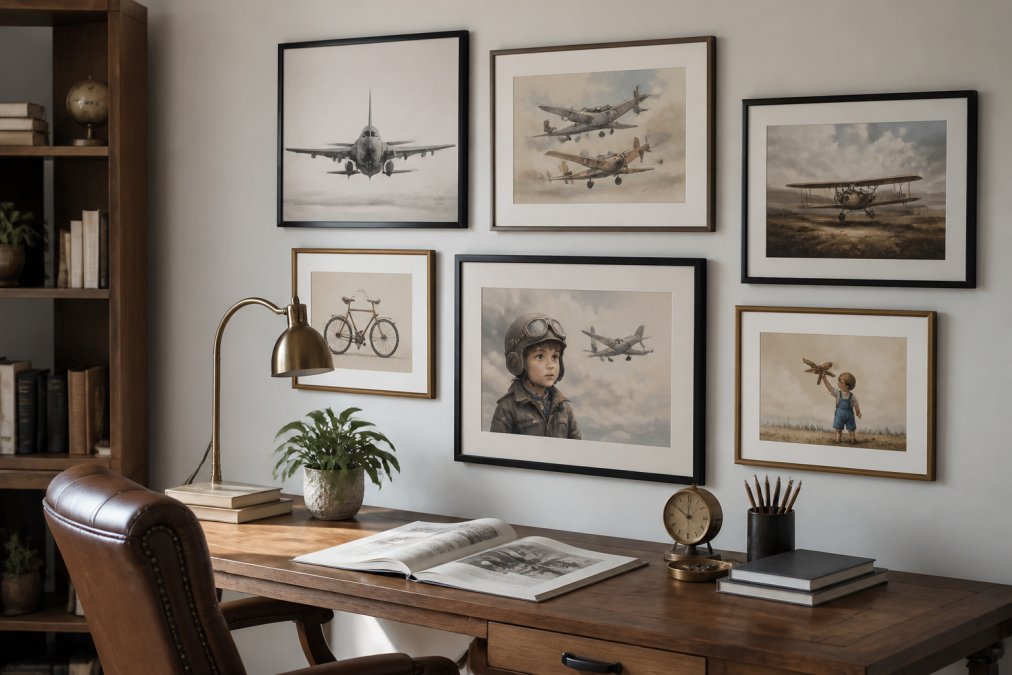
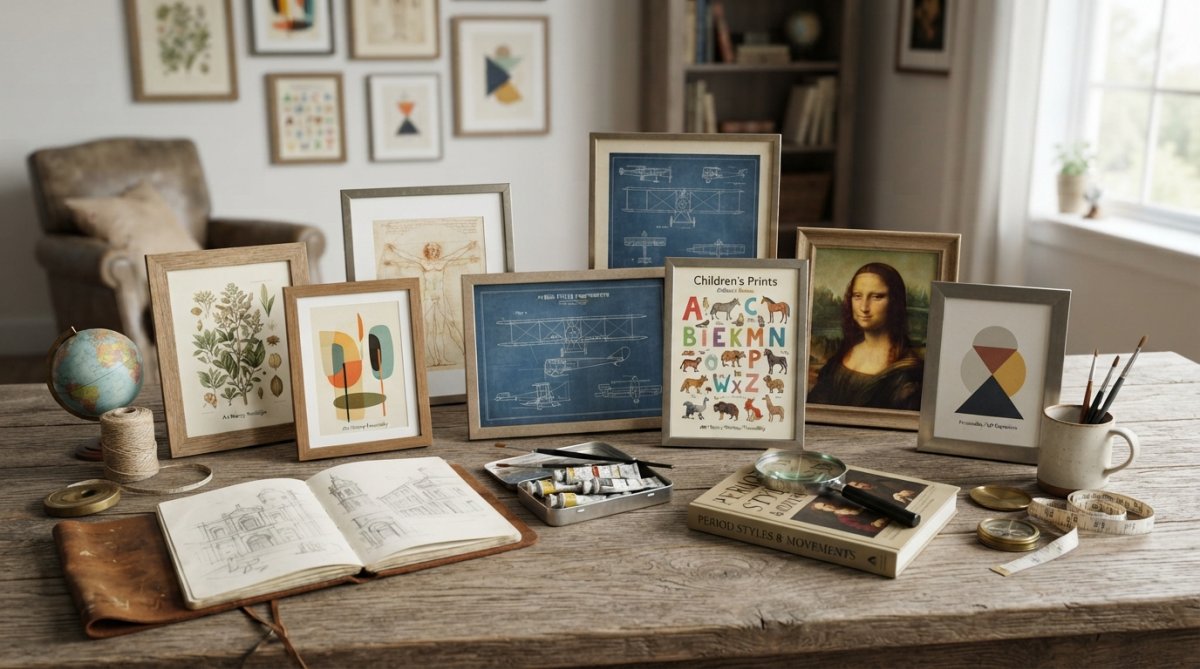
Runway & Heirloom offers art-history-inspired pieces, Watercolor Nursery Art, and historic aviation artwork for studies or offices. Browse the collection to find a piece that becomes part of your room's story.
Frequently Asked Questions
What nursery colors are trending right now?
Brown palettes, soft neutrals, and color-drenched rooms appear in 2026 trend predictions, alongside calming pastels. The practical move is to pick one warm base for walls and let richer color come in through textiles and art rather than paint. That way, if your taste shifts in two years, you swap a print or a throw instead of repainting the whole room.
Are themed nurseries still in style?
You can still honor a passion, whether that is aviation, trains, or classic cars, by letting one or two framed pieces carry the theme instead of covering every surface. A single well-chosen print reads as intentional; a room of matching motifs reads as a catalog page.
What wall art works best in a nursery?
Runway & Heirloom offers watercolor nursery art and historic aviation prints.
How can I design a nursery that grows with my child?
Start with convertible furniture, a layout that leaves floor space, and art that does not depend on a baby motif. A crib that converts to a toddler bed and a dresser that doubles as a changing station carry you through the first five years. Gender-neutral nursery ideas help here too: soft neutrals, nature-inspired prints, and warm wood tones suit a newborn and a six-year-old equally. Add personality through removable wallpaper and framed prints rather than paint and built-ins.
Choosing nursery art that survives the toddler years and still feels right in a school-age room is harder than it looks. RunwayandHeirloomArt curates prints built around story and longevity, from watercolor nursery pieces to art-history-inspired prints, so the art you choose now still belongs on the wall years later. Explore the collection and find the piece that starts your room's story.