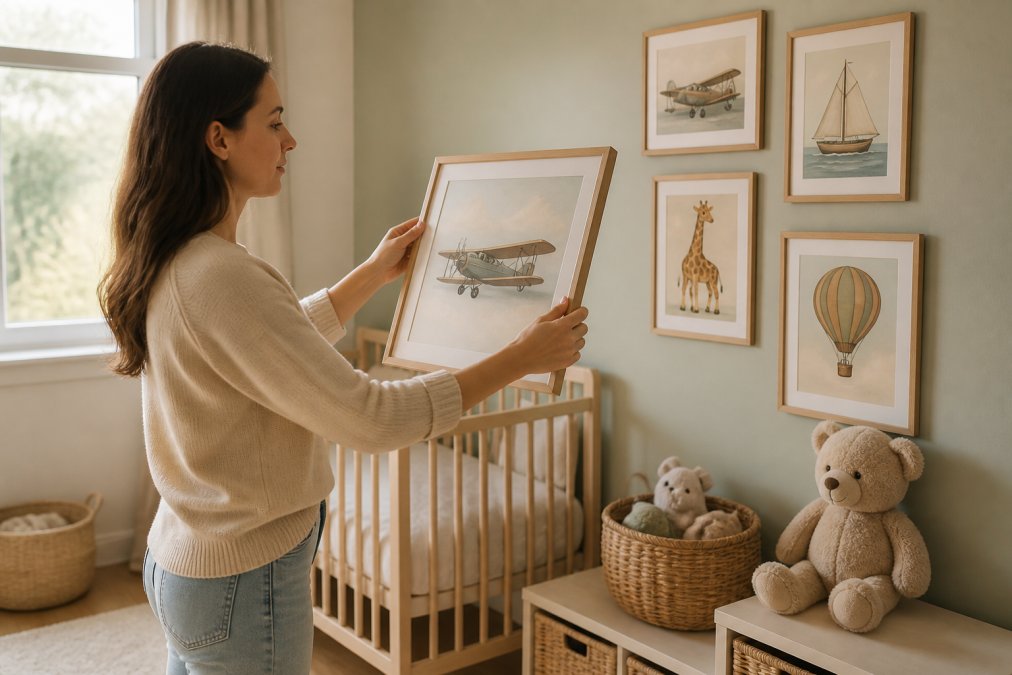
 ultimate-guide
How to Choose Art for Nursery: A Parent's Guide
Table of Contents
- Start with Your Color Palette
- Understand Scale and Proportion for Your Space
- Choose Art That Grows With Your Child
- Nursery Wall Art Ideas: Finding Your Aesthetic
- How to Hang Nursery Art Safely and Securely
- Creating a Gallery Wall Layout for Nursery
- Developmental Benefits and Sensory Considerations
- Maintenance, Longevity, and Investment Value
- Frequently Asked Questions
Last Updated: August 18, 2026
The global nursery wall art prints market reached USD 1.28 billion in 2024, with projections to grow to USD 2.23 billion by 2033. Yet choosing art for nursery spaces remains overwhelming for new parents. You want something beautiful, age-appropriate, and meaningful, art that lasts beyond infancy without looking dated by age three.
At RunwayandHeirloomArt, we understand that nursery art influences your child's developing brain, sets the room's aesthetic tone, and either grows with them or forces redecoration within years. This guide breaks down how to choose art for nursery spaces in a way that honors both your design vision and your child's developmental needs.
Start with Your Color Palette
Your color palette is the foundation for every design decision. It determines which artworks feel cohesive and whether your nursery feels intentional or chaotic.
Contemporary design now embraces warmer, more complex palettes over the all-white minimalist nurseries of the past decade. Neutral-adjacent colors like sage green, slate blue, mauve, rust, and clay tones are gaining momentum because they feel fresh while remaining calming, essential for a space where a baby needs to sleep.
If your nursery features existing furniture, flooring, or wall color, your art palette should complement rather than compete. A sage green wall pairs beautifully with warm terracotta prints and cream-toned frames. Research is clear: overly bright or saturated colors can overstimulate babies and interfere with sleep. Soft, muted tones create a calming environment that transitions well as your child grows.
Understand Scale and Proportion for Your Space
Scale matters more than most parents realize. A single large-scale print creates visual impact and becomes a focal point. Multiple small prints scattered across the wall feel busy and fragmented.
Measure your wall space before selecting art. For a standard nursery wall, a 24x36-inch print works well as a standalone focal point. If planning a gallery wall, use a mix of sizes ranging from 5x7 inches up to 16x20 inches, arranged with intentional spacing.
Hang art at eye level, roughly 57-60 inches from the floor to the center of the artwork. This feels natural when holding your baby and creates visual balance. Proportion also applies to the relationship between artwork and furniture. A small print above a large dresser looks insignificant, while a massive canvas above a delicate changing table feels unbalanced.
Choose Art That Grows With Your Child
Most nursery design advice fails here: parents invest in beautiful infant-specific artwork, only to need complete redesign when their child turns three or four.
The solution is choosing art that transcends the infant stage. Fine art, nature-inspired prints, and art-history-inspired pieces have longevity that novelty nursery art doesn't. A watercolor landscape or abstract composition works in an infant's nursery and continues working in a five-year-old's bedroom. A print of Van Gogh's "The Starry Night" or a botanical study remains relevant as your child grows.
Research supports this: babies' preferences for Van Gogh mirrored adult preferences, suggesting certain visual biases are present in infancy. You're not compromising artistic quality by choosing sophisticated prints; you're providing visual stimulation that aligns with how your child's brain naturally responds to art.
Avoid art too specific to infancy or particular themes. Oversized bunnies, primary-color alphabet prints, and cutesy animal characters feel dated quickly. Instead, select artwork that coordinates well, is interesting, and can grow with your child or move to other rooms. At RunwayandHeirloomArt, the approach centers on pieces inspired by art history, aviation, nostalgia, and imagination, artwork that works in a newborn's room and remains relevant through childhood.
Nursery Wall Art Ideas: Finding Your Aesthetic
Your aesthetic choices should reflect both the room's function and your family's personality. The nursery is your child's space, but it's also a room you'll spend significant time in during nighttime feedings and quiet moments.
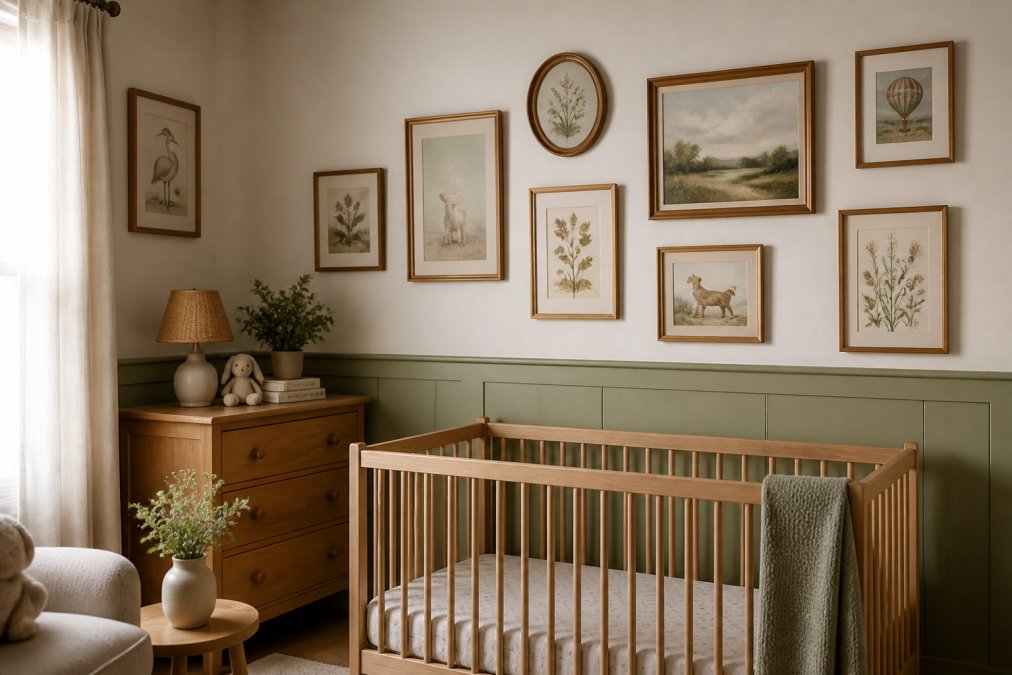
Nature-inspired nursery decor remains consistently strong. Botanical prints, landscape watercolors, and wildlife illustrations create a calming visual environment while teaching your child about the natural world. These pieces work in any color palette and age gracefully.
Animal-themed wall art works when executed with restraint. Rather than cartoon animals, consider realistic or stylized illustrations of birds, deer, or woodland creatures. These feel more mature and transition better into older childhood.
Gallery walls have become increasingly popular, moving away from single focal-point designs. A well-curated gallery wall tells a story, perhaps mixing family moments, nature prints, and art-history pieces. The key is cohesion, your gallery wall should feel like a curated collection, not a random assortment.
Personalized and meaningful art pieces carry emotional weight. This might include a custom print featuring your child's name, artwork referencing family heritage, or a piece capturing a specific memory.
How to Hang Nursery Art Safely and Securely
How to hang nursery art safely goes beyond aesthetics, it's a critical safety consideration. Every artwork must be securely fastened and installed according to proper standards.
Use appropriate mounting hardware for your wall type. For drywall, heavy-duty picture hangers rated for your frame's weight are essential. For plaster walls, toggle bolts provide better holding power. Never rely on nails alone for artwork heavier than a few pounds.
Placement height matters for safety and aesthetics. Hang artwork high enough that your child cannot reach it once climbing or standing. Place the center at least 5-6 feet from the floor, well above toddler reach.
Avoid placing artwork directly above the crib or changing table. If a frame fell, it could injure your baby. Position art on adjacent walls or at a safe distance instead.
Check installations periodically. Vibrations from doors, footsteps, and normal activity can loosen hardware over time. A monthly visual check ensures everything remains secure.
For renters or those preferring not to drill, adhesive picture hangers designed for temporary installation can work for lighter frames under 5 pounds. Read weight specifications carefully and test on a less visible wall first.
Creating a Gallery Wall Layout for Nursery
A gallery wall layout requires planning, but the visual impact justifies the effort. A well-designed gallery wall becomes the room's signature design element.
Start with a design plan. Lay your framed pieces on the floor in your desired arrangement before hanging a single nail. Take a photo for reference. This prevents mistakes and saves unnecessary holes.
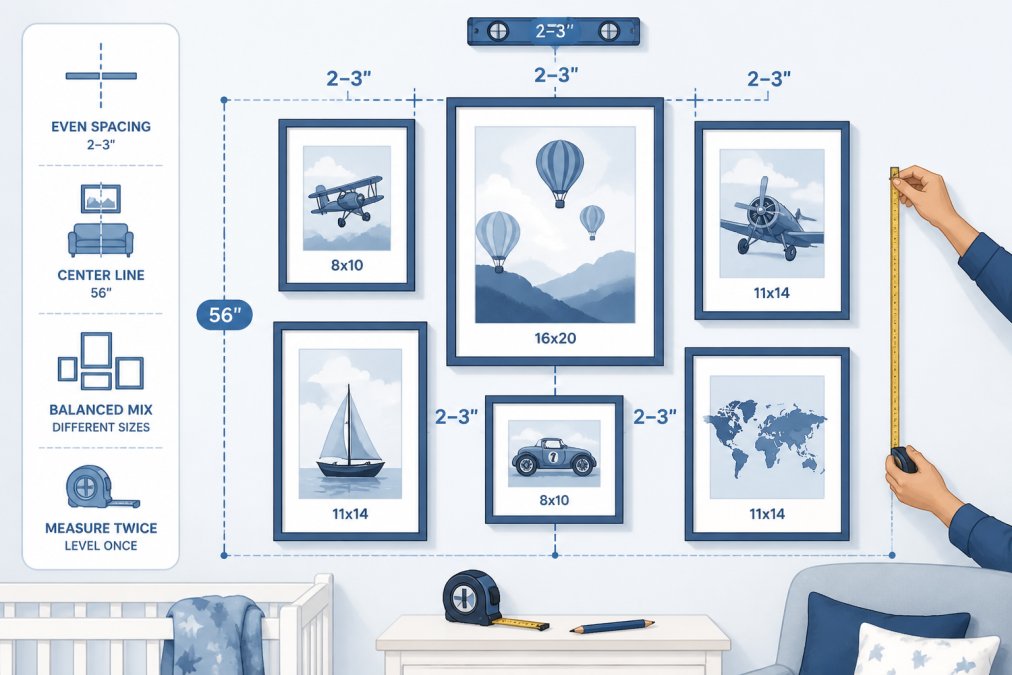
Spacing is critical. Maintain 2-3 inches between frames for a cohesive, intentional look. Too much space makes the gallery wall feel disconnected; too little feels cramped. Consistency in spacing creates visual harmony, even when frame sizes vary.
Consider your layout pattern. A grid arrangement (equal-sized frames in straight rows) feels modern and structured. An organic arrangement (varied sizes in asymmetrical pattern) feels more eclectic. Both work in nurseries, choose based on your aesthetic preference.
Measure twice, hang once. Use a level and measuring tape to mark precise hanging points. A stud finder helps locate studs for heavier arrangements. Mark holes lightly in pencil before drilling, allowing adjustments if needed.
The focal point should be at eye level (57-60 inches from the floor to the center of your arrangement). This creates natural visual balance.
Developmental Benefits and Sensory Considerations
Understanding the developmental benefits of art transforms how you approach selection. Art isn't just decoration, it's a tool for visual development and cognitive stimulation.
According to the National Endowment for the Arts research on arts in early childhood, at-home arts engagement of toddlers, preschoolers, and kindergarteners was positively correlated with social-emotional attributes and cognitive outcomes. Young people who participate regularly in the arts are four times more likely to be recognized for academic achievement and participate in math and science fairs.
Infants benefit from visual contrast and complexity. High-contrast patterns and varied color combinations stimulate visual development. However, the goal isn't overstimulation, it's providing enough visual interest to engage your baby's developing brain without creating sensory chaos. Soft, muted artwork with some visual complexity strikes this balance.
Children whose parents engage them with art show measurable cognitive benefits. Pre-teens with regular exposure to visual arts have higher levels of creative thinking skills compared to their peers. The art you select for your nursery is an investment in your child's cognitive development.
Maintenance, Longevity, and Investment Value
Your nursery art is an investment requiring consideration of longevity and maintenance. Choosing quality prints and proper framing protects your investment and ensures artwork lasts for years.
Print quality varies dramatically. Digital prints on standard paper fade within 2-3 years, especially in rooms with natural light. Archival-quality prints on acid-free paper resist fading for decades.
Framing matters as much as the print itself. UV-protective glass blocks harmful light and prevents fading. Acid-free matting and backing prevent deterioration. Proper framing transforms a print into a lasting piece that can be passed down or moved to other rooms.
Maintenance is straightforward. Dust artwork gently with a soft, dry cloth every few months. Avoid glass cleaner or water, which can damage the print. Keep artwork away from direct sunlight to prevent fading.
Quality artwork you select thoughtfully will outlast your child's infant years. The best nursery art is art you'll be happy to display in other rooms as your child grows.
Choosing art for nursery spaces is one of the most personal design decisions you'll make as a parent. The art you select shapes your child's visual environment during their earliest years and sets the tone for how you want their room to feel. RunwayandHeirloomArt offers a thoughtfully curated collection of prints designed to grow with your child, from sophisticated nature-inspired pieces to art-history-inspired artwork that brings character and imagination to any nursery. Start with your color palette, prioritize longevity over trends, and select artwork that tells a story. Your nursery will be all the richer for it.
Frequently Asked Questions
How do I choose nursery art that won't look too babyish as my child grows?
Select timeless pieces with artistic merit rather than overly themed designs. Nature-inspired prints, classic color palettes, and sophisticated illustrations age gracefully. Avoid art that's too specific to infancy or trendy characters. High-contrast prints and gallery-style pieces work well for newborns and remain visually interesting for older children. Quality matters: curated art from established collections maintains its appeal across developmental stages, whereas cheap, character-focused prints quickly feel outdated and require replacement.
What role does nursery wall art play in child development?
Visual art stimulates infant development and supports cognitive growth. Research shows children who participate regularly in arts activities are four times more likely to be recognized for academic achievement. At-home arts engagement correlates with positive social-emotional attributes and cognitive outcomes. High-contrast prints support visual development in newborns, while colorful, varied artwork encourages focus and planning skills in pre-teens. Art exposure teaches visual interpretation and critical thinking skills that extend beyond aesthetics into academic performance.
How do I know if wall art will actually last and not fade over time?
Quality materials determine longevity. Look for fade-resistant inks, archival-grade paper or canvas, and UV-protective framing. Digital prints from established art studios offer better durability than mass-produced alternatives. Avoid direct sunlight exposure by positioning art on walls away from windows. Proper framing with museum-quality glass protects prints from fading and environmental damage. Curated art collections designed as heirlooms use superior materials and printing techniques that withstand years of display without color loss or deterioration.
What's the difference between choosing art for a small nursery versus a larger room?
Scale matters significantly. In small spaces (under 100 sq ft), vertical wall arrangements and a single focal point prevent overwhelming the room. Use an 8x10 rug and go vertical with storage to maximize the area. Large-scale pieces can make small rooms feel cramped, so opt for medium-sized prints or a curated gallery wall with varied sizing. In larger nurseries, bold statement pieces and expansive gallery walls create visual interest without feeling cluttered. Match art scale to wall space: smaller walls need proportionally smaller art, while larger walls accommodate bigger focal pieces.
This article was written using GrandRanker