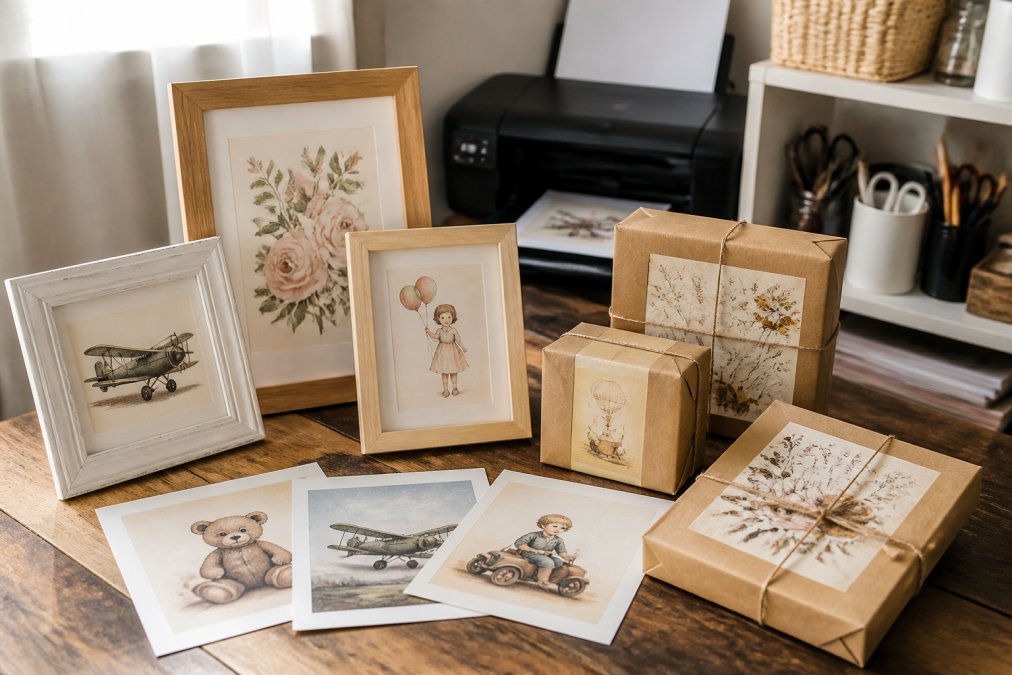
 listicle
Printable Gift Ideas: 12 Creative DIY Presents for 2026
Table of Contents
- Why Printable Gift Ideas Are Taking Over 2026
- 12 Printable Gift Ideas That Feel Personal, Not Generic
- The Best Paper for Printing Art at Home
- How to Frame Printable Art So It Looks Like a Gallery Piece
- Last Minute Printable Gifts You Can Deliver Today
- How to Wrap and Present Printable Gifts
- Eco-Friendly Printable Gifting: Less Waste, More Meaning
- Conclusion: Choosing Printable Gifts That Tell a Story
- Frequently Asked Questions
Last Updated: September 15, 2026
Why Printable Gift Ideas Are Taking Over 2026
Americans are projected to spend $476 billion on gifts in 2026, according to Elle Cadeaux's gift-giving statistics report, yet a growing share of that spending is shifting toward gifts people print, cut, and assemble themselves. Printable gift ideas are digital files, delivered as PDFs or image downloads, that you print at home and turn into finished presents: framed art, gift tags, party favors, greeting cards, and even 3D paper models. This guide from RunwayandHeirloomArt covers why they work, which formats hold up, and how to present them so they look intentional rather than improvised.
The appeal is simple. You skip shipping delays and store markups, and the recipient gets something that reflects a specific interest rather than a generic shelf item. Research from ScienceDaily's coverage of customization research found that customized gifts earn higher appreciation from recipients regardless of how much time or money the giver invested. Below, we break down 12 printable gift ideas, the paper that makes them last, and how to wrap a gift that arrives as a sheet of paper.
12 Printable Gift Ideas That Feel Personal, Not Generic
The strongest printable gifts fall into four families: tags and labels, seasonal printables, jar and favor sets, and 3D paper builds. Each one solves a different gifting problem, from "I need a finishing touch" to "I need a full present by tonight."
| Category | Best For | Time to Assemble | Skill Level |
|---|---|---|---|
| Gift tags and labels | Finishing touches on wrapped gifts | 5-10 minutes | Beginner |
| Holiday printables | Christmas, birthdays, seasonal decor | 15-30 minutes | Beginner |
| Mason jar sets and favors | Teachers, neighbors, party guests | 20-40 minutes | Intermediate |
| 3D models and boxes | Standalone gifts, keepsakes | 30-90 minutes | Intermediate to advanced |
DIY Gift Tags and Labels
Gift tags are the cheapest way to make a wrapped present look considered. A printable pack of tags, labels, and mini cards costs nothing beyond paper and ink, and you can match a color scheme exactly instead of settling for whatever the store had in stock. Print on cardstock, punch a hole with a standard hole punch, and thread with twine or ribbon.
Holiday Printables for Christmas and Birthdays
Seasonal printables carry the most demand. Market data shows rising interest in DIY calendar kits and printable gift list templates, and the same buyers snap up Christmas tags, birthday banners, and printable greeting cards. The advantage over store-bought decor is repeatability: print the same design for every gift in a set, or scale it up for a banner and down for a tag.
Mason Jar Gifts and Party Favors
Mason jar gifts pair a physical container with a printed label, instruction card, or recipe tag. The jar holds the contents; the printable does the storytelling. Party favors work the same way, and a printed favor tag turns a handful of small items into something that looks assembled on purpose.
3D Printable Models and Paper Gift Boxes
3D printable models and paper gift boxes turn a flat sheet into a three-dimensional object. Downloadable STL models tagged for gift-giving are seeing growth, and paper crafters follow the same logic with fold-and-tab gift boxes. Assembly matters here: score every fold line with a ruler before folding, and the box edges come out crisp instead of crumpled.
The Best Paper for Printing Art at Home
The best paper for printing art at home is a matte or satin photo paper in the 200-300 gsm range, or a heavy cardstock if you plan to frame the print. Paper weight and finish matter more than printer brand for how a finished print reads. But paper is only half the equation. The other half is what you tell the printer to do with it, and that is the part most guides skip entirely.
Paper Types and What Each One Is For
- Matte photo paper (200-300 gsm): best for watercolor-style art and nursery prints, no glare behind glass
- Satin or luster photo paper: slightly more color depth, good for aviation and automotive subjects
- Heavy cardstock (110-130 lb): best for gift tags, labels, and folded cards
- Textured fine art paper: closest to a gallery print, but check that your printer handles thick stock
- Recycled or FSC-certified stock: the eco-friendly choice, though colors read slightly warmer than on bright-white coated paper
Printer Settings That Actually Change the Output
What most guides miss is that the printer setting matters as much as the paper. Match the media type in your print dialog to the actual stock, and choose the highest quality setting your printer offers. Standard copy paper at 20 lb will curl, show ink bleed, and look thin behind glass.
- Media type. Set this to "Matte Photo Paper," "Glossy Photo Paper," or "Cardstock" to match what is loaded. Leaving it on "Plain Paper" tells the printer to lay down less ink, and the image comes out washed out.
- Print quality. Choose "High" or "Best." Draft mode is for test prints only.
- Color management. For the most accurate color, let the printer manage color for everyday prints, but switch to your editing software's color management when you have calibrated a specific paper. Mixing the two produces muddy midtones.
- Borderless vs. bordered. Borderless printing looks cleaner for framed art but forces the printer to overspray slightly, so the image is scaled up a few percent. If exact sizing matters, print bordered and trim.
- Ink type. Dye-based inks produce more vivid color on glossy paper but fade faster. Pigment-based inks last longer and are the better choice for anything that will hang on a wall.
Color, Calibration, and Fading
A print that looks perfect on screen can come out too dark, too warm, or too saturated. Three fixes handle most of it:
- Calibrate your monitor. An uncalibrated screen is the single biggest cause of disappointing prints. A basic hardware calibrator costs less than a single custom framing job and pays for itself the first time you avoid a reprint.
- Soften the brightness. Monitors emit light; paper reflects it. Reduce screen brightness to roughly 120 cd/m² before editing anything you plan to print.
- Check the color space. Files saved in sRGB print predictably on home inkjets. Adobe RGB files can look dull unless the printer and paper profile support the wider gamut.
Fading is the long-term concern. Dye inks on uncoated paper can shift visibly within a year in direct sun. Pigment inks on coated paper, framed behind UV-filtering glass and hung away from direct light, hold color for decades. If the print is a gift someone will keep, that combination is worth the extra cost.
Troubleshooting Common Print Problems
- Banding (horizontal lines): run the printer's nozzle check and cleaning cycle. If banding persists, the print head may need alignment.
- Ink smearing on glossy paper: the printer is laying down too much ink for the media type. Switch the media setting to the correct glossy profile and slow the print speed.
- Paper jams on thick cardstock: feed sheets one at a time through the rear or manual feed tray rather than the main cassette.
- Colors too dark: the print dialog is applying a color profile twice. Turn off color management in either the printer driver or the editing software, not both.
How to Frame Printable Art So It Looks Like a Gallery Piece
Framing is what separates a printout from a piece of art. A printed sheet dropped into a frame looks flat and cheap.
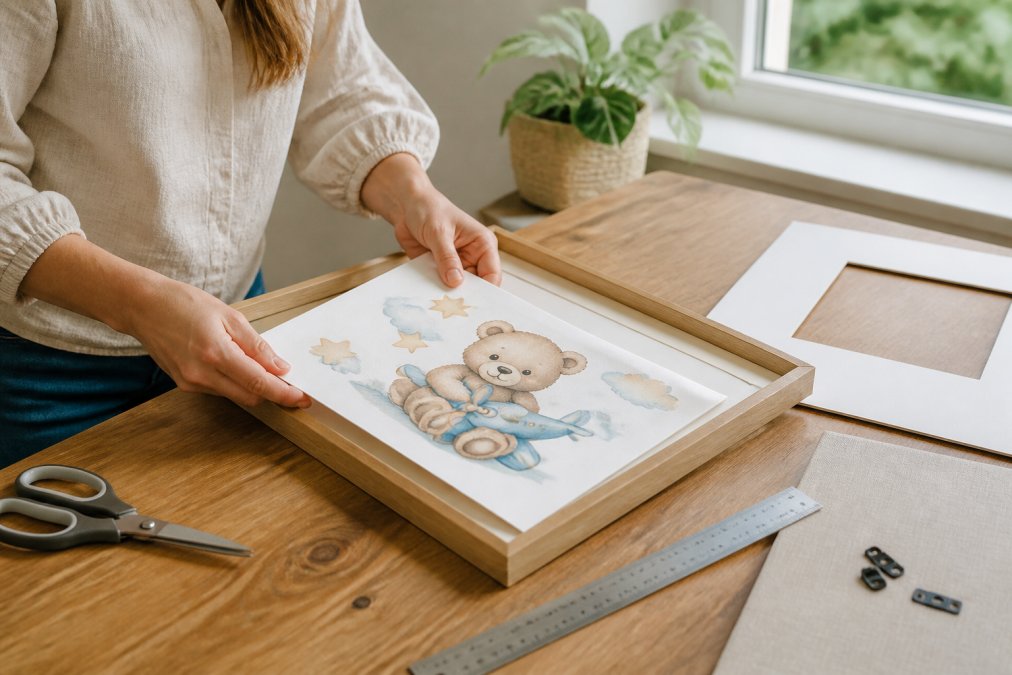
Follow these steps for a clean result:
Last Minute Printable Gifts You Can Deliver Today
How to Wrap and Present Printable Gifts
Eco-Friendly Printable Gifting: Less Waste, More Meaning
Conclusion: Choosing Printable Gifts That Tell a Story
Frequently Asked Questions
What are some cool gifts I can make from paper?
Paper gifts cover more ground than most people expect. You can print custom gift tags, mini books, mason jar labels, party favors, and full art prints for framing. DIY calendar kits and printable gift questionnaires are also trending for 2026. The key is choosing a template that matches the recipient's interests, then printing on quality cardstock so the finished piece feels substantial rather than flimsy.
What is the best paper for printing high-quality gift art?
For art prints, matte photo paper or fine art paper between 200 and 300 gsm gives the richest color and a texture that reads as gallery-quality. Cardstock works well for gift tags and labels. Always check your home printer's manual for maximum paper weight before buying, and run a single test print to confirm colors before committing to a full batch.
Are printable gifts considered thoughtful presents?
Research from ScienceDaily (2024) found that customized gifts earn higher appreciation from recipients regardless of the actual time or effort the giver invested. That means a thoughtfully chosen printable art print, personalized with the recipient's interests, often lands better than a generic store-bought item. The personalization is what carries the emotional weight.
How can I make printable art look professional when gifting?
Print on heavyweight matte or fine art paper, trim edges cleanly with a craft knife, and frame the piece before wrapping. A simple frame with a white mat elevates a printable dramatically. If you are short on time, roll the print into a kraft tube with a handwritten note. The presentation signals care just as much as the artwork itself.