 blog
blog
Affordable Limited Edition Prints for First-Time Homeowners
Table of Contents
- Why Limited Edition Prints Make Sense for a First Home
- How to Choose Art for a New Home Without Overspending
- Budget-Friendly Wall Art Ideas That Still Feel Curated
- How to Frame Art Prints Affordably Without Cutting Corners
- Large-Format Art Prints on a Budget: What to Know Before You Buy
- How to Verify a Limited Edition Print Is Genuinely Limited
- Conclusion: Start Your Collection With Intention
- Frequently Asked Questions
Last Updated: October 14, 2026
Why Limited Edition Prints Make Sense for a First Home
Buying a first home drains a bank account in ways nobody fully warns you about. After closing costs, movers, and the inevitable "we need a couch" moment, the idea of spending hundreds on wall art feels almost irresponsible.
A fine art print is a reproduction of an original work, produced in a controlled run and often signed or numbered by the artist. According to The Arsenale's 2026 pricing guide, fine art prints typically cost between $20 and $300, while signed limited editions by established artists can climb into the hundreds or beyond.
There's a second reason prints suit a first home: flexibility. A starter home is rarely a forever home. Prints travel well, swap between rooms easily, and don't require the insurance rider that original paintings sometimes demand.
How to Choose Art for a New Home Without Overspending
Choosing art for a new home starts with a budget you set before you browse, not after. Decide what you can spend across the whole house, then divide it by room.
Here's a simple framework to consider:
- Set a total art budget as a percentage of your furnishing budget, not your home price
- Rank rooms by visibility: living room and entry first, bedrooms and offices second
- Buy one statement piece per high-visibility room rather than five small ones
That last point matters more than it sounds. Splashworks' 2026 guide to emerging artist prints advises buyers to purchase art they genuinely love, noting that signed, low-run editions tend to hold value better than open editions but that appreciation should never be the primary reason to buy.
Match the Art to the Room, Not the Other Way Around
The most common mistake is buying a print first and then trying to build a room around it. Flip that order. Measure your wall, note your existing color palette, and identify the interior style already present. Then shop for art that fits those constraints. A large-format print in a room with low ceilings will overwhelm the space. A tiny print on a big empty wall will look like an afterthought.
Budget-Friendly Wall Art Ideas That Still Feel Curated
Budget-friendly wall art works best when you treat the wall as one composition instead of a collection of unrelated purchases.
A few approaches that consistently look intentional:
- One large piece centered on the main wall, with generous white space around it
- A triptych of three related prints from the same series or artist
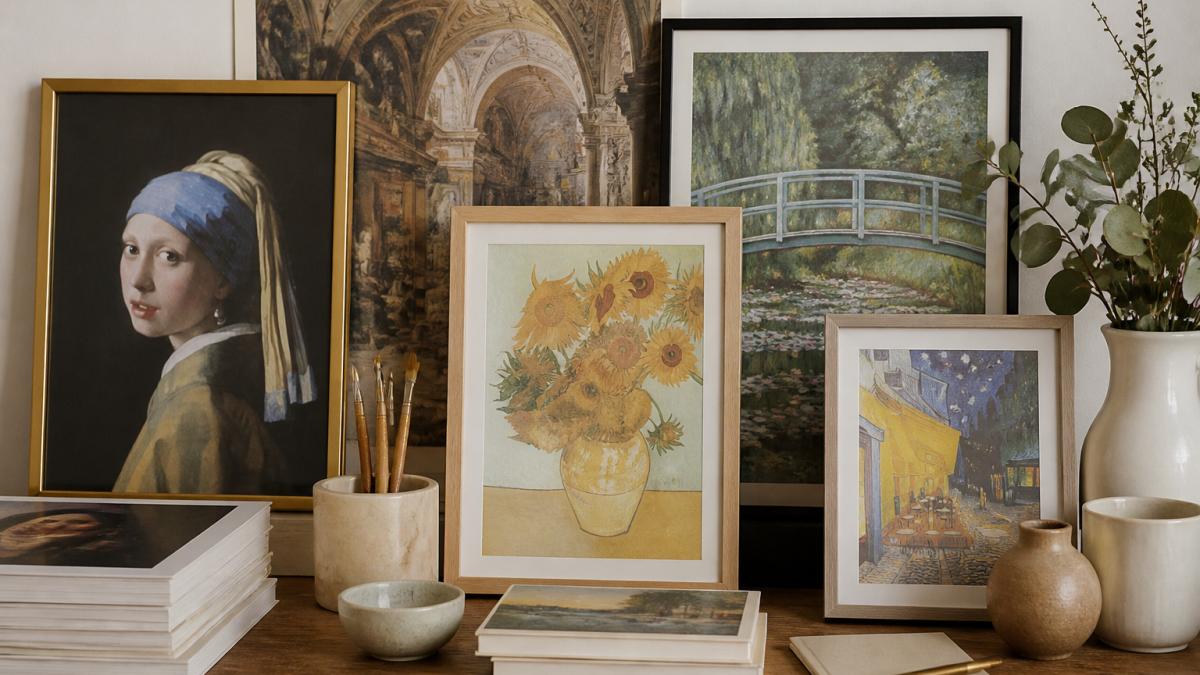
- A leaning arrangement on a console or shelf, which avoids hanging costs entirely
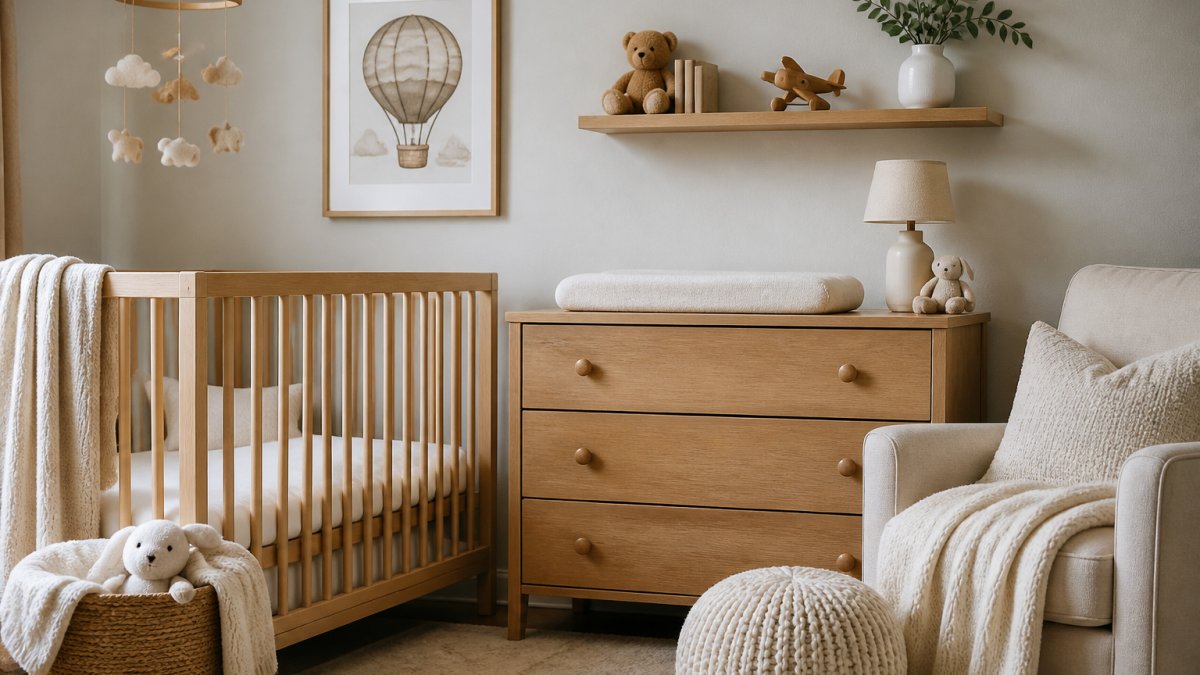
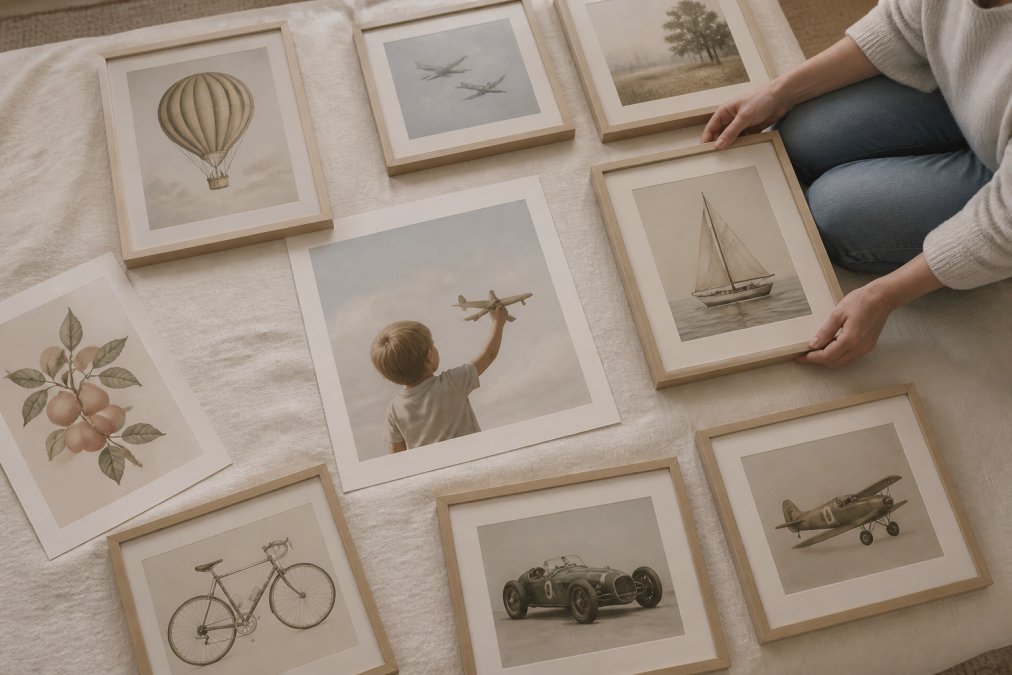
- A themed cluster: nursery prints in one room, aviation or classic car prints in a study
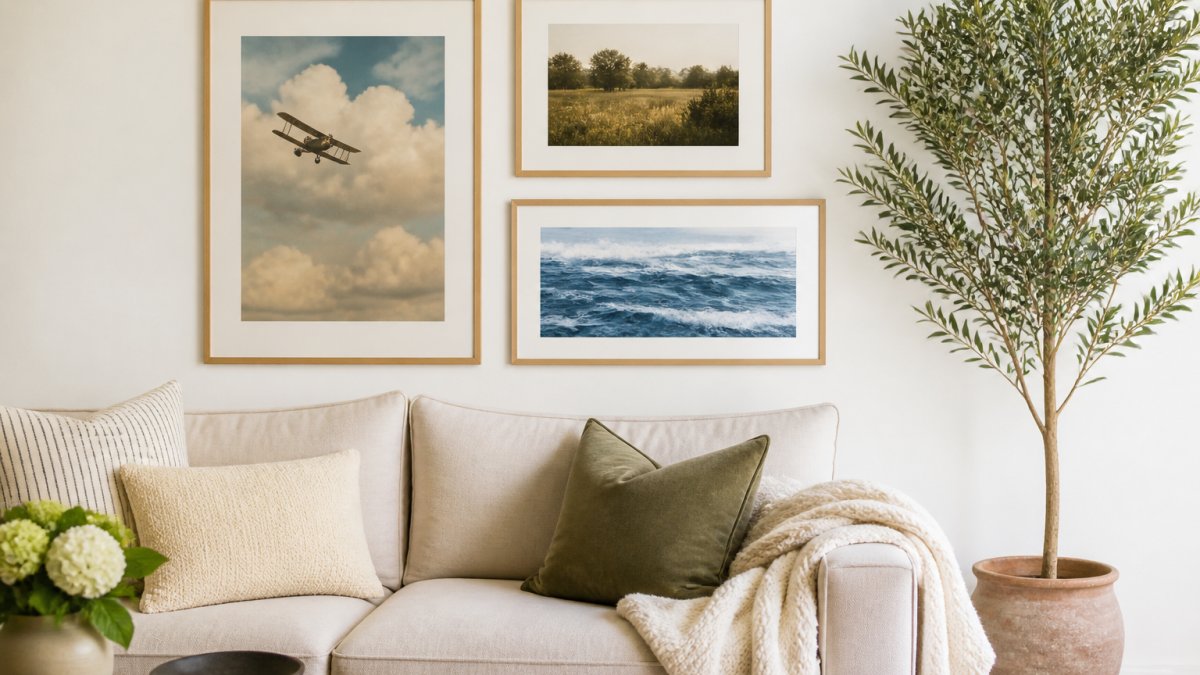
Curated doesn't mean expensive. It means deliberate. Three prints chosen with a shared color story will always read better than ten random ones.
Build a Gallery Wall With Fewer, Larger Pieces
Fewer, larger pieces cost less per square foot of wall covered and look more confident. Three 18x24 inch prints will fill a standard living room wall better than nine 8x10 inch prints, and you'll pay for three frames instead of nine. If your budget is tight, this is the single biggest lever you have.
How to Frame Art Prints Affordably Without Cutting Corners
Framing is where art budgets quietly die, and it's the line item most first-time homeowners forget entirely. Custom framing at a typical independent shop commonly runs several times the price of the print itself, and a single large custom job can wipe out what you saved on the artwork. The affordable path is standard-size frames, which are widely stocked and cost a fraction of custom work.
Here's how to frame prints affordably without sacrificing quality:
- Buy prints in standard sizes so off-the-shelf frames fit without a custom mat cut. Common U.S. frame sizes include 8x10, 11x14, 16x20, 18x24, and 24x36 inches.
- Choose metal or simple wood frames over ornate profiles. A basic black or natural-wood frame reads as gallery-neutral and rarely clashes with a room's palette.
- Use acid-free mats to protect the paper from discoloration. This is the one corner you should never cut.
- Skip non-glare glass unless the print sits opposite a window. It costs more and slightly mutes color.
The Total Cost of Ownership Nobody Adds Up
The listed price of a print is rarely what you actually pay. Before you commit, add these to your mental math:
- Framing: an off-the-shelf frame for a mid-size print is a modest add-on; custom framing can multiply the total.
- Mat board: acid-free mats cost more than standard mats but protect the print for decades.
- Shipping: large prints should ship rolled in a rigid tube, and oversized or framed shipments cost more.
- Sales tax: applies in most states at checkout, and it's calculated on the full order including shipping in many jurisdictions.
A common pattern among new homeowners is to budget for the print and then discover the framed, hung, taxed total is meaningfully higher. Setting aside roughly a fifth of your art budget for framing and hardware keeps you from blowing past your limit.
Why the Mat Matters More Than the Frame
A cheap mat will leach acid into the paper over time and leave brown burn marks, a condition collectors call mat burn. Acid-free mat board costs a little more and protects the print for decades. If you're buying a numbered limited edition, protecting it with an acid-free mat and backing is what keeps it in the condition a future buyer would want.
Large-Format Art Prints on a Budget: What to Know Before You Buy
Large-format art prints on a budget come down to three variables: paper, ink, and edition size. A pigment print on archival paper will outlast a poster printed on thin stock by a wide margin, and it usually costs only modestly more.
What to check before buying:
- Paper type: matte art paper or archival paper holds color better than glossy poster stock. Heavier paper (measured in grams per square meter, or gsm) resists wrinkling and feels substantial in the frame.
- Ink type: pigment inks resist fading far better than dye-based inks. If a listing doesn't say which is used, ask.
- Edition size: a numbered edition of 50 is more collectible than one of 5,000. Smaller runs also tend to hold value better.
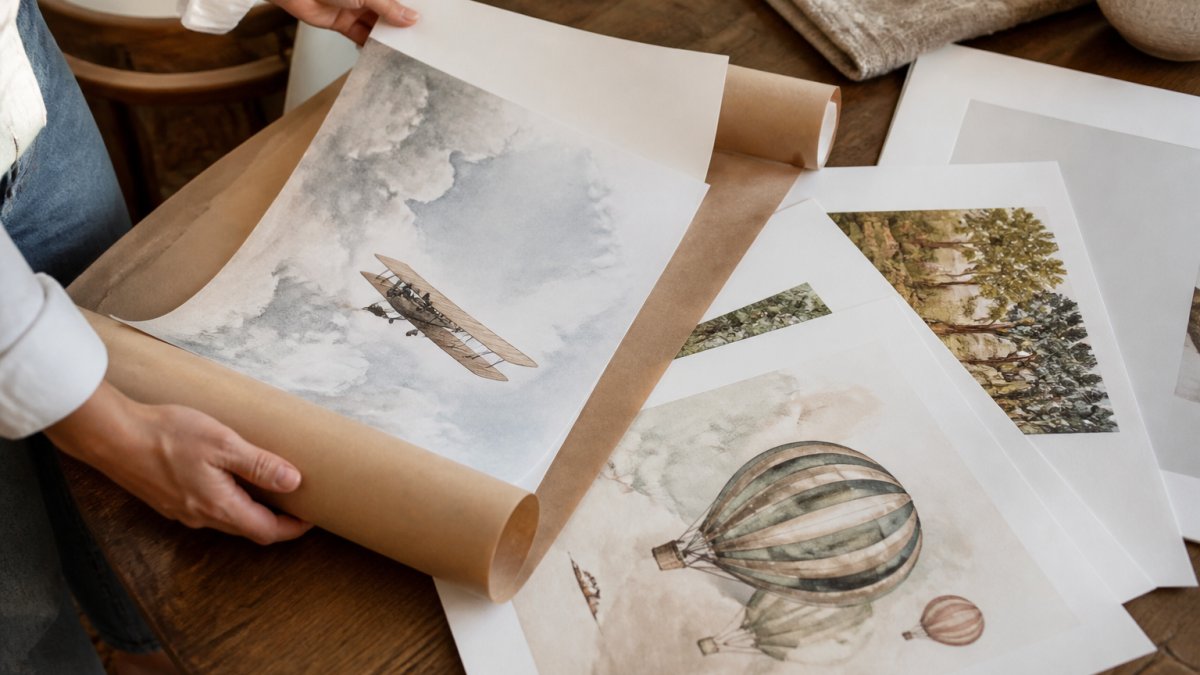
- Shipping method: large prints should ship rolled in a rigid tube, never folded. Creases in a large print are nearly impossible to remove.
According to Architectural Digest's guide to affordable art online, prices across featured stores range from around $24 to over $3,000, which tells you the "large format" label covers everything from a budget poster to a serious investment.
Sizing and Placement: Get the Proportions Right
A large print on a small wall overwhelms the room; a small print on a large wall looks like an afterthought.
Hanging height matters just as much. The common guideline is to place the center of the artwork at roughly eye level, about 57 to 60 inches from the floor. In rooms where people mostly sit, some designers hang slightly lower so the art sits in the seated sightline.
Materials, Longevity, and Care
Archival materials are what make a print last. Look for acid-free or archival paper, pigment-based inks, and a certificate or label that names the paper and ink. Once it's on your wall, keep it out of direct sunlight, which fades even pigment inks over years, and avoid hanging it above a heat source like a radiator or fireplace, where fluctuating humidity can warp the paper.
| Decision Point | Budget Choice | Upgrade Choice | Why It Matters |
|---|---|---|---|
| Paper | Standard matte | Archival matte art paper | Longevity and color depth |
| Ink | Dye-based | Pigment print | Fade resistance over years |
| Edition | Open edition | Numbered limited edition | Collectibility and resale |
| Framing | Off-the-shelf frame | Custom frame | Cost vs. exact fit |
| Shipping | Flat mailer | Rigid tube | Arrival without creases |
How to Verify a Limited Edition Print Is Genuinely Limited
Verifying a limited edition print means checking three things: the edition size, the numbering, and the certificate of authenticity. A genuine limited edition states how many prints exist in the run and marks each one individually, such as "12/150."
Here's what to look for:
- A stated edition size printed on the artwork or its documentation
- Hand-numbering in pencil or pen, not a printed number
- A certificate of authenticity naming the artist and the edition
- A signature, either on the print or the certificate
Why does this matter? Because MyArtBroker's 2026 guide to investing in prints notes that limited-edition prints can be sound investments, but only when approached correctly. Scarcity and a signature alone don't guarantee appreciation.
This is also where a first-time homeowner's budget and long-term thinking meet. A numbered edition from an emerging artist often costs less than a mass-produced poster from a big-box store, and it holds its story. Phillips reported that 43% of its editions buyers in 2024 and 2025 were new to the auction house, according to Hedonism Gallery's 2026 art investment guide, which suggests the appetite for editioned work keeps drawing in new collectors.
Conclusion: Start Your Collection With Intention
The challenge for most first-time homeowners isn't finding art. It's finding art that feels like yours without blowing the budget you just spent on a down payment.
At Runway & Heirloom, we curate prints designed to become part of a home's story, from watercolor nursery art to historic aviation prints and art-deco-inspired pieces. Every print is chosen for personality and endurance, not trend.
Frequently Asked Questions
What should first-time homeowners look for when buying a limited-edition print?
Check the edition size, the artist's signature, and whether a certificate of authenticity is included. A numbered edition means the artist committed to a fixed run, which distinguishes it from an open edition that can be reprinted indefinitely. Also ask about the paper and ink: archival paper and pigment inks resist fading far better than standard poster stock. If you're buying for a nursery or living room, confirm the print size fits your wall before ordering.
Are limited-edition prints more valuable than open-edition prints?
Limited editions are generally considered more collectible because the supply is fixed, but scarcity alone does not guarantee appreciation. Splashworks notes that low-run, signed limited editions tend to hold value better than open editions, while MyArtBroker cautions that prints are only investments when approached correctly. For most first-time homeowners, the practical benefit is knowing your print will not be mass-reproduced. Buy what you love first, and treat any future value as a bonus rather than the goal.
How much does a fine art print cost?
Fine art prints typically cost between $20 and $300, according to The Arsenale's 2026 pricing guide. Signed limited editions by established artists can reach hundreds or even six figures, depending on the artist's reputation and edition size. For a first home, the $20 to $300 range covers a wide selection of quality prints. Framing adds to the total, so factor that into your budget before you buy.
How do I know if a limited-edition print is authentic?
Look for a numbered edition (such as 12/50), the artist's signature, and a certificate of authenticity. Reputable sellers state the edition size and total run clearly. If a listing claims a print is limited but shows no edition number or signature, treat that claim with caution. You can also ask the seller directly how many were printed and whether the edition is closed. A closed edition means no more will be made.