 blog
blog
Where to Shop Art History Housewarming Gifts Online
Table of Contents
- Why Art History Gifts Make the Most Meaningful Housewarming Presents
- Housewarming Gifts for Art Lovers: Matching the Person to the Period
- Classical and Neoclassical: For Traditional, Symmetrical Interiors
- Romanticism: For Warm, Atmospheric, Story-Driven Rooms
- Impressionism and Post-Impressionism: For Bright, Casual, Contemporary Spaces
- Art Nouveau and Arts and Crafts: For Ornamental, Handmade-Loving Homes
- Art Deco and Modernism: For Design-Forward, Geometric Interiors
- Mid-Century Modern and Abstract Expressionism: For Retro and Gallery-Style Rooms
- A Quick Matching Table
- Meaningful Housewarming Gifts: The Provenance Behind the Print
- Art Prints for Home Decor: Practical Buying Guidance
- Historical Art Prints for Niche Passions: Aviation, Railroads, and Classic Cars
- Housewarming Etiquette and Personalization: Getting the Gift Right
- Where to Shop Online for Art-History-Inspired Housewarming Gifts
- Frequently Asked Questions
Last Updated: October 8, 2026
Why Art History Gifts Make the Most Meaningful Housewarming Presents
A housewarming gift should carry a story the recipient can live with every day, which is why art history gifts have become a go-to choice for people who want real meaning behind a present.
Below: how to match a period to a person, what to check before you buy, and where to browse a curated collection spanning art history, aviation, and nostalgia.
How Art Connects to a Home's Story
Art is the fastest way to make a new house feel like someone's home. A print on the wall signals taste, memory, and identity in a way a scented candle cannot.
A piece of historical art carries a moment in time, a movement, a mood.
The Metropolitan Museum of Art's Heilbrunn Timeline of Art History is a useful reference for understanding movements before you commit to a gift.
Housewarming Gifts for Art Lovers: Matching the Person to the Period
Start with the person, not the product. The right housewarming gifts for art lovers reflect how someone already lives, not how you wish they would decorate.
Ask three questions: What era does their furniture suggest? What colors run through their rooms? What do they talk about with genuine enthusiasm? Then match the answers to an art-history period.
Classical and Neoclassical: For Traditional, Symmetrical Interiors
Classical art runs from roughly the fifth century BCE through the fall of Rome; Neoclassicism revived it in the late eighteenth and early nineteenth centuries.
This suits a recipient with antique wood, symmetrical furniture, and a palette of cream, ochre, and deep green. A classical bust, red-figure vase motif, or Neoclassical architectural study sits naturally above a fireplace or in a book-lined study.
Romanticism: For Warm, Atmospheric, Story-Driven Rooms
Romanticism emerged in the late eighteenth century and ran through the mid-nineteenth, the opposite of Neoclassical restraint. Its signature is dramatic light, weather, emotion, and landscape, with Caspar David Friedrich's misty figures and J.M.W.
Choose this for a cozy, layered home: soft textiles, warm lamps, a reading chair. A Romantic landscape print works in a bedroom or hallway with gentle light, pairing well with wood tones and muted greens and grays.
Impressionism and Post-Impressionism: For Bright, Casual, Contemporary Spaces
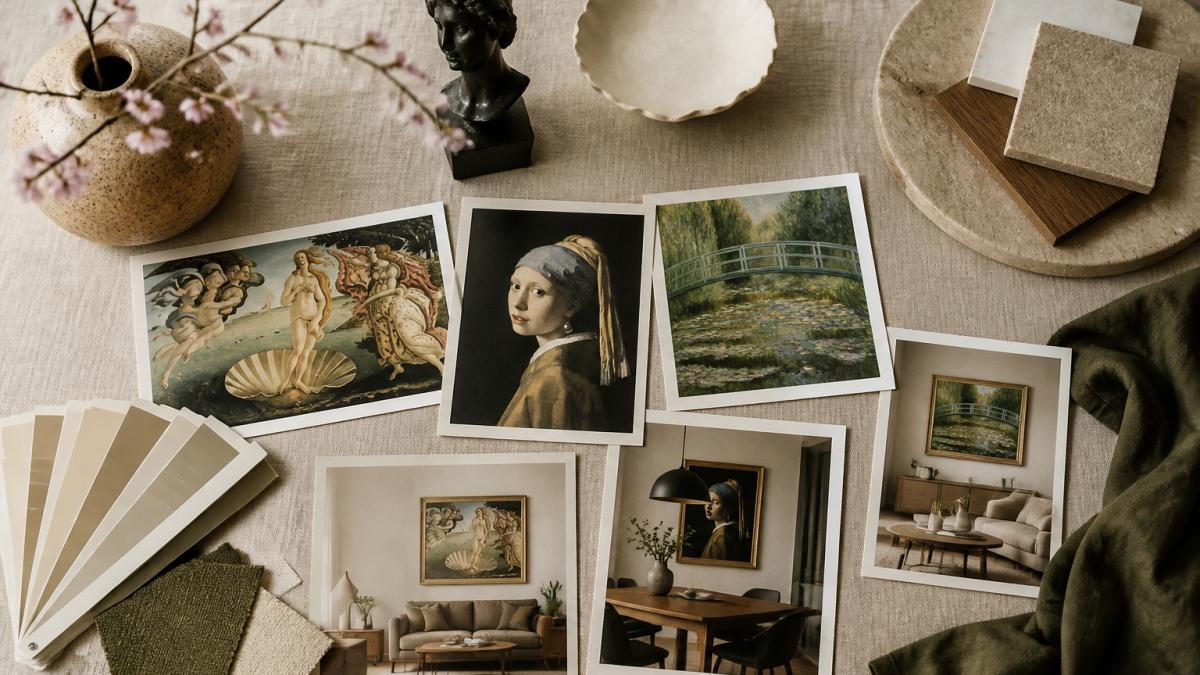
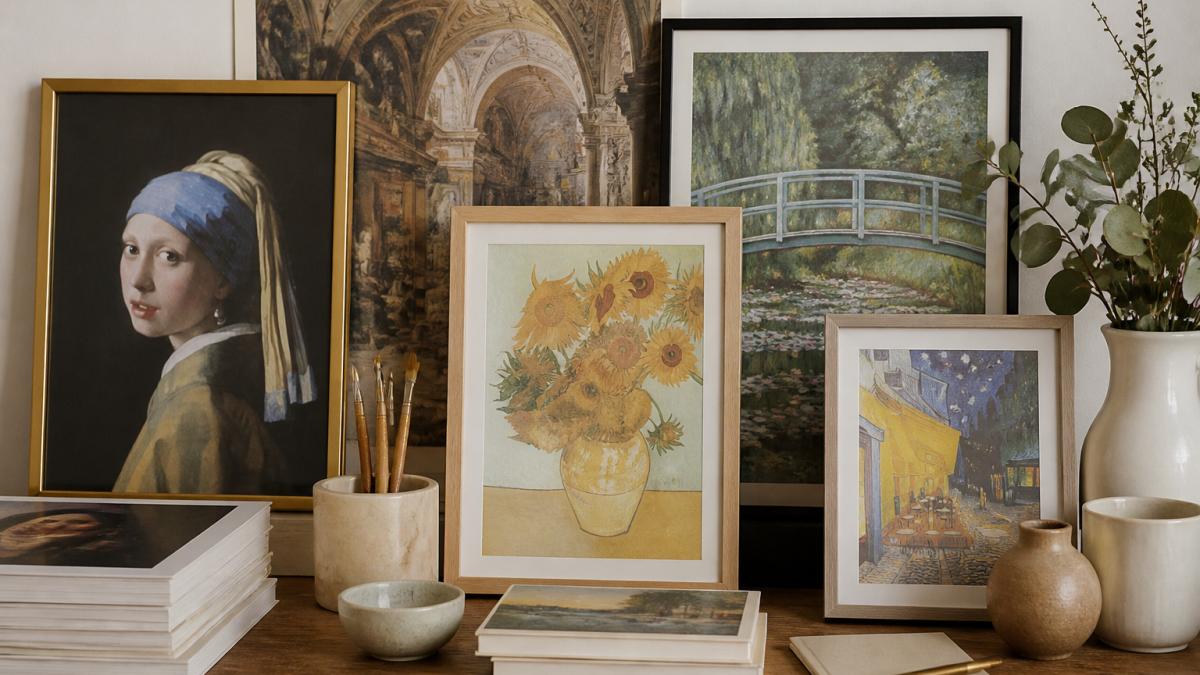
Impressionism began in France in the 1870s, with Monet, Renoir, and Berthe Morisot building scenes from visible brushstrokes and shifting light. Post-Impressionism followed in the 1880s and 1890s, with Van Gogh, Cézanne, and Seurat pushing color and structure further.
This is the most forgiving category for a gift: bright palette, familiar subject matter. It suits airy apartments, white walls, and rooms with natural light.
Art Nouveau and Arts and Crafts: For Ornamental, Handmade-Loving Homes
Art Nouveau flourished from about 1890 to 1910, defined by flowing organic lines, botanical motifs, and decorative pattern. Alphonse Mucha's posters and Antoni Gaudí's architecture are the touchstones.
Pick this for someone who collects handmade objects, favors warm wood, and loves pattern and craft. A Mucha-style poster or Morris-inspired botanical print fits a hallway, stairwell, or dining room with a patterned rug.
Art Deco and Modernism: For Design-Forward, Geometric Interiors
Art Deco emerged in the 1920s and 1930s, rewarding symmetry, metallic tones, and confident geometry. Modernism stripped ornament down to line, grid, and primary color, with Bauhaus figures like Kandinsky and Mondrian as reference points.
This is the safest strong choice for a design-forward recipient: chrome accents, geometric rugs, black-and-white palettes, clean-lined furniture. A Deco print or Bauhaus-inspired composition in a slim black frame reads deliberate rather than dated.
Mid-Century Modern and Abstract Expressionism: For Retro and Gallery-Style Rooms
Mid-century modern design ran from roughly 1945 to 1969, with clean lines, tapered legs, and warm woods. Abstract Expressionism, led by Pollock, Rothko, and de Kooning in the 1940s and 1950s, pushed toward large-scale color and gesture.
Choose this for someone with a walnut credenza, an Eames-style chair, or a room that already feels like a small gallery.
A Quick Matching Table
| If their home looks like... | Consider this period | Why it fits |
|---|---|---|
| Antique wood, symmetry, cream and green | Classical or Neoclassical | Order and history |
| Soft textiles, warm lamps, reading chair | Romanticism | Atmosphere and mood |
| White walls, natural light, casual | Impressionism or Post-Impressionism | Bright, familiar, forgiving |
| Handmade objects, pattern, warm wood | Art Nouveau or Arts and Crafts | Craft and ornament |
| Chrome, geometry, black and white | Art Deco or Modernism | Line and glamour |
| Walnut, tapered legs, gallery wall | Mid-Century Modern or Abstract Expressionism | Retro and color |
The Metropolitan Museum of Art's Heilbrunn Timeline of Art History is a useful reference for checking dates, artists, and visual signatures before you commit to a gift. Knowing whether your recipient leans toward the ornate or the minimal turns a guess into a thoughtful choice.
Meaningful Housewarming Gifts: The Provenance Behind the Print
Meaningful housewarming gifts earn that label through provenance, the story of where an image comes from and why it matters.
What most guides miss: provenance is not only about the original painting.
We built Runway & Heirloom around this principle. Every piece connects to a subject, era, or feeling, a childhood memory, a love of flight, a fascination with a bygone design movement.
Art Prints for Home Decor: Practical Buying Guidance
Quality separates a print that lasts from one you replace in two years. Before buying art prints for home decor online, work through four decisions in order: size, materials, framing, and the seller's shipping and return terms.
Size and Placement: Match the Print to the Wall
The most common mistake is buying a print too small for its wall. A useful rule of thumb: wall art should cover roughly two-thirds to three-quarters of the width of the furniture below it, such as a sofa or console.
Standard print sizes you will see most often online:
- 8 x 10 inches and 11 x 14 inches: good for gallery walls, hallways, and small rooms
- 16 x 20 inches and 18 x 24 inches: the workhorse sizes for living rooms and bedrooms
- 24 x 36 inches and larger: statement pieces for a main wall or above a sofa
Measure the wall before you buy and leave a few inches of breathing room on each side. If unsure, a larger print in a simple frame usually reads better than a small print floating on a big wall.
Paper, Ink, and Framing: What to Check Before You Buy
Good art paper has weight and slight texture, not office copy paper. Pigment-based inks resist fading far better than cheap dye inks, which matters near a window. A proper frame with a mat protects the surface and gives the piece room to breathe.
Use this quick checklist before you add anything to your cart:
- Paper weight and finish are stated (look for textured, archival-style stock)
- Inks are described as pigment-based or fade-resistant
- The listing shows the actual print, not just a mockup
Price Ranges: What to Expect at Each Tier
Art print pricing online generally falls into various tiers, depending on factors like size, materials, and whether the piece is a limited edition or hand-finished. Pricing depends on quantity, dates, and delivery, so direct readers to Runway & Heirloom's website for current prices or a quote.
Shipping, Delivery, and Returns
Shipping timelines vary by seller and whether the piece is made to order. For specific shipping information, please refer to the seller's website.
Prints should ship flat in a rigid mailer or rolled in a sturdy tube.
Return policies matter more for art than most gifts, since the recipient may not have seen the piece in person.
Care and Longevity
Once the print is on the wall, a few habits extend its life. Keep it out of direct sunlight, which fades even pigment inks over years. Dust with a dry, soft cloth. If you frame it yourself, use acid-free matting and backing so the paper does not yellow. Hang it away from kitchens and bathrooms, where humidity warps paper and clouds glass.
If a listing is vague about paper, ink, sizing, or returns, treat that as a warning sign. Reputable studios state their terms plainly, and a seller who will not answer a pre-purchase question is unlikely to help after the sale.
Historical Art Prints for Niche Passions: Aviation, Railroads, and Classic Cars
Historical art prints hit hardest when they match a genuine passion. A generic landscape is pleasant; a piece tied to someone's lifelong interest becomes a keepsake.
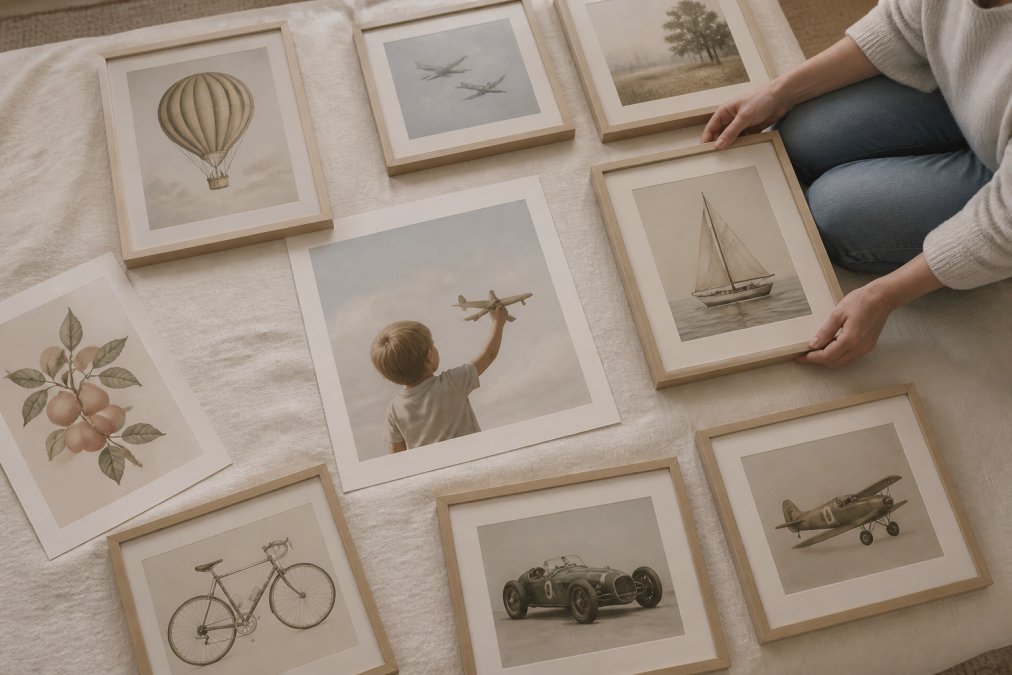
Aviation is the clearest example. For an enthusiast, the difference between a random airplane picture and a considered piece is enormous. Our historic aviation prints focus on the aircraft and eras that enthusiasts actually care about, and our Women in Aviation collection covers a side of flight history that often gets overlooked.
Housewarming Etiquette and Personalization: Getting the Gift Right
Housewarming etiquette is simpler than people fear: bring or send something thoughtful, keep it in proportion to your relationship, and skip anything implying the recipient's home needs fixing.
Personalization is where a good gift becomes memorable. A custom piece tied to the recipient's name, hometown, or passion shows you thought about them specifically.
| Situation | Best Approach | Why It Works |
|---|---|---|
| Close friend, known taste | Specific period or passion print | Shows you pay attention |
| New neighbor, little context | Neutral art-history or landscape piece | Hard to get wrong |
| Colleague or distant relative | Small personalized print or card set | Thoughtful, low-pressure |
| Art enthusiast | Niche historical or aviation print | Matches a real interest |
If you are buying for someone you do not know well, a greeting card paired with a modest print removes the pressure of guessing wrong on a large piece.
Where to Shop Online for Art-History-Inspired Housewarming Gifts
Shop with a studio that curates by era and interest rather than dumping thousands of unrelated images into one catalog.
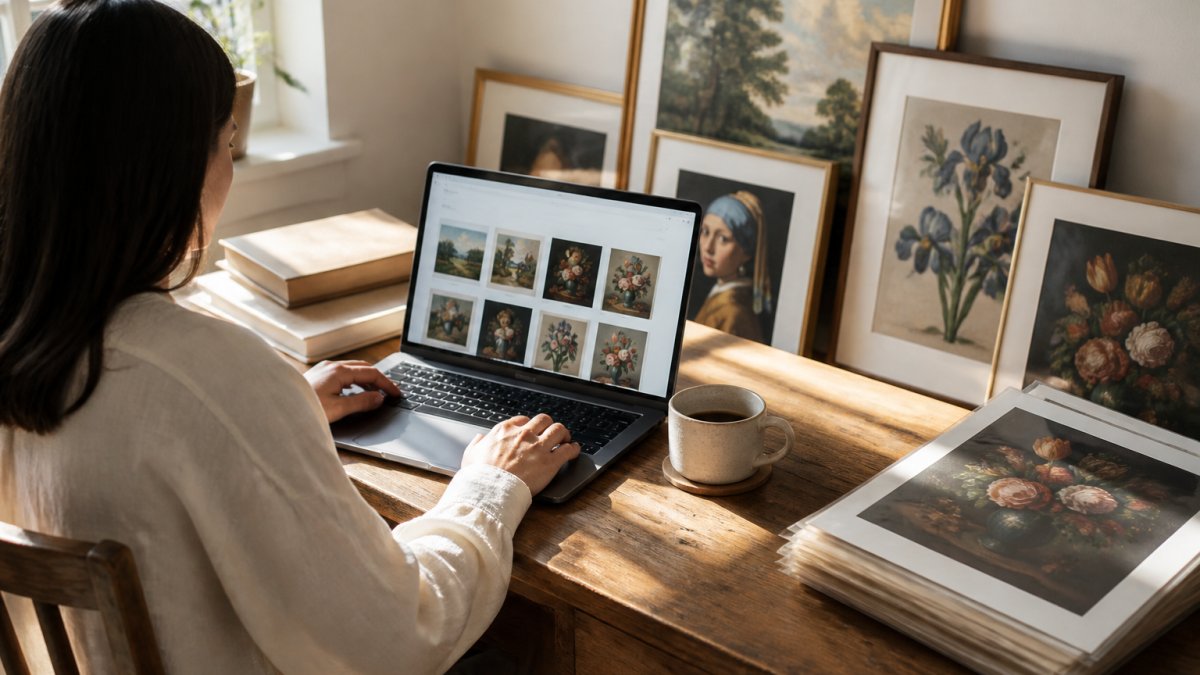
Runway & Heirloom exists for exactly this kind of search.
Browse the full collection, filter by the era or passion that fits your recipient, and ask us questions before you buy.
Choosing a housewarming gift for someone whose taste you only partly know is genuinely hard, and guessing wrong on a large piece is a real risk.
Frequently Asked Questions
What are some good gifts for art history lovers?
Art-history-inspired prints are a strong choice because they combine visual appeal with a story. Look for pieces tied to a specific movement, such as Art Deco, or a subject the recipient already loves, like aviation or classic cars. A framed reproduction of a well-known work or an artist-created piece that references a historical period gives the recipient something to talk about and display. The key is matching the era or theme to their existing interests and home style.
Where can I buy art-history-inspired prints online?
Independent art studios and artist-run shops online are often the best source for art history gifts, because they curate by theme rather than by generic category. Runway & Heirloom Art, for example, organizes its collection around art history, aviation, childhood nostalgia, and self-expression, so you can browse by the recipient's passion rather than scrolling through thousands of unrelated posters. Check that the shop lists paper weight, ink type, and shipping details before you order.
Are art prints a good housewarming gift?
Yes, art prints work well as meaningful housewarming gifts because they help a new space feel personal without requiring the recipient to commit to furniture or a color scheme. A print is easy to move, easy to reframe later, and carries a story that a mass-market item does not. Choose a subject tied to the recipient's interests or heritage, and keep the size modest so it fits a wall they have not yet filled.
How do I choose a print that suits someone's home?
Start with what you already know about their space: do they lean modern and minimal, or warm and traditional? For modern interiors, Art Deco or abstract historical prints in muted tones tend to fit. For traditional rooms, classical or Romantic reproductions in richer colors work better. If you are unsure, choose a smaller piece in a neutral palette and let them decide where it goes. When in doubt, ask about a favorite era or city.