 ultimate-guide
Art Prints That Tell a Story: Meaningful Wall Art Guide
Table of Contents
- Art Prints That Tell a Story: Why Narrative Art Belongs on Your Walls
- Narrative Art Prints: How Images Communicate Without Words
- Meaningful Wall Art: Choosing Prints That Reflect Identity and Memory
- Gallery Wall Ideas for Arranging Prints Into a Visual Story
- Art Prints for Living Room: Room-Focused Storytelling
- Print Quality, Sizes, and Materials Compared
- Conclusion
- Frequently Asked Questions
Last Updated: October 12, 2026
Art Prints That Tell a Story: Why Narrative Art Belongs on Your Walls
Art prints that tell a story turn a wall into a conversation.
At RunwayandHeirloomArt, every piece we carry is chosen because it carries a narrative, not just a color palette.
A print that merely matches your sofa gets replaced the moment you repaint. A print that tells a story stays for decades, because the story doesn't go out of style.
Below, we'll cover how narrative art prints work, how to read them, and how to choose pieces you'll still love in ten years.
Narrative Art Prints: How Images Communicate Without Words
Narrative art is artwork that conveys a sequence, character, or moment through visual cues alone. A single frame can imply what came before and what happens next, which is why a good print keeps revealing itself over time.
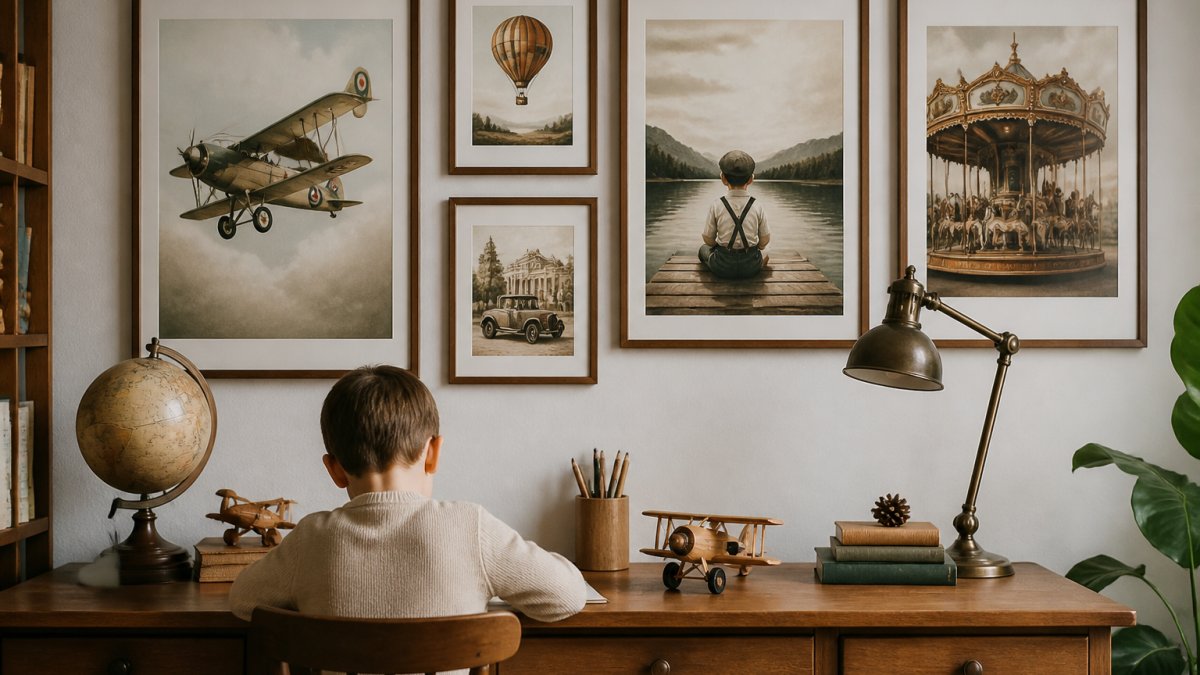
A painting of a plane on a runway works the same way: the angle of the aircraft, the light, the empty tarmac together suggest departure, ambition, or a specific era of aviation history.
That's the mechanism. Artists use composition, color, and detail to build a visual narrative the viewer completes.
Reading Symbolism Without Overclaiming Meaning
Symbolism in art is real, but it has limits. A wilting flower often signals loss; a lit window in a dark house suggests warmth or waiting. These readings recur across art history.
You don't have to decode everything. Treating every object as a hidden message only leaves you feeling like you failed a test you were never meant to take.
Here's a cleaner approach:
- Start with what you notice first. That's usually the artist's intended focal point.
- Ask what mood the scene creates. Emotion is the most reliable signal.
- Check the era or context if you're curious. Historical background adds depth, not obligation.
- Stop when you have a reading that feels true to you. That's interpretation, and it's valid.
Meaningful Wall Art: Choosing Prints That Reflect Identity and Memory
Meaningful wall art works best when it starts with you, not a trend. The prints people keep longest are tied to a real interest, a place, or a chapter of life.
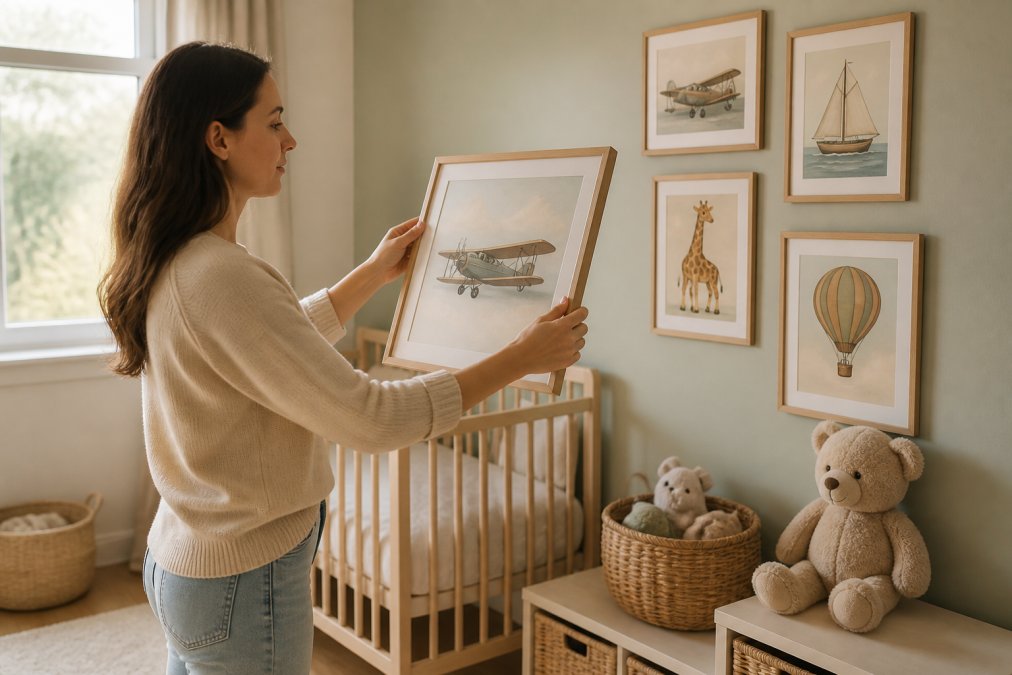
We see this constantly in what customers choose. A pilot picks a historic aviation print because it recalls a first solo flight. New parents choose a watercolor nursery piece to introduce a world of imagination to a child too young to speak.
Identity is the throughline. Ask three questions before you buy:
- What do I want this room to say about the people who live here?
- Is there an era, hobby, or memory I'd like to see every day?
- Would I still want this on the wall if no one else ever saw it?
If you can answer all three, you've found a meaningful print. If you can only answer the third with a shrug, keep looking.
Gallery Wall Ideas for Arranging Prints Into a Visual Story
Gallery wall ideas work best when the arrangement itself tells a story. Treat the wall as a single composition with a beginning, a middle, and a focal point.
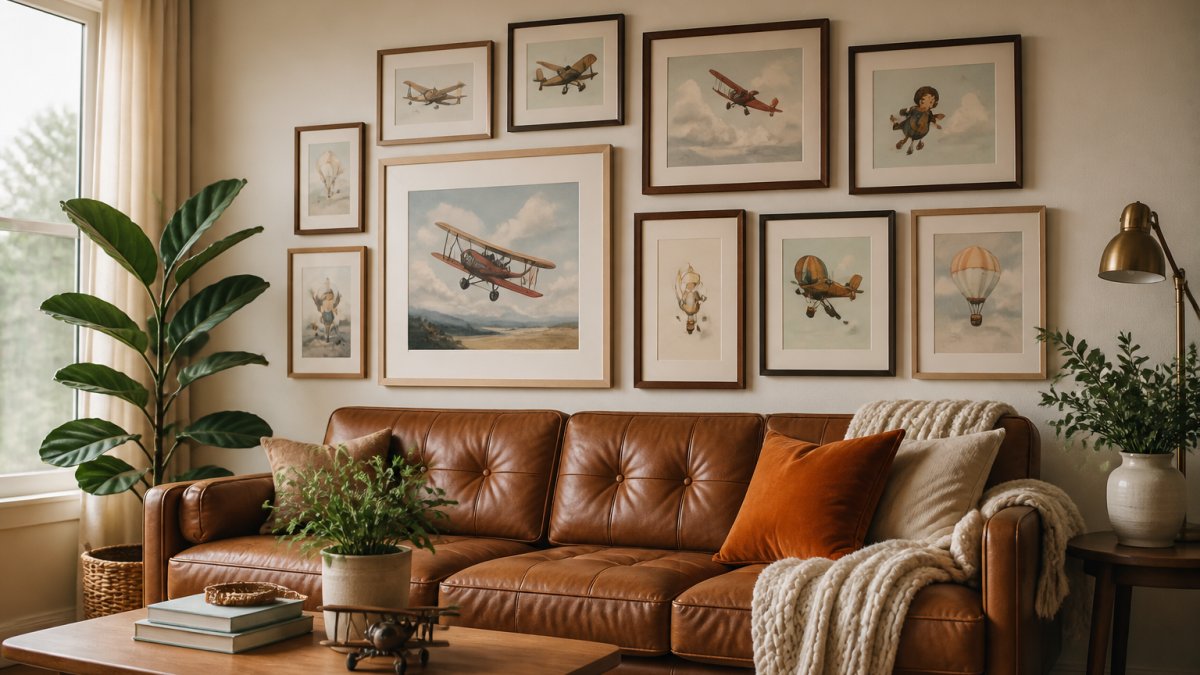
The most common mistake is buying a set of identical prints and calling it a gallery. It reads flat, because nothing creates tension or reward.
A stronger approach is to mix scale and subject deliberately. One large anchor print, two or three medium pieces, and a few small accents give the eye somewhere to land and somewhere to wander.
The Mechanics: Spacing, Height, and Sequencing
Most guides stop at "mix sizes and hang them." These details separate a wall that reads as a story from one that reads as clutter.
Spacing. A consistent gap between frames makes a mixed-size arrangement look intentional. Most designers use 2 to 3 inches; wider gaps feel disconnected, tighter gaps feel cramped.
Sequencing. This is the storytelling layer.
Anchor first, then fill. Hang the largest piece first, centered on the 57-to-60-inch line, and build outward.
Layered Frames, Grids, and Salon-Style Layouts
Layered frames, grids, and salon-style layouts are the three standard arrangements, and each suits a different kind of story.
- Grid: Best when you want calm and order. Works well for a series of related prints, like a set of aviation pieces from the same era. Keep the gaps identical in both directions or the grid will look accidental.
- Layered: Best when you want depth. Lean one frame against the wall on a shelf or ledge for a collected, lived-in feel. Overlap the frames slightly so they read as one object rather than several.
- Salon-style: Best when you have a genuine collection. Fill the wall edge to edge, mixing sizes and eras for a gallery feel. This is the only layout where inconsistent gaps are acceptable, because the density itself is the point.
A Practical Framework for Building the Story
Before you hammer a nail, work through these four steps to turn a pile of prints into a narrative.
- Write the story in one sentence. "This wall is about the years we spent near the coast." If you cannot write the sentence, you do not yet have a story, only a color scheme.
- Assign each print a role. One anchor (the thesis), two to four supporting pieces (the evidence), and one or two accents (the punctuation).
- Lay it out on the floor first. Trace the arrangement with painter's tape on the wall if the floor is too small. Adjust before you commit.
- Check it from the doorway and from the sofa. A gallery wall has to work from the distance people actually view it, not from six inches away.
Art Prints for Living Room: Room-Focused Storytelling
Art prints for living room walls should anchor the room's mood, not compete with it. The living room is where a home's story is most visible, so a narrative print earns its place here.
Most guides say to "match the print to the room." True, but useless on its own. What actually determines whether a print works is scale, placement, and light, and each has a number attached.
Scale: The Rule That Fixes Most Bad Hangs
The most common living room mistake is a print too small for the wall. A piece that looks generous on a screen can look like a postage stamp above a sofa.
The working rule: a print or grouping should span roughly two-thirds to three-quarters of the width of the furniture below it.
For a single statement piece on a large wall, most designers size it at 60 to 75 percent of the wall's width if the wall is otherwise empty.
Placement: Height, Centering, and the Sofa Gap
- Height. Hang the center of the print at 57 to 60 inches from the floor. This is the standard gallery height and it puts the art at eye level for a standing adult.
- Centering. Center the print on the furniture below it, not on the wall. If the sofa is off-center in the room, the art should follow the sofa.
- The gap. Leave 6 to 10 inches between the bottom of the frame and the top of the sofa. Closer than that and the art feels like it is sitting on the furniture; further and the two elements stop reading as a pair.
- Negative space. Empty wall around a print gives it room to speak. A print crowded by shelves, sconces, and a TV loses its authority.
Light: What the Room Does to the Print
Light changes how a print reads, and how long it lasts.
North-facing walls get cool, indirect light all day, muting warm palettes while cool tones hold. South-facing walls get strong, shifting light that warms everything.
View a print in the room at the time of day you actually use it. A piece that looks flat at noon may glow at 7 p.m., when you're actually sitting there.
Direct sunlight is the other half. Ultraviolet light fades pigment over time, and no ink is fully immune.
Matching the Print's Energy to the Room's Function
- Quiet reading corner. A contemplative landscape or a muted architectural print suits the slower pace.
- Busy family room. A bolder, more graphic piece can hold its own against noise and motion.
- Entertaining space. A print with a strong sense of era gives guests an immediate conversation point.
- Transitional or open-plan room. One large anchor print reads better than several small ones scattered across a long wall.
For a living room that needs a story with real weight, our Historic Aviation Prints and Art Deco Prints tend to do the heavy lifting. Both carry a strong sense of era, which gives a room an instant point of view.
Print Quality, Sizes, and Materials Compared
Print quality determines whether a narrative print survives long enough to become an heirloom. Paper, ink, and framing matter more than most buyers expect.
Here's how the common options compare:
| Material | Look and Feel | Best For | Longevity |
|---|---|---|---|
For sizing, measure the wall before you buy. A print that looks generous on a screen can look lost on a large wall, and vice versa. As a rule, a print should occupy roughly two-thirds to three-quarters of the width of the furniture below it.
Conclusion
Choosing art prints that tell a story is less about finding the "right" piece and more about finding the one that already belongs to you. Start with meaning, then let quality and framing protect it.
That's what we build at RunwayandHeirloomArt. Our collection spans Watercolor Nursery Art for children's rooms, Oil Painting Prints for living spaces, and Women in Aviation pieces for studies and offices, each chosen to carry a narrative rather than fill a gap.
Explore the collection and find the piece that already knows where it belongs.
Frequently Asked Questions
What is art that tells a story called?
Art that tells a story is often called narrative art. Narrative art prints use characters, scenes, and symbolism to convey a message or evoke a journey, rather than simply decorating a wall. Think of a watercolor scene showing a child's bedtime ritual, or a vintage aviation print capturing a historic flight. The viewer becomes part of the story by interpreting the details, emotions, and cultural references within the frame. This makes narrative art prints a meaningful choice for spaces where you want more than just color and pattern.
How do you choose meaningful wall art for your home?
Start with a personal theme: a memory, a passion, or a value you want to see daily. For meaningful wall art, look for pieces that reflect your identity, such as historic aviation prints for an enthusiast or watercolor nursery art for a new parent. Check the print quality: archival paper, pigment inks, and proper framing help it last. Consider the room's palette and scale. Runway & Heirloom Art offers curated collections by theme to help you find prints that feel personal.
How can you arrange wall art to create a visual story?
Arrange prints in a sequence that guides the eye, like a timeline or a journey. For gallery wall ideas, group prints by theme, era, or color story. A salon-style layout with layered frames can mix sizes and subjects, while a grid layout works for a cohesive narrative art series. Start with a focal piece, then build outward. Keep spacing consistent, and let the story unfold across the wall. This approach turns a collection of art prints into a single visual narrative that feels intentional and personal.
What makes a piece of art feel personal?
A piece feels personal when it connects to your memories, identity, or aspirations. That could be a print of a classic car you once owned, a train that reminds you of childhood travels, or a scene that captures a family value. The artist's story and cultural context add depth. When you choose art prints that tell a story you relate to, the piece becomes part of your own narrative. Runway & Heirloom Art curates prints across nostalgia, aviation, and childhood themes to help you find that connection.