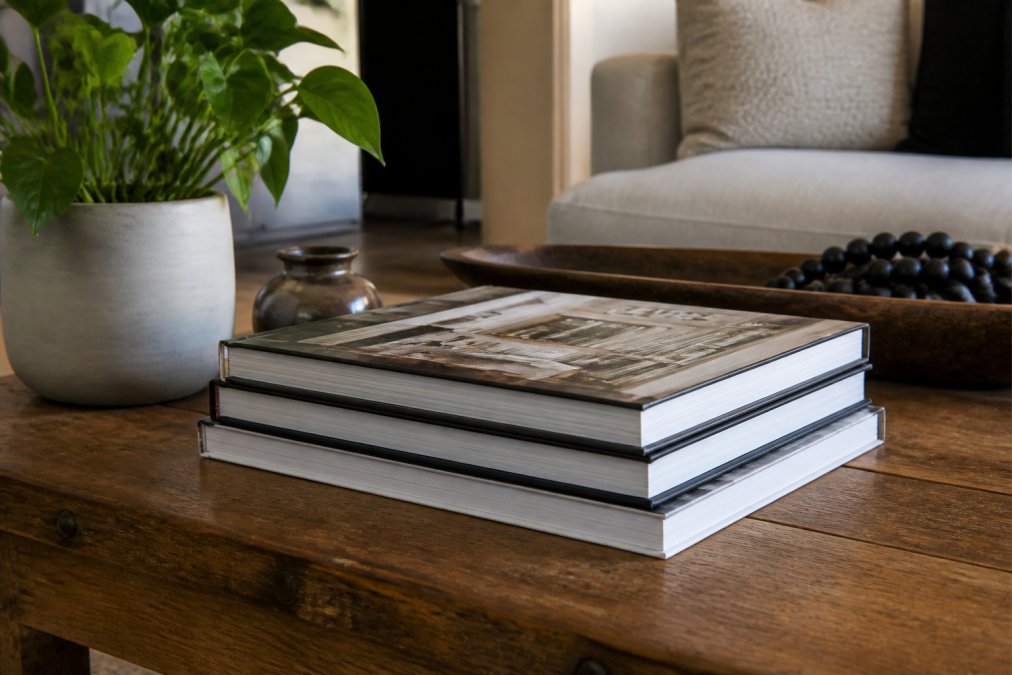
 listicle
Best Coffee Table Books for Interior Design Lovers
Table of Contents
- Why the Best Coffee Table Books for Interior Design Lovers Do More Than Fill Space
- How to Style Coffee Table Books Like a Designer
- 1. Timeless Interior Design Classics
- 2. Best Interior Design Books for Beginners
- 3. Curated Collections by Design Style: Minimalist, Maximalist, Coastal, and Urban
- 4. Books That Teach Design Principles and Color Palette Inspiration
- 5. Coffee Table Books for Small Spaces, Budget-Friendly Finds, and Workbook-Style Guides
- Conclusion
- Frequently Asked Questions
Last Updated: September 12, 2026
Why the Best Coffee Table Books for Interior Design Lovers Do More Than Fill Space
The best coffee table books for interior design lovers work as styling tools, not just reading material. According to design enthusiasts sharing ideas on Instagram design community, people increasingly use books to add height, texture, color, and personality to coffee tables and consoles.
That shift matters. A stack of books gives a room a lived-in feel that no single decorative object can replicate. This guide from RunwayandHeirloomArt breaks down how to choose and style coffee table books that actually elevate a space.
Below, we cover the 3-5-7 rule, the best interior design books for beginners, and how to match books to your design style.
How to Style Coffee Table Books Like a Designer
Styling coffee table books is the practice of arranging hardcover volumes in deliberate stacks and groupings so they add height, texture, and color to a surface. The goal is balance, not symmetry.
Designers treat books as the base layer of a tablescape. From there, a small ceramic object, a candle, or a decorative bowl finishes the arrangement. Books also work stacked on consoles, shelves, and nightstands when a table feels crowded.
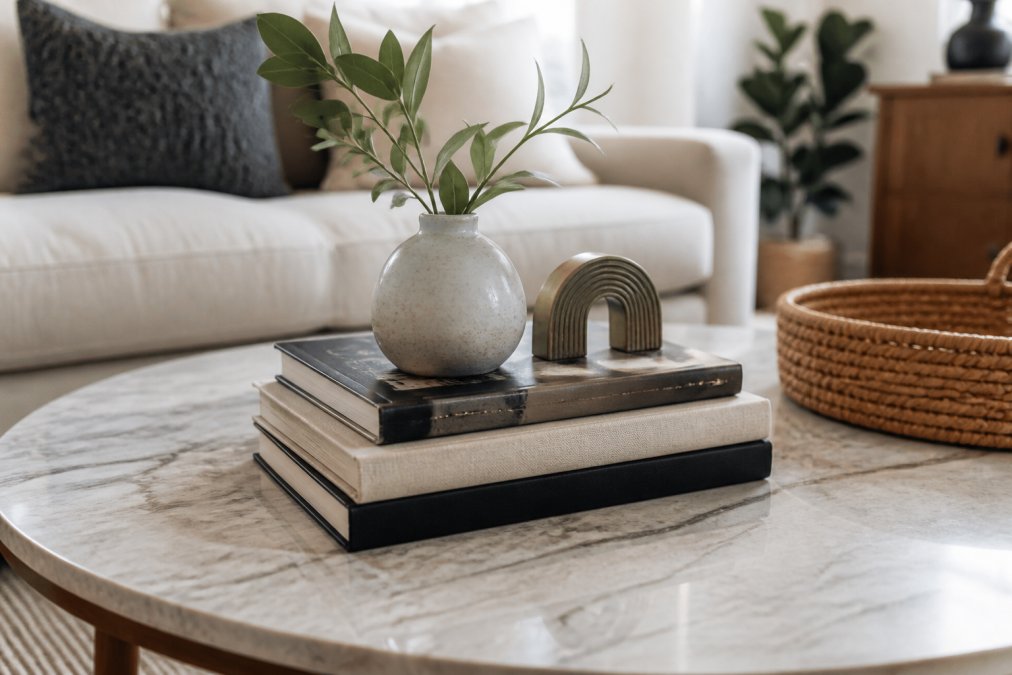
The 3-5-7 Rule and the 2/3 Rule for Coffee Tables
The 3-5-7 rule says to group decorative objects in odd numbers: three, five, or seven items. Odd groupings read as more natural and less rigid than even ones.
The 2/3 rule covers proportion. Keep about two-thirds of the table surface clear and one-third styled. That leaves breathing room for drinks and remotes while keeping the arrangement intentional.
| Rule | What It Controls | How to Apply It |
|---|---|---|
| 3-5-7 rule | Grouping | Use odd numbers of objects per arrangement |
| 2/3 rule | Proportion | Leave two-thirds of the surface open |
| Stack height | Visual weight | Keep stacks to 3-5 books |
| Color contrast | Interest | Mix one bold spine with neutral covers |
Book Size, Weight, and Table Scale: The Practical Guide Most Lists Skip
Most roundups tell you which books look good but never tell you whether they will actually fit. That is the gap this section fills.
Standard coffee table book trim sizes cluster around three formats. A slim volume runs roughly 8 x 10 inches and about 1 inch thick. A mid-format book runs about 9 x 12 inches and 1 to 1.5 inches thick. A large-format or "monograph" book runs 11 x 14 inches or larger and can hit 2 to 3 inches thick. Weight scales with page count and paper stock: a 200-page mid-format hardcover typically lands between 3 and 5 pounds, while a 400-page large-format monograph can exceed 7 pounds.
That matters because table scale is a ratio, not a preference. A common pattern among stylists is to keep the total footprint of a book stack under roughly one-third of the tabletop's surface area. On a 36-inch round table, that means a stack footprint no wider than about 12 inches. On a 48-inch rectangular table, a stack footprint of 14 to 16 inches reads as intentional rather than crowded.
Match format to table type:
- Round or pedestal tables: use one mid-format stack of 3 books. Large-format monographs on a small round table visually swallow the surface.
- Rectangular or rectangular-with-shelf tables: two stacks of different heights work well. Pair a 3-book mid-format stack with a 2-book large-format stack for asymmetry.
- Glass or acrylic tables: weight is the constraint. Keep total book weight under about 10 pounds so the surface does not flex or scratch.
- Console and entry tables: depth is usually shallower (12 to 16 inches), so stick to books 10 inches deep or less.
Stacking Mechanics: Spine-Out vs. Spine-In, and the Layering Move
Two mechanics separate a styled stack from a pile. First, alternate spine direction: place the bottom book spine-out, the middle book spine-in (pages facing out), and the top book spine-out. This breaks the visual line and adds texture without adding objects. Second, layer horizontally: place a smaller book on top of a larger one, then top the stack with a single object no wider than the smallest book beneath it. The taper is what makes the stack read as designed.
A third mechanic is the "anchor and accent" pairing. Anchor the stack with one large-format volume that matches the room's dominant color, then accent with a slim volume in a contrasting spine color. This is the same principle behind the color-contrast row in the table above, applied to a single stack rather than a whole surface.
1. Timeless Interior Design Classics
Timeless interior design classics are books that stay relevant across decades because they document enduring principles rather than passing trends. The Interior Design Handbook by Frida Ramstedt tops many curated lists for 2026, including one from Prettybooks' 2026 interior design roundup.
Making Space: Interior Design by Women features a global survey of 250 female interior designers, according to Intelligent Collector's 2026 book feature. Titles like this reward repeat browsing and hold their place on a table for years.
2. Best Interior Design Books for Beginners
The best interior design books for beginners explain fundamentals in plain language: space planning, proportion, light, and color. Start with one principles book and one visual reference rather than buying a dozen at once.
Timeless Interior Design, published in April 2026, focuses on American interior design style and suits readers who want a single grounding text, as noted by The Dallas Morning News 2026 design book coverage. Pair it with a photography-heavy volume so you can see the principles applied.
3. Curated Collections by Design Style: Minimalist, Maximalist, Coastal, and Urban
A curated collection should match your room's aesthetic before it matches a bestseller list. Minimalist spaces call for books with restrained covers and generous white space. Maximalist rooms can carry bold, textural covers and taller stacks.
Coastal and urban interiors each have their own visual vocabulary. Coastal leans toward natural tones and scenic themes, while urban spaces suit architecture and city photography. Design enthusiasts on Reddit's interior decorating community increasingly favor thematic books over luxury brand catalogs.
But style matching only gets you halfway. The stronger move, and the one most roundups skip, is to build a collection around a specific architectural era. Era-specific volumes give a table a point of view, and they pair naturally with the watercolor and print work that anchors many styled surfaces.
Minimalist
Look for books with a single subject per spread and a muted spine. Titles built around Japanese and Scandinavian design traditions tend to fit: volumes on wabi-sabi interiors, Danish modern furniture, and Japanese joinery all read as restrained on a table. A slim 8 x 10 format works better here than a large monograph, because the point is negative space.
Maximalist
Maximalist tables reward color and pattern. Books on Memphis Group design, 1970s interior photography, and pattern-heavy textile traditions carry the visual weight a maximalist room needs. Stack 4 to 5 books here rather than 3, and let spine colors clash on purpose.
Coastal
Coastal does not mean nautical kitsch. The strongest coastal collections lean on natural materials and horizon-line photography: volumes on shingle-style architecture, New England cottage interiors, and Mediterranean whitewash traditions. Pair with a natural-fiber object on top of the stack.
Urban
Urban tables suit architecture and street photography. Books on city planning, brutalist public buildings, and mid-century urban renewal projects give an urban table intellectual weight, not just visual weight.
Era-Specific Volumes: The Angle Most Lists Miss
If you want a collection that reads as curated rather than accumulated, pick one era and go deep. Three eras reward this approach especially well:
- Mid-century modern (roughly 1945-1969): volumes on Case Study Houses, Eames furniture, and California postwar residential design. These books tend to be large-format and photograph-heavy, which makes them strong base-layer books in a stack.
- Brutalism (roughly 1950s-1970s): concrete-focused monographs on public architecture. These are usually slim and dense, which makes them good middle-layer books that add contrast without adding height.
- Art Deco (roughly 1920s-1930s): volumes on Parisian interiors, ocean liner design, and American skyscraper lobbies. Art Deco books often carry metallic or patterned covers, which makes them natural accent books on top of a stack.
A three-book era stack, one large-format base, one slim middle, one patterned accent, covers all three layers and tells a coherent story. That is the difference between a styled table and a decorated one.
4. Books That Teach Design Principles and Color Palette Inspiration
Books that teach design principles give you the vocabulary to make decisions: contrast, rhythm, scale, and balance. Color palette inspiration works the same way. A single book built around one palette can guide an entire room's furnishings and art.
Here's where art and books overlap. At RunwayandHeirloomArt, our watercolor prints are inspired by art history, aviation, childhood, nostalgia, personality, and self-expression, making them a natural complement to design volumes on a styled table.
5. Coffee Table Books for Small Spaces, Budget-Friendly Finds, and Workbook-Style Guides
Small spaces need books that earn their footprint. Choose one statement volume over five thin ones, and rotate titles seasonally instead of displaying everything at once.
Workbook-style design books, with exercises and prompts, suit readers who want to apply what they learn rather than admire it. For budget-friendly finds, look for paperback editions and museum catalog remainders; they carry the same content at a lower cost.
Conclusion
Choosing coffee table books is really a question of curation, and curation takes time most people don't have. RunwayandHeirloomArt helps you build that layered, personal look with a thoughtfully curated collection of prints, including watercolor nursery art, historic aviation prints, and Art Deco pieces that pair naturally with design volumes. Each print is available as a digital download for immediate access, so you can frame and style it the same day. Explore the collection and give your table a story worth displaying.
Frequently Asked Questions
What makes a coffee table book essential for interior design?
Coffee table books serve as both visual anchors and conversation starters. They add height, texture, and color to flat surfaces, reinforcing a room's aesthetic while reflecting the homeowner's personality. According to a 2025 Instagram trend report, designers increasingly use books to layer personality into spaces. A well-chosen book can bridge gaps between furnishings and introduce artistic inspiration that ties a room together.
How many coffee table books should you display at once?
Most designers recommend displaying one to three stacks, with two to four books per stack. The goal is balance, not clutter. A common guideline is the 3-5-7 rule: use odd numbers of objects, varying heights, and a mix of textures. For a small coffee table, one stack of two or three books paired with a single decorative object often looks best. Rotate books seasonally to keep the display fresh.
What is the best coffee table book for interior design lovers on a budget?
Look for paperback or smaller hardcover editions of design classics, or check for workbook-style guides that offer high educational value at a lower cost. The Interior Design Handbook by Frida Ramstedt was ranked as a top recommendation in a 2026 Prettybooks list and is widely available. For visual inspiration, consider thematic collections focused on specific interests like aviation or coastal design.
How do you style coffee table books for a professional look?
Start with a solid base: a stack of two to four hardcover books in coordinating colors. Place a small tray or decorative object on top to anchor the stack. Vary heights by mixing horizontal and vertical stacks, and leave negative space around the arrangement. For a polished look, choose books with complementary spines and avoid overcrowding. The 2/3 rule suggests filling about two-thirds of the table's surface, leaving one-third empty for visual breathing room.