 listicle
Art History Wall Art for Home: 7 Curated Styles
Table of Contents
- Why Art History Wall Art Transforms Your Home
- Vintage Prints: Timeless Aesthetic for Any Room
- Documentary Photography and Historical Imagery
- How to Create a Gallery Wall with Historical Art
- Best Framing Styles for Classic Art
- Art History Decor Ideas for Every Space
- Choosing Quality: Archival Materials and Museum-Grade Prints
- Conclusion
- Frequently Asked Questions
Last Updated: August 19, 2026
Why Art History Wall Art Transforms Your Home
Art reshapes how we experience our living spaces. When you hang art history wall art for home, you're introducing narrative, depth, and intentional design that changes a room's character.
The numbers reflect this shift. According to Fortune Business Insights market analysis, the global wall art market was valued at $66.89 billion in 2025 and is projected to grow to $145.49 billion by 2034, growing at a compound annual growth rate of 9.39%. Research shows that 64% of consumers invest in wall art to enhance home aesthetics, while 68% prioritize interior design, driving a 42% rise in art-related home décor purchases over the past five years.
Well-chosen art pieces increase perceived spatial perception by up to 15% and comfort levels by 20-25%. Thoughtfully selected artworks reduce stress, increase productivity, and enhance overall happiness, making art history wall art for home a genuine investment in daily well-being.
At RunwayandHeirloomArt, we believe that art should tell a story. Whether you're drawn to vintage prints, documentary photography, or historical imagery, the right pieces transform a house into a home with personality and meaning.
Vintage Prints: Timeless Aesthetic for Any Room
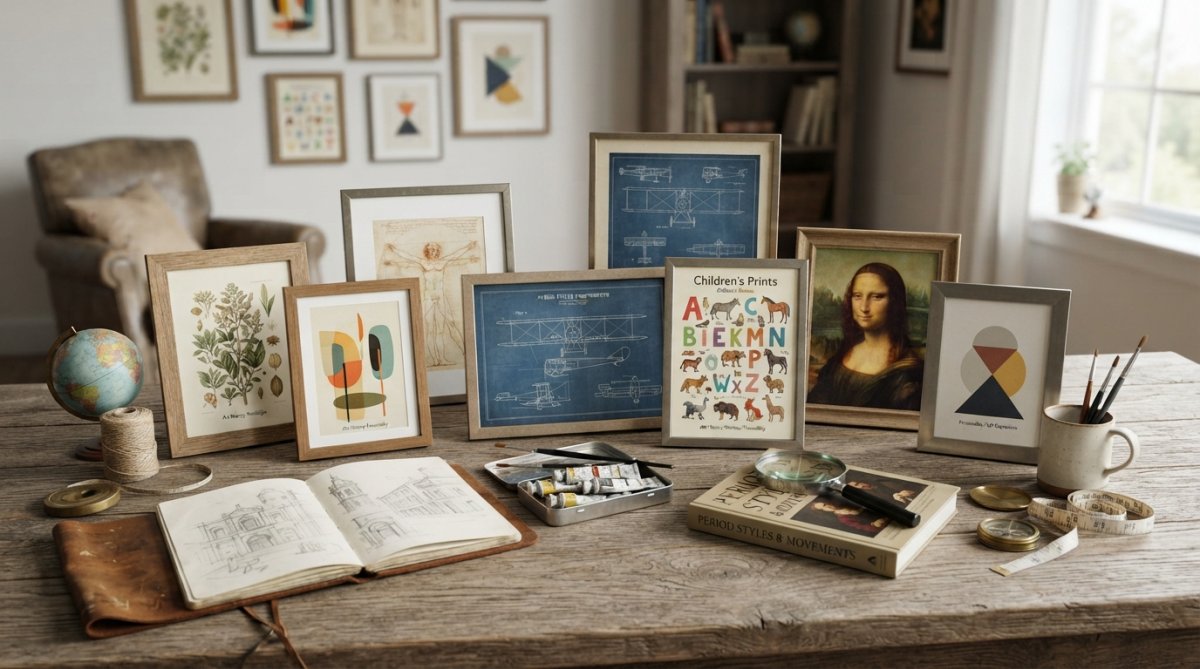
Vintage prints represent one of the most versatile approaches to art history wall art for home decoration. These pieces carry the patina of time, 19th-century engravings, early 20th-century advertisements, or mid-century design, and work across modern, eclectic, and traditional interiors.
Their appeal lies in archival quality and embedded stories. A sepia-tone botanical illustration, a period-accurate historical map, or a vintage travel poster brings authenticity to a space without requiring extensive art history knowledge. Vintage prints offer visual narrative alongside aesthetic appeal, making them ideal for bedrooms, home offices, and reading nooks.
When selecting vintage prints, consider your room's color palette. Sepia tones and monochrome photography pair effortlessly with warm neutrals and earth-toned furnishings. For cooler spaces, seek vintage artwork with cooler undertones or black-and-white documentary photography. Vintage pieces feel more intimate and approachable than contemporary art.
RunwayandHeirloomArt offers curated vintage aesthetic prints that blend historical authenticity with modern design sensibility.
Documentary Photography and Historical Imagery
Documentary photography stands as one of the most powerful forms of art history wall art for home. These images capture real moments, soldiers in wartime, streets of bygone eras, architectural details, and carry emotional weight that staged art cannot match.
Historical photography educates without lecturing. A framed photograph of the Brooklyn Bridge under construction tells the story of engineering ambition. A portrait of a historical figure becomes a conversation starter. Documentary imagery grounds a space in reality and meaning.
Quality documentary photography prioritizes specificity and provenance. A photograph from a known archive, dated and sourced, carries more authority than an undated image. When selecting art history wall art for home, prioritize pieces with clear attribution and historical context. Museum-grade reproduction quality ensures finer details, subtle tonal gradations, and texture all contribute to impact.
Documentary photography works particularly well in studies, home offices, and living rooms. Pair striking historical photographs with minimal framing, a simple black frame or canvas wrap, to let the image be the focal point. Unlike trendy décor, these pieces age gracefully and gain richness over time.
How to Create a Gallery Wall with Historical Art
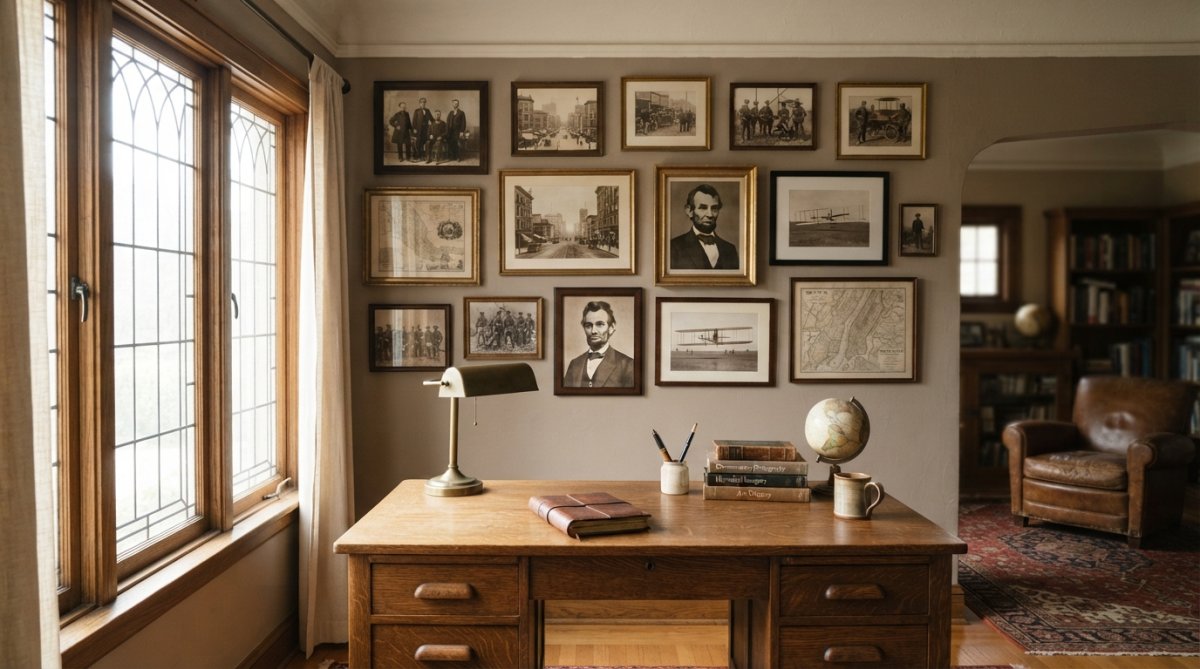
A gallery wall featuring historical art requires thoughtful planning. Start by selecting 5 to 9 works depending on wall size, then lay them out on the floor before hanging. This allows experimentation with spacing and arrangement without committing to nail holes.
Visual balance is foundational. Mix frame sizes and orientations: a large landscape photograph paired with smaller portrait-oriented prints, alternating between vertical and horizontal pieces. If your collection includes different frame styles, wood, metal, that adds visual interest and suggests curation rather than matching sets.
Spacing is critical. Most designers recommend 2 to 3 inches between frames, though this varies by aesthetic preference. Tighter spacing creates a cohesive, gallery-like feel; wider spacing emphasizes individual pieces.
Consider the wall's context. A gallery wall in an entryway makes a powerful first impression. In a bedroom, 3 to 5 pieces feel intimate. Above a sofa, a horizontal gallery wall anchors the seating area.
| Step | Action | Timeline |
|---|---|---|
| 1. Curate | Select 5-9 pieces that share a theme or color palette | 1-2 weeks |
| 2. Frame | Choose frames that complement your décor (wood, metal, or canvas wrap) | 2-3 weeks |
| 3. Layout | Arrange pieces on the floor to test composition | 1-2 hours |
| 4. Mark | Lightly pencil mark wall positions before hanging | 30 minutes |
| 5. Hang | Install frames level and secure, using appropriate hardware | 1-2 hours |
| 6. Adjust | Step back, evaluate, and make minor adjustments | 15 minutes |
Best Framing Styles for Classic Art
The frame you choose can elevate or diminish your art history wall art for home. Classic art deserves framing that respects its heritage while fitting your interior aesthetic.
Traditional wooden frames in natural finishes, oak, walnut, or cherry, suit historical prints, vintage botanical illustrations, and documentary photography beautifully. These frames add warmth and suggest authenticity. For sepia-tone or monochrome imagery, a simple wood frame in neutral tone lets the photograph be the star.
Metal frames, particularly in black or brushed gold, work well for modern interiors paired with historical art. This contrast, contemporary framing around archival imagery, creates visual interest and prevents dated feeling. Canvas wraps printed directly onto canvas and stretched over wooden bars create a frameless, gallery-like appearance, working especially well for large-scale documentary photographs.
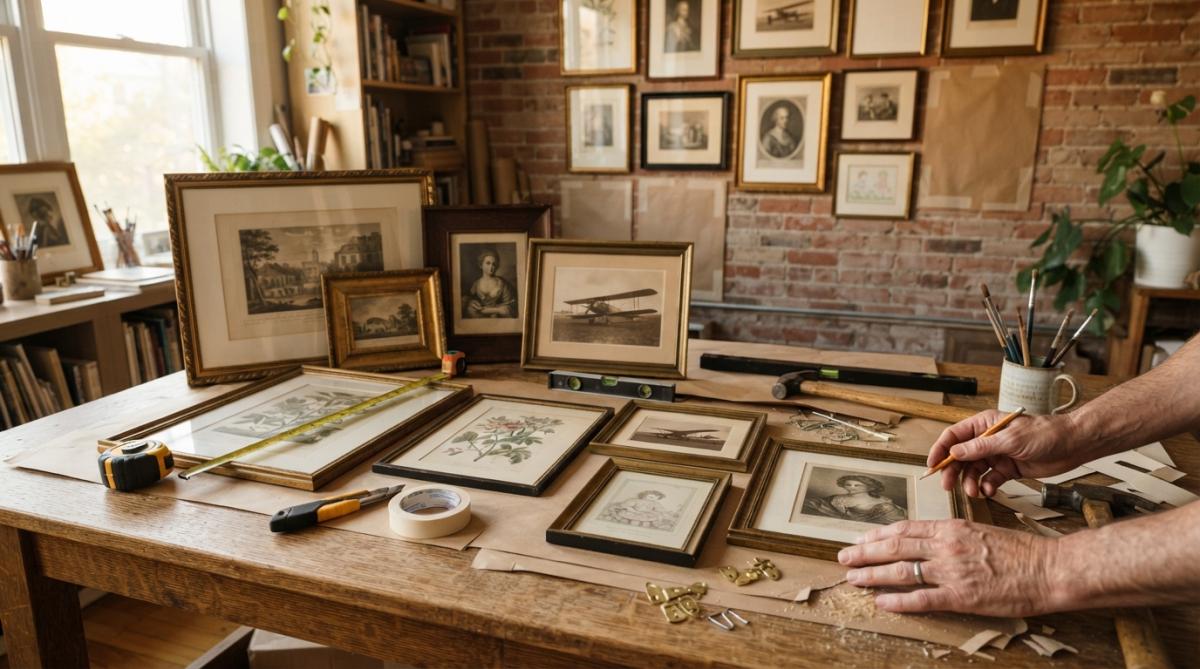
Prioritize archival quality. UV-resistant glass protects artwork from fading. Acid-free matting and backing prevent deterioration over decades. Museum-grade framing ensures your investment functions as an heirloom rather than temporary décor.
Consider frame finishes in relation to other metallic elements in your room. If lighting fixtures are brass, choose brass-toned frames. If hardware is matte black, select black frames. This coordination creates a polished, intentional aesthetic.
Art History Decor Ideas for Every Space
Art history wall art for home takes different expressions depending on location and function.
Bedrooms: Create restful environments with softer imagery. Botanical prints, landscape photography, and portraits in muted tones work well. Avoid jarring or overly dramatic pieces. A single large-scale artwork centered above the bed or a small gallery wall of 3 pieces provides visual interest without overstimulation.
Home Offices and Studies: Documentary photography and historical imagery shine here. Black-and-white architectural photographs, meaningful maps, or portraits of admired historical figures create an intellectual atmosphere that inspires focus.
Living Rooms: Go bold. Large-scale historical prints, multi-panel artwork, or comprehensive gallery walls work well where you entertain and gather. This is your opportunity to make a statement with art history wall art for home reflecting your passions.
Entryways: A single striking piece, a large-scale vintage poster, dramatic historical photograph, or framed map, sets the tone for your entire home and benefits from artwork with strong visual presence.
Nurseries and Children's Rooms: RunwayandHeirloomArt specializes in charming, imaginative artwork for young spaces. Historical illustrations, vintage children's book art, and whimsical period-accurate prints introduce aesthetic appreciation early and often become cherished keepsakes.
Dining Areas: Historical imagery of food, agriculture, or cultural traditions works beautifully. Vintage restaurant posters, botanical illustrations of fruits and vegetables, or period-accurate culinary artwork adds character while connecting to the room's purpose.
Choosing Quality: Archival Materials and Museum-Grade Prints
The difference between art that fades and art that endures comes down to materials. Museum-grade printing uses acid-free paper, pigment-based inks, and archival processes designed to preserve artwork for 100+ years. Standard commercial printing uses cheaper materials that degrade within 5-10 years.
According to the Smithsonian Institution's conservation guidelines, proper archival framing includes UV-resistant glass, acid-free matting, and lignin-free backing materials. These elements prevent deterioration from light exposure, humidity, and chemical reactions over time.
When evaluating art history wall art for home options, ask: What paper stock is used? Are inks pigment-based or dye-based? Is the printing process giclee (fine art reproduction) or standard digital printing? Does framing include UV glass? Is matting acid-free? These answers reveal whether you're purchasing artwork or temporary decoration.
Canvas wraps should specify material composition. Quality canvas is cotton or linen blend, not polyester. Stretcher bars should be solid wood, not particle board. These details matter when considering long-term durability.
RunwayandHeirloomArt creates prints using archival-quality processes with attention to color accuracy and material durability, designed to age gracefully and become more meaningful over time.
A museum-grade print of meaningful historical artwork becomes an heirloom you pass to the next generation. When choosing art history wall art for home, quality of materials determines whether your investment appreciates in value and meaning.
Conclusion
Art history wall art for home is more than decoration, it's a way to surround yourself with meaning, beauty, and stories that matter. Whether drawn to vintage prints, documentary photography, or curated gallery walls, the right pieces transform how you experience your living spaces.
According to Market Research Future's fine art market analysis, the online fine art market is experiencing rapid growth, making quality artwork more accessible than ever.
Selecting and displaying art history wall art for home requires intention. Choose pieces that speak to your passions and aesthetic. Frame them with archival quality. Arrange them thoughtfully. Over time, these pieces become part of your home's story, visual anchors reflecting who you are and what you value.
At RunwayandHeirloomArt, we create prints designed to do exactly this. Our curated collection spans historical periods, themes, and styles, from aviation artwork to nursery prints to art-history-inspired pieces that bring character to every room. Each print combines historical authenticity with contemporary design sensibility.
Discover artwork that tells your story. Explore our collection and find the pieces that transform your space into a home filled with meaning.
Frequently Asked Questions
What makes art history wall art different from generic decorative prints?
Art history wall art draws from established artistic movements, historical periods, and documented cultural moments, giving each piece educational and aesthetic depth. These prints often feature museum-grade reproductions of archival-quality work, with attention to historical accuracy and artistic composition. Unlike mass-produced decor, art history pieces tell a story and create focal points that reflect personal taste and intellectual engagement with interior design.
How do I create a gallery wall with historical art without it looking cluttered?
Start by selecting a unifying element, a shared color palette, frame style, or historical period. Lay out your pieces on the floor first to plan spacing. Use consistent framing styles (matching wood tones or metal finishes) to tie the composition together. Leave 2-3 inches between frames for visual breathing room. A gallery wall works best when pieces share either a theme or a cohesive aesthetic, making the arrangement feel intentional rather than random.
What framing styles work best for classic art and historical prints?
Wood frames in natural finishes complement vintage aesthetic and documentary photography beautifully. Metal frames, particularly matte black or brushed gold, suit modern interiors with historical art. Matting adds sophistication and protects the print; acid-free, archival-quality mats preserve artwork for decades. Canvas wraps work well for larger historical photographs, while traditional framing with UV-resistant glass protects against fading. The frame should enhance the artwork without overwhelming it.
How can I be sure art history prints won't fade or deteriorate?
Look for giclee prints on archival paper or canvas, which use pigment-based inks that resist fading for 100+ years. Museum-grade framing includes UV-resistant glass that blocks harmful light. Acid-free matting and mounting prevent yellowing and deterioration over time. Avoid direct sunlight on valuable pieces, and choose frames designed for conservation. Quality prints from established studios are created with longevity in mind, ensuring your investment remains vibrant as an heirloom.
This article was written using GrandRanker