 listicle
Nursery Wall Art That Grows Up: 7 Collections
Table of Contents
- Why Nursery Wall Art That Grows Up Matters
- How to Choose Art for Nursery: What Actually Works
- Quick Comparison: 7 Collections That Transition Well
- 1. Watercolor Nursery Art: Soft Sophistication That Lasts
- 2. Modern Minimalist Prints: Clean Lines for Every Age
- 3. Gallery Wall Ideas for Children: Building Flexible Collections
- 4. Aviation and Adventure Art: Imagination That Grows
- 5. Timeless Nursery Decor Ideas: Neutral Palettes and Classic Themes
- Installation and Transition Tips: Making Art Work as Your Child Grows
- Why Quality Matters: The Heirloom Perspective
- Bringing It Together: Your Nursery Wall Art That Grows Up
- Frequently Asked Questions
Last Updated: August 24, 2026
Why Nursery Wall Art That Grows Up Matters
The U.S. kids room decor market size was valued at $12,750.2 million in 2022 and is projected to reach $24,490.1 million by 2032, registering a CAGR of 6.8% from 2023 to 2032 (dataintelo.com). Parents are investing thoughtfully in their children's spaces with an eye toward longevity. Most find a natural refresh point around 18-24 months, when toddlers show clear preferences (babysparks.com). Rather than starting over, thoughtful parents choose art that transitions seamlessly from infant room to big kid bedroom.
What separates enduring nursery art from the rest: it tells a story without relying on cartoon characters or pastel clichés. It uses color psychology, narrative depth, and design sophistication to create an environment that supports development while remaining beautiful as tastes mature.
High-contrast visual stimulation increases neural pathway formation during the first six months of life (peer-reviewed research). Story-based nursery environments can support early literacy readiness. Thoughtful art choices matter, they're developmental tools, not mere decoration.
This guide covers seven collections that work: pieces supporting your infant's cognitive growth, adapting to your toddler's emerging personality, and remaining beautiful as your child enters elementary school and beyond.
How to Choose Art for Nursery: What Actually Works
Choosing nursery art requires balancing visual stimulation for newborns, aesthetic appeal for parents, and longevity as your child grows.
Start with color. Newborns see high-contrast patterns best, black, white, and deep jewel tones trigger visual focus and neural development. These same colors read as sophisticated to adult eyes. A navy-and-white gallery wall feels intentional, not babyish. By choosing colors that work for both developmental stages and adult taste, you're ahead from the start.
Next, think about narrative. A mural of a hot air balloon introduces adventure and wonder. A watercolor landscape grows with your child, at age two, it's a place to point and name colors; at age eight, it's inspiration for their own art; at age sixteen, it's a reminder of childhood without feeling babyish.
Material matters. Prints fade; canvas warps. The best nursery art uses archival-quality inks on museum-grade paper or employs techniques like watercolor that age beautifully. You're creating an heirloom, not just decorating a room.
Consider scale. A single large piece anchors a room better than five small ones. If building a gallery wall, curate it like a collection, pieces that speak to each other, not a hodgepodge of unrelated frames.
Finally, ask yourself: will I still love this when my child is ten? The best nursery wall art passes the longevity test. It's art you'd hang in your own bedroom.
Quick Comparison: 7 Collections That Transition Well
| Collection | Best For | Grows With Your Child | Key Advantage |
|---|---|---|---|
| Watercolor Nursery Art | Soft, sophisticated aesthetic | Newborn to age 10+ | Timeless, artistic, high-quality |
| Modern Minimalist Prints | Clean, contemporary spaces | Newborn to teen | Neutral palette, scalable themes |
| Gallery Wall Ideas | Curated, intentional look | Newborn to age 12+ | Flexible, can evolve with updates |
| Aviation and Adventure Art | Story-driven environments | Newborn to age 15+ | Inspires imagination, gender-neutral |
| Timeless Neutral Decor | Versatile, long-lasting appeal | Newborn to age 18+ | Works with any evolving style |
1. Watercolor Nursery Art: Soft Sophistication That Lasts
Watercolor is the gold standard for nursery art that grows up. Galleries show watercolor paintings, not character posters. A well-executed watercolor landscape reads as intentional, artistic, and enduring.
Soft color transitions soothe infants while subtle complexity engages developing brains. Watercolor doesn't scream for attention, it whispers, exactly what a newborn's nervous system needs.
As your child grows, watercolor pieces become conversation starters. A watercolor forest canopy isn't just pretty; it's an entry point to nature study, art appreciation, and imagination. At age six, your child might ask why the artist chose those colors. At age twelve, they might want to try watercolor themselves.
The challenge with watercolor online is quality. Poor reproductions look flat and lifeless. The best watercolor nursery art uses museum-grade paper and archival inks that preserve luminosity and depth. RunwayandHeirloomArt's watercolor collection emphasizes this, each piece is designed to age beautifully, with colors remaining vibrant for decades.
2. Modern Minimalist Prints: Clean Lines for Every Age
Minimalist design is enduring because it removes everything unnecessary, leaving only what matters. A modern minimalist print with clean lines, neutral tones, and geometric simplicity works in a newborn's room and a teenager's bedroom without modification.
Minimalist art reduces visual noise. In a world of overstimulation, a clean, intentional print provides visual rest. Newborns benefit from this calm; parents benefit even more.
The best minimalist nursery prints use limited color palettes, soft grays, warm whites, and single accent colors like sage or soft blue. These coordinate with any evolving décor. You're never locked into a specific theme.
Consider prints featuring simple line drawings of animals, abstract shapes, or architectural elements. These age particularly well because they're not tied to trends or character licensing.
3. Gallery Wall Ideas for Children: Building Flexible Collections
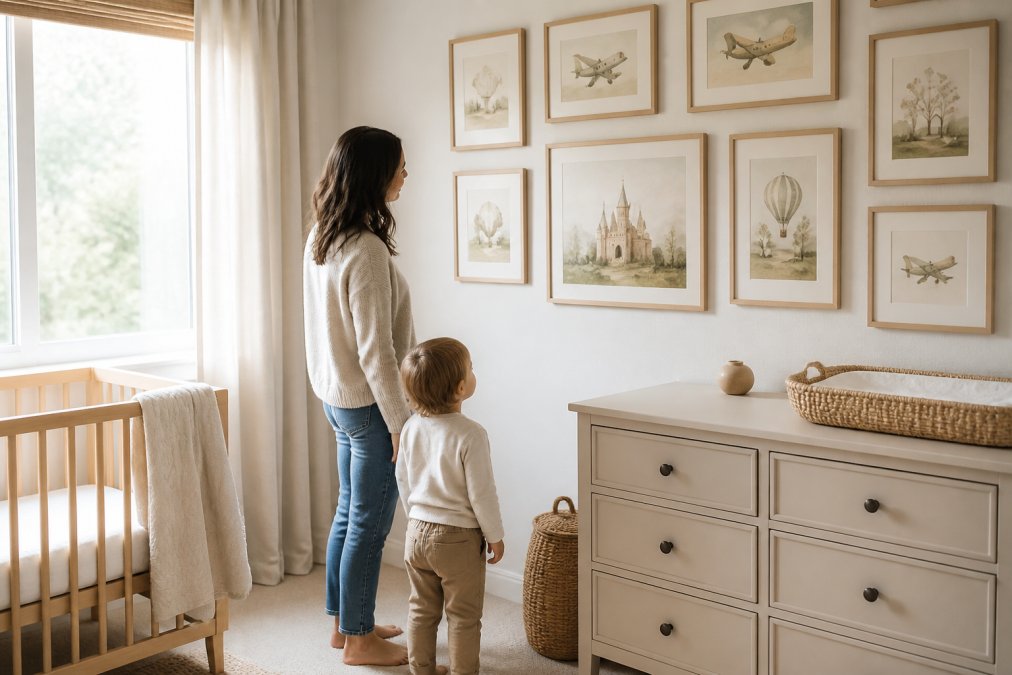
A gallery wall is the most flexible approach to nursery wall art that grows up. Rather than committing to a single piece, you're building a curated collection that can evolve. When your child's interests shift, you swap out one or two prints without reimagining the entire room.
The key is intentionality. Choose a unifying element: consistent frame color, shared color palette, or common theme. This creates cohesion even as individual pieces change.
Start with a mix of sizes and orientations. Two large prints anchored by four to six smaller ones creates visual interest without chaos. Vary spacing, some frames closer together, some breathing room.
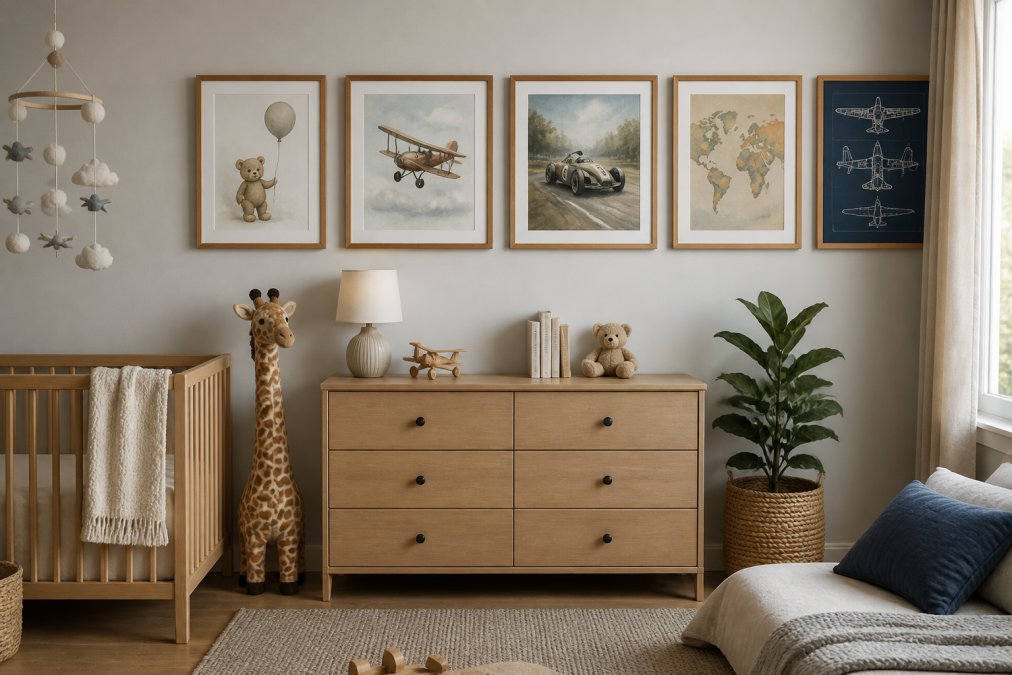
For nurseries, mix themes: a landscape, an animal, a geometric pattern, and a child-friendly scene like a hot air balloon. This variety keeps the wall interesting as your child grows.
Frame consistency matters. Stick to two, maybe three frame colors maximum. Black, natural wood, and white work together and age beautifully.
4. Aviation and Adventure Art: Imagination That Grows
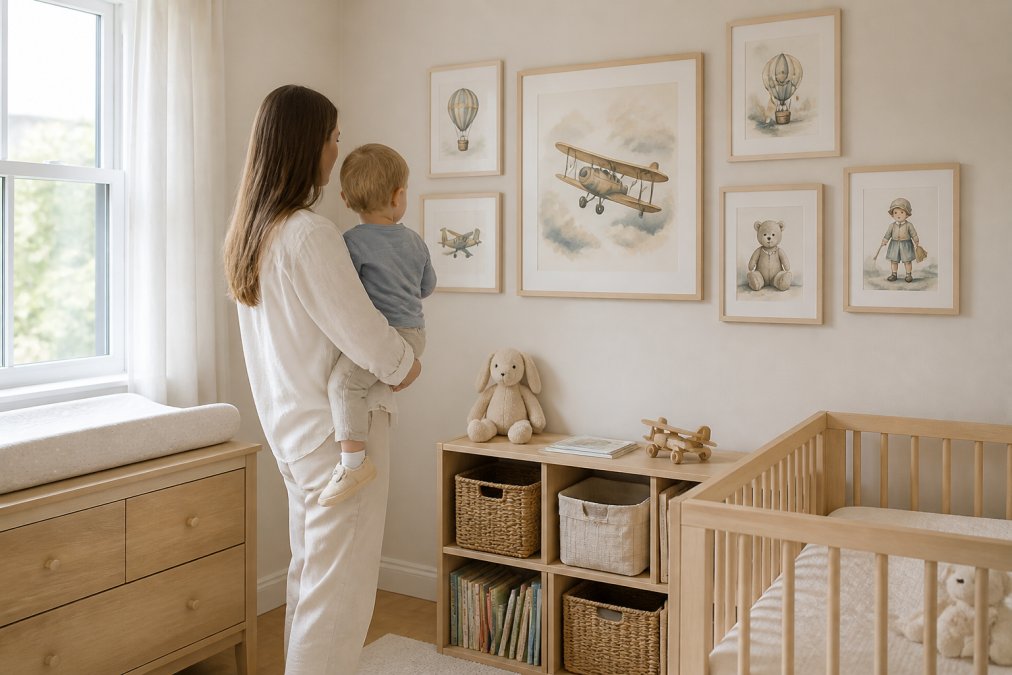
Aviation art speaks to adventure, possibility, and wonder without being cartoonish. A vintage-inspired airplane print or hot air balloon illustration is an invitation to imagine.
Children respond to aviation art instinctively. A two-year-old points and says "sky!" A five-year-old asks where it's going. A teenager sees vintage aviation art and thinks about travel, history, and possibility.
The best aviation art uses a sophisticated palette, warm golds, deep blues, muted greens. Avoid bright primary colors or overly cartoonish styles. Choose pieces inspired by vintage travel posters or historical aviation imagery. These age beautifully because they're rooted in design history rather than trends.
Aviation themes pair beautifully with other elements. A hot air balloon coordinates with watercolor landscapes. A vintage airplane works alongside minimalist prints. This flexibility makes aviation art an excellent anchor for a growing collection.
5. Timeless Nursery Decor Ideas: Neutral Palettes and Classic Themes
The foundation of any nursery that grows up is a neutral palette. Opt for whites, grays, or soft pastels. These offer a timeless backdrop that complements any evolving theme.
Neutral doesn't mean boring. A soft gray-and-white room feels sophisticated and calm. Add texture through different frame finishes, varied print styles, and layered décor. The neutrality creates a canvas; the art adds personality.
Classic themes, nature, animals, geography, history, never feel dated. A forest canopy is timeless. A world map grows with your child from toddler to college student. A historical train or ship illustration carries narrative weight that trends can't touch.
These themes support learning. A nature-themed room invites conversation about seasons and ecosystems. A geography-themed space introduces the wider world. They're educational, not just beautiful.
When choosing classic themes, prioritize quality over quantity. One beautifully executed print beats five mediocre ones. Consider pieces reflecting your family's interests or heritage. If your family loves sailing, aviation-themed art makes sense. This personalization ensures the art feels meaningful.
Installation and Transition Tips: Making Art Work as Your Child Grows
Hanging nursery art requires thinking beyond the moment. Where you place a print matters as your child grows and the room's function shifts.
For newborns, hang prints at eye level when sitting, roughly 57 to 60 inches from the floor. This creates a visual anchor during nighttime feedings.
As your child grows into a toddler, prioritize safety. Secure all frames firmly. Avoid sharp edges or heavy pieces that could cause injury if dislodged. Use quality picture hangers rated for frame weight.
The transition from nursery to toddler room happens gradually. Around 18-24 months, most parents find a natural refresh point. Rather than removing everything, update 30 to 40 percent of the art. Keep pieces you love; add new ones reflecting your child's emerging personality.
By age five or six, involve your child in choices. Ask what colors they like, what themes interest them. This ensures the art feels personal, not imposed.
For the big kid years (ages 8 to 12), maintain the core collection while introducing new pieces reflecting their interests. The foundation remains timeless; details evolve.
Why Quality Matters: The Heirloom Perspective
There's a difference between prints you tolerate for a season and art you'll treasure for decades. Quality shows in archival inks that resist fading, museum-grade paper that ages beautifully, and design sophistication that transcends trends.
When you invest in quality nursery wall art that grows up, you're saying: this space matters. This art was chosen thoughtfully. This room is part of our family's story.
Professional services report growing demand from parents seeking developmentally appropriate artistic environments that support learning. This reflects a broader shift, parents are thinking deeply about their children's environments.
The financial argument is simple: a $30 high-quality print lasting fifteen years costs $2 per year. A $10 low-quality print fading in three years costs $3.33 per year. Quality is economical.
Your child will remember the art in their childhood room. By choosing art with intention and quality, you're creating a memory.
Bringing It Together: Your Nursery Wall Art That Grows Up
The best nursery wall art that grows up starts with a clear vision: this room will evolve, and the art should evolve with it. Choose pieces supporting your newborn's development while remaining beautiful as they mature. Prioritize quality, intentionality, and timelessness over trends.
Consider your space's light, your family's aesthetic preferences, and themes that resonate with you. Build your collection thoughtfully, perhaps starting with one anchor piece and adding complementary prints over time. A gallery wall needn't be finished overnight, it can grow and change as your child does.
The nursery is one of the few rooms designed entirely for another person. That responsibility deserves thoughtful choices.
At RunwayandHeirloomArt, we believe nursery wall art should tell a story. Our watercolor collection and aviation-themed prints are designed for parents wanting art with personality, pieces supporting development in infancy, remaining beautiful through toddlerhood, and feeling intentional as your child grows into their own style. Explore our curated selections and discover art that becomes part of your family's story. Get started with RunwayandHeirloomArt and create a nursery that grows with your child, a space that's beautiful from day one and remains meaningful for years to come.
=== FAQ ANSWERS (audit these too, same rules) ===
[1] Q: How do I choose nursery wall art that won't look too babyish as my child grows? A: Select pieces with timeless qualities: neutral color palettes, geometric patterns, or art-history-inspired designs rather than character-driven themes. Story-based nursery environments can support early literacy readiness. Look for gallery wall concepts that layer different pieces together, this approach feels more intentional and evolves naturally as your child's interests develop. Avoid overly cutesy imagery; instead, choose sophisticated watercolor art or minimalist prints that feel equally at home in a toddler's room or a school-age child's bedroom.
[2] Q: What themes work best for nursery wall art that lasts through childhood? A: Neutral themes with imaginative undertones perform best: space and celestial imagery, nature scenes, historical or aviation themes, and abstract patterns. The nursery decor market shows strong demand for art that supports learning while maintaining safety, pieces that introduce concepts like geography, history, or exploration without being explicitly 'baby' focused. High-contrast visual stimulation increases neural pathway formation during the first six months of life, but designs should remain sophisticated enough to feel relevant at ages 5, 8, and beyond. Avoid limited-edition character collections that fade from cultural relevance.
[3] Q: How can I style nursery wall art to transition into a toddler room without replacing everything? A: Most parents find a natural refresh point around 18-24 months when toddlers show clear preferences. Rather than replacing all artwork, add complementary pieces that work alongside existing prints. Use coordinating sets or gallery wall collections that allow flexibility, you can add new prints, reframe pieces, or rearrange the layout without starting over. Choose digital downloads or printable artwork options that let you print new sizes or formats as the room evolves. Neutral frames and mats make it easy to swap prints without changing the wall installation. This approach respects both your initial investment and your child's developing taste.
[4] Q: Should I choose framed prints or canvas for a child's room that grows with them? A: Framed prints offer more flexibility for long-term transitions. They're easier to swap out, reframe in different styles as your child's room evolves, and can move to other spaces (bedrooms, studies, offices) as the child ages. Canvas art works well for permanent installations but becomes harder to update. Consider a mix: invest in quality framed prints for the main gallery wall and use canvas for accent pieces. Digital downloads give you the most flexibility, print on canvas, framed prints, or even wallpaper as your needs change. High-quality prints in archival materials resist fading and hold up through years of display.
[5] Q: How do I know if nursery wall art will actually last and not fade over time? A: Look for prints made with archival-quality materials, fade-resistant inks, and acid-free paper. Quality matters: watercolor art and oil painting prints from established artists hold color better than mass-produced alternatives. Check whether the artist uses professional printing standards, this information is usually available on the product page. Avoid direct sunlight on delicate prints; use UV-protective glass if the artwork will receive significant natural light. Brands emphasizing durability and heirloom quality typically use better materials. Digital downloads let you reprint if fading occurs, giving you long-term flexibility. Real quality shows in the weight of the paper, the vibrancy of colors, and the reputation of the artist.
Frequently Asked Questions
Q: How do I choose nursery wall art that won't look too babyish as my child grows?
A: Select pieces with timeless qualities: neutral color palettes, geometric patterns, or art-history-inspired designs rather than character-driven themes. Story-based nursery environments can support early literacy readiness. Look for gallery wall concepts that layer different pieces together, this approach feels more intentional and evolves naturally as your child's interests develop. Avoid overly cutesy imagery; instead, choose sophisticated watercolor art or minimalist prints that feel equally at home in a toddler's room or a school-age child's bedroom.
Q: What themes work best for nursery wall art that lasts through childhood?
A: Neutral themes with imaginative undertones perform best: space and celestial imagery, nature scenes, historical or aviation themes, and abstract patterns. The nursery decor market shows strong demand for art that supports learning while maintaining safety, pieces that introduce concepts like geography, history, or exploration without being explicitly 'baby' focused. High-contrast visual stimulation increases neural pathway formation during the first six months of life, but designs should remain sophisticated enough to feel relevant at ages 5, 8, and beyond. Avoid limited-edition character collections that fade from cultural relevance.
Q: How can I style nursery wall art to transition into a toddler room without replacing everything?
A: Most parents find a natural refresh point around 18-24 months when toddlers show clear preferences. Rather than replacing all artwork, add complementary pieces that work alongside existing prints. Use coordinating sets or gallery wall collections that allow flexibility, you can add new prints, reframe pieces, or rearrange the layout without starting over. Choose digital downloads or printable artwork options that let you print new sizes or formats as the room evolves. Neutral frames and mats make it easy to swap prints without changing the wall installation. This approach respects both your initial investment and your child's developing taste.
Q: Should I choose framed prints or canvas for a child's room that grows with them?
A: Framed prints offer more flexibility for long-term transitions. They're easier to swap out, reframe in different styles as your child's room evolves, and can move to other spaces (bedrooms, studies, offices) as the child ages. Canvas art works well for permanent installations but becomes harder to update. Consider a mix: invest in quality framed prints for the main gallery wall and use canvas for accent pieces. Digital downloads give you the most flexibility, print on canvas, framed prints, or even wallpaper as your needs change. High-quality prints in archival materials resist fading and hold up through years of display.
Q: How do I know if nursery wall art will actually last and not fade over time?
A: Look for prints made with archival-quality materials, fade-resistant inks, and acid-free paper. Quality matters: watercolor art and oil painting prints from established artists hold color better than mass-produced alternatives. Check whether the artist uses professional printing standards, this information is usually available on the product page. Avoid direct sunlight on delicate prints; use UV-protective glass if the artwork will receive significant natural light. Brands emphasizing durability and heirloom quality typically use better materials. Digital downloads let you reprint if fading occurs, giving you long-term flexibility. Real quality shows in the weight of the paper, the vibrancy of colors, and the reputation of the artist.
This article was written using GrandRanker