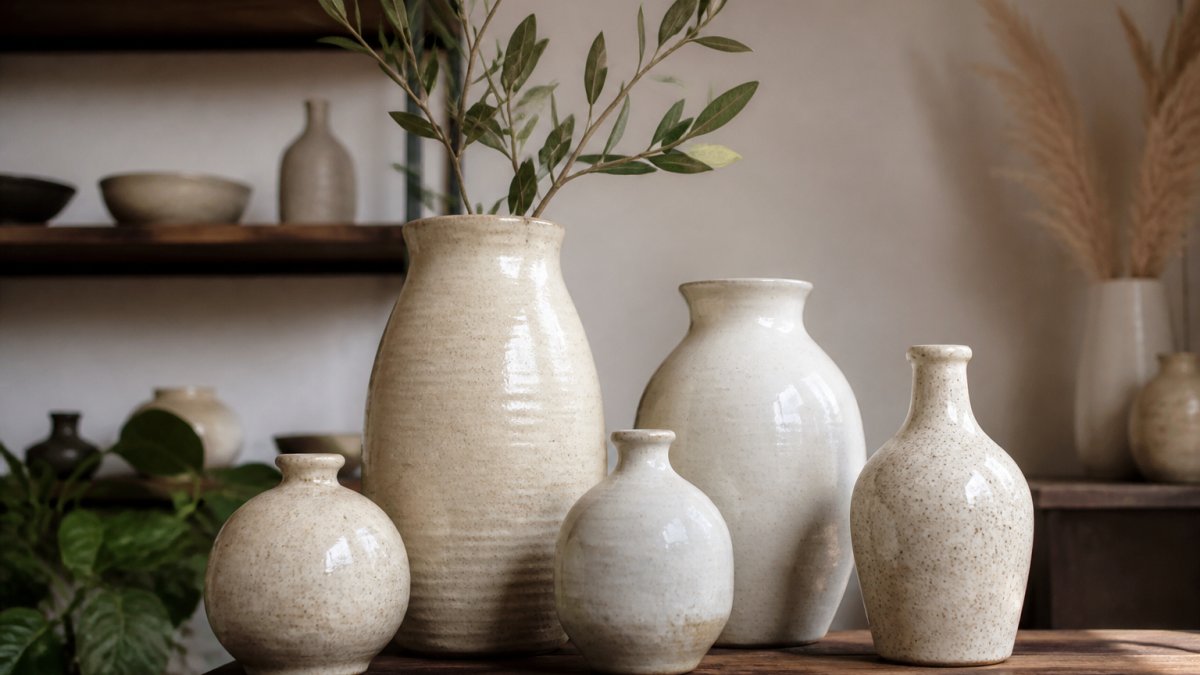
 listicle
Unique Handmade Ceramic Vases for Modern Homes
Table of Contents
- Why Unique Handmade Ceramic Vases Belong in Modern Homes
- How to Choose a Handmade Ceramic Vase: A Selection Framework
- Sculptural Ceramic Vases: When the Vessel Is the Art
- Large Ceramic Floor Vases: Anchoring a Room Without Clutter
- Ceramic Vase Styling Ideas for Every Room
- Care, Cleaning, and Water-Tightness: Making a Vase Last
- What to Ignore: Common Bad Advice About Ceramic Vases
- Conclusion: Building a Collection That Tells Your Story
- Frequently Asked Questions
Last Updated: October 9, 2026
Why Unique Handmade Ceramic Vases Belong in Modern Homes
The contemporary ceramic vase market was valued at $398.5 million in 2021 and was projected to reach $538.37 million by the end of 2026, according to Cognitive Market Research's contemporary ceramic vase market analysis.
A handmade ceramic vase is a wheel-thrown or hand-built vessel shaped from clay and finished with glaze, made by an individual artist rather than a production line.
At Runway & Heirloom, we believe artwork should tell a story, whether it recalls another era, reflects a lifelong passion, introduces a child to a world of imagination, or simply captures something that speaks to you.
How to Choose a Handmade Ceramic Vase: A Selection Framework
Start with the room, not the vase. Measure the surface, note the height of surrounding furniture, and pull the two or three dominant colors from the space. A vessel that ignores those constraints will look borrowed no matter how beautiful it is alone.
Scale, Shape, and Glaze: The Three Decisions That Matter
Scale decides whether a vase reads as decor or clutter.
Shape sets the mood. Cylindrical forms read architectural and calm; organic, asymmetric forms read expressive. Mid-century interiors favor tapered, narrow-neck silhouettes.
Glaze controls how the piece interacts with light. Glossy finishes bounce light and suit bright, minimalist rooms; matte and textured glazes absorb light and add depth to warmer, layered spaces.
| Decision | Choose This | When |
|---|---|---|
| Scale | Small bud vase (under 15 cm) | Coffee tables, shelves, bedside |
| Scale | Medium vase (20-35 cm) | Consoles, dining tables, mantels |
| Scale | Large floor vase (60 cm+) | Empty corners, beside sofas |
| Shape | Cylindrical or tapered | Minimalist, mid-century rooms |
| Shape | Organic or abstract | Eclectic, sculptural interiors |
| Glaze | Glossy | Bright rooms, neutral palettes |
| Glaze | Matte or textured | Warm rooms, layered textiles |
Sculptural Ceramic Vases: When the Vessel Is the Art
Four criteria do most of the work.
**1. If you can describe the form in one sentence, "a tall folded column," "a squat pinched sphere", it will hold a room.
2. Negative space. Sculptural pieces live or die by the air around them.
3. Surface honesty. Hand-built work shows coil lines, thumb marks, or an uneven lip; wheel-thrown work shows concentric rings. Neither is a defect.
4. Weight and balance. A tall piece with a narrow base is a tipping hazard.
Sizing a Sculptural Vase to the Room
Sculptural pieces are usually the largest object on their surface, so scale errors are obvious. Starting points:
| Placement | Target Height | Base Diameter |
|---|---|---|
| Open shelf | 20-35 cm | 8-12 cm |
| Console or sideboard | 35-55 cm | 12-18 cm |
| Dining table centerpiece | 25-40 cm (below eye line when seated) | 12-20 cm |
| Floor, beside seating | 60-90 cm | 20-30 cm |
On a dining table, keep the vase top below the seated eye line, roughly 40 cm above the surface, so guests can see across it. On open shelving, a sculptural piece works best alone; two competing forms cancel each other out.
What Drives the Price of a Sculptural Vase
Handmade sculptural work sits in a wide price band, traceable to four factors:
- Technique. Hand-built pieces take longer than wheel-thrown ones of the same size, and one-of-a-kind forms cannot be repeated, so the maker's time is priced into a single object.
- Size and kiln risk. Larger pieces are more likely to crack or warp in the kiln, and makers price that failure rate in.
- Glaze complexity. Layered, reactive, or crystalline glazes require test tiles, extra firings, and more rejected results.
- One-of-a-kind status. A signed, dated piece from a named studio carries a premium over an unsigned production-adjacent form.
A useful gut check: divide the price by the height in centimeters. Sculptural work lands in a higher per-centimeter band than functional tableware, you are paying for the form, not the function.
Where Sculptural Vases Work Best
- On open shelving with clear space on both sides
- As a solo centerpiece on a long dining table
- In a study or entry, where the piece can be seen up close and from across the room
- Paired with dried branches, or left completely empty
If you collect art prints, a sculptural vase does the same job in three dimensions: it gives the eye somewhere to rest and the room a focal point that is not a screen.
Large Ceramic Floor Vases: Anchoring a Room Without Clutter
Large ceramic floor vases solve a specific problem: empty corners. A tall vessel fills vertical space furniture cannot, without adding visual noise.
Size is where most buyers go wrong. A floor vase under 60 cm reads as a mistake, too big for a table, too small for the floor.
Weight matters too. Check the base diameter before you commit, a narrow base on a tall form tips easily in a household with kids or pets.
Ceramic Vase Styling Ideas for Every Room
Styling a handmade ceramic vase is a matching problem: the vessel's silhouette, scale, color, and finish either agree with the room or fight it. Here is the practical version, room by room.
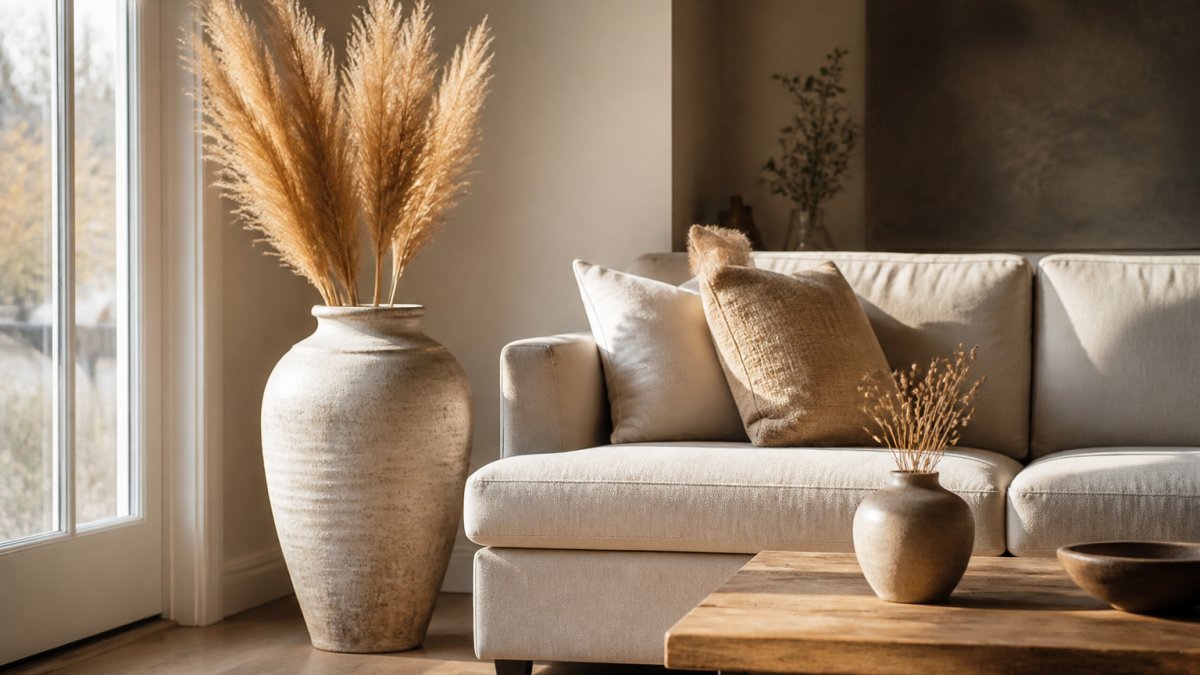
Match the Silhouette to the Room's Architecture
Before you pick a color, pick a shape that echoes the room's existing lines.
- Minimalist rooms, clean walls, low furniture, few objects. Choose cylindrical, tapered, or gently rounded forms in a single glaze color; avoid busy texture.
- Mid-century modern rooms, tapered legs, walnut tones, warm neutrals. Choose narrow-neck, tapered silhouettes with a matte or satin glaze in mustard, olive, burnt orange, or cream.
- Industrial or loft spaces, exposed brick, metal, concrete. Choose heavier, hand-built forms with visible texture and a darker, reactive glaze; glossy finishes look out of place against raw materials.
- Scandinavian rooms, pale wood, white walls, soft textiles. Choose small to medium pieces in off-white, sand, or pale gray with a matte finish.
Match the Color to the Room's Dominant Palette
Pull two colors from the room, usually the wall and the largest piece of furniture, and choose a vase that matches one or sits one step away on the color wheel.
- Neutral rooms (white, gray, beige): a single saturated glaze, deep teal, rust, cobalt, becomes the accent. One is enough.
- Warm rooms (wood, terracotta, cream): stay in the warm family. Olive, ochre, clay, and cream glazes layer without competing.
- Cool rooms (blue, gray, green): a warm glaze creates contrast. A cream or amber piece against a cool wall reads intentional rather than accidental.
- Already colorful rooms: choose a neutral glaze, matte white, sand, charcoal, so the vase does not add a fourth voice.
Match the Finish to the Room's Light
Glaze finish is the most overlooked styling decision. It changes how a piece reads at different times of day.
- Glossy glazes bounce light and make a small piece feel larger; they suit bright, south-facing rooms and neutral palettes.
- Matte glazes absorb light and add depth; they suit warmer, layered rooms and look better under lamplight.
- Textured or reactive glazes catch light unevenly, adding interest in rooms with flat, even lighting.
- Speckled glazes read slightly rustic and pair well with linen, wood, and wool.
A quick test: hold a swatch or phone photo of the vase next to the wall at the time of day you use the room most. A glaze that looks right at noon can look flat at 8 p.m.
Room-by-Room Starting Points
- Living room: one large floor vase in an empty corner, plus a small bud vase on the coffee table, both in the same color family.
- Bedroom: a single small vase on the nightstand, under 20 cm so you can see over it from the pillow; matte glazes work better than glossy here.
- Entryway: a medium vase (30-45 cm) on the console with seasonal branches, the one spot where a bolder glaze earns its place.
- Home office: one sculptural piece on a shelf, positioned so you see it when you look up from the screen.
Grouping Small Vases Without Clutter
Small vases are the hardest to place because a single one on a large surface looks lost. Group two or three at different heights, with at least 10 cm between tallest and shortest, and one taller stem or dried branch to tie the group together. Odd numbers read more naturally, and leave more empty space beside the group than the group itself occupies.
Care, Cleaning, and Water-Tightness: Making a Vase Last
Not every handmade ceramic vase is water-tight, and assuming otherwise is the fastest way to ruin a shelf. Unglazed or low-fired pieces can seep moisture through the clay body.
For glazed pieces, hand wash with warm water and mild dish soap; skip the dishwasher, which can cloud a glaze or chip a rim.
For fresh flowers, change the water every two days and trim stems at an angle.
What to Ignore: Common Bad Advice About Ceramic Vases
The third is that price equals quality. a 2009 International Journal of Design case study on emotionally durable ceramics found that emotional attachment, not technical perfection, is what keeps people using an object for decades. A slightly irregular glaze you love will outlast a flawless one you feel nothing about.
Conclusion: Building a Collection That Tells Your Story
A collection built over years beats a set bought in an afternoon. Start with one piece that fits your room's scale and palette, live with it, and add the next when it genuinely adds to the story.
That is the same principle behind everything at RunwayandHeirloomArt. Our watercolor nursery art and historic aviation prints are chosen to sit alongside objects like these, pieces that reflect a passion or a memory rather than a trend.
Frequently Asked Questions
How do you style a ceramic vase in a modern home?
Start with the room's palette and scale. A tall sculptural vase works on the floor beside a sofa or console, while a small bud vase suits a coffee table or shelf. Keep arrangements simple: three stems of dried flowers or a single branch often reads more modern than a dense bouquet. Group vases in odd numbers and vary heights for visual rhythm. For a cohesive look, repeat one glaze color across two or three vessels in the same room.
What makes a handmade ceramic vase unique?
Each handmade ceramic vase is shaped, glazed, and fired individually, so slight variations in form, texture, and color are normal and part of the value. A 2009 International Journal of Design case study on emotionally durable ceramics found that this individuality helps objects stay meaningful to owners over time. Studio-made pieces often carry the maker's marks, and no two are identical. That is different from mass-produced pottery, where every unit matches exactly.
Can handmade ceramic vases hold water?
Most glazed ceramic vases are water-tight and suitable for fresh flowers. Unglazed or low-fire pieces may seep moisture through the clay body, so use a glass insert or a small plastic liner if you plan to display fresh stems. Always check the maker's care instructions before filling a new vase. For dried arrangements, water-tightness does not matter, and many collectors prefer unglazed finishes for their matte texture.
How do you clean and care for a ceramic vase?
Hand wash glazed ceramic vases with warm water and mild dish soap, then dry with a soft cloth. Avoid abrasive sponges and the dishwasher, which can dull a glossy finish or chip a rim. For mineral buildup inside, fill with warm water and a tablespoon of white vinegar, let it sit for an hour, then rinse. Keep sculptural or hand-painted pieces out of direct sunlight to protect the glaze color, and handle by the base rather than the neck.