 ultimate-guide
How to Buy Art for Gifts: A Thoughtful 2026 Guide
Table of Contents
- Why Art Is the Gift That Keeps Giving
- Decode the Recipient's Style Before You Buy Art for Gifts
- Original Artwork vs. Prints: What to Choose
- Best Places to Buy Affordable Art Online
- How to Frame Art for Longevity and Lasting Appeal
- Essential Tips for Buying Art Prints as Gifts
- The Art of the Collaborative Gift and Provenance Check
- Conclusion: Give a Story, Not Just a Decoration
- Frequently Asked Questions
Last Updated: September 7, 2026
The global wall art market is projected to reach $70.94 billion in 2026, according to Fortune Business Insights' 2026 Wall Art Market Report, yet choosing a piece for someone else remains one of the most personal decisions a gift giver can make. Learning how to buy art for gifts is about translating someone's taste into a tangible expression of how well you know them. This guide covers the practical steps, from decoding a recipient's style to navigating delivery logistics, so your gift feels intentional rather than generic. We'll show you exactly how to select a piece that resonates, with a focus on quality, longevity, and the personal meaning that turns a decoration into a keepsake.
Why Art Is the Gift That Keeps Giving
Art is the rare gift that compounds in value over time, not financially, but emotionally. A thoughtfully chosen print becomes part of someone's daily environment, a quiet reminder of the person who gave it and the moment it was received. Unlike a gadget that gets replaced or a candle that burns down, a framed piece can move with the recipient through several homes and decades of life.
The shift toward buying art this way is already happening. Data from Crib of Art's First-Time Art Buyer Statistics shows that 65% of collectors now purchase artwork online without seeing it in person first, up from 59% in 2024. Gift givers are part of this wave, and the key to success lies in how carefully you match the piece to the person.
Decode the Recipient's Style Before You Buy Art for Gifts
The single biggest mistake people make is buying art they love themselves and assuming the recipient will too. Before you buy art for gifts, you need to become a student of the other person's environment and preferences. This research phase takes a few days of quiet observation but prevents the awkward moment of watching someone unwrap a piece that clashes with everything they own.
Read the Room: Matching Decor and Wall Space
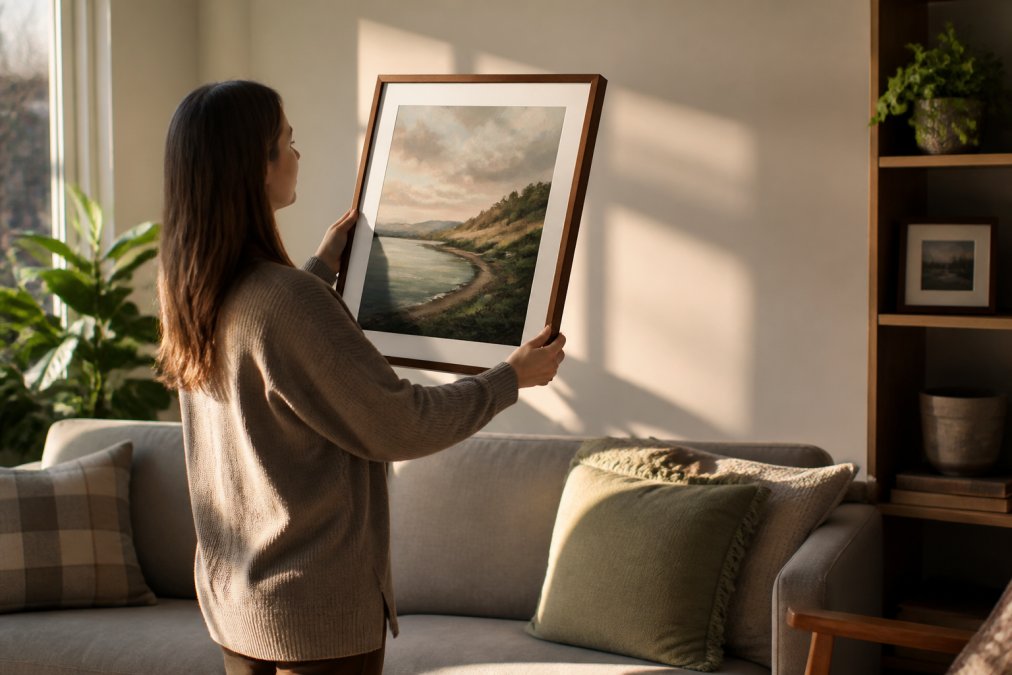
Start by looking at the space where the art will live. Note the dominant color palette, the style of the furniture, and the amount of natural light. A modern, minimalist room with cool grays calls for something different than a cozy, traditional space with warm woods.
Measure the wall where the piece will hang. A print that is too small gets lost; one that is too large overwhelms the room. A good rule of thumb is that the artwork should span roughly two-thirds to three-quarters of the width of the furniture beneath it.
Deciphering Personal Taste: Abstract, Landscape, or Portrait
Beyond decor, consider what the person responds to emotionally. Some are drawn to the energy of abstract forms, others find peace in landscapes, and still others connect with figurative work or portraiture. Look at what they already own, what they post on social media, or what they stop to look at in galleries. For someone with a passion for a specific era or subject, a niche collection like Art Deco Prints or Historic Aviation Prints can speak directly to that interest in a way a generic landscape never will.
For a 2026 perspective, this generational shift is notable: approximately 52% of younger collectors prioritize how art complements their specific lifestyle choices and home interiors, according to Women in Arts Network market analysis. The practical takeaway is that art chosen to fit a person's life, not just their wall, lands better as a gift.
Original Artwork vs. Prints: What to Choose
Original artwork offers uniqueness, but prints provide accessibility and range. For most gifting scenarios, a high-quality print is the smarter choice, allowing you to select from a broader array of styles and keeping the price point reasonable without sacrificing visual impact.
What matters most is the quality of the reproduction. Look for giclée prints on archival paper or canvas, which are made with pigment-based inks designed to resist fading for decades. This is where the phrase "gallery quality" earns its meaning. Paper weight, ink density, and color accuracy all separate a print that looks like a poster from one that looks like a painting. The global market growth reflects this appetite, with the wall art sector projected to expand from $70.94 billion in 2026 to $145.49 billion by 2034 Fortune Business Insights.
Best Places to Buy Affordable Art Online
The digital marketplace has made buying art easier than ever, but quality varies wildly between platforms. For affordable options, you are looking at three main channels: large e-commerce marketplaces, specialized print-on-demand services, and independent artist studios.
Independent artists and small studios often provide the best balance of quality and originality. Buying directly from the creator can mean better communication, more customization options, and a story you can share with the recipient. Pricing on these platforms is accessible, with Architectural Digest's analysis of online art platforms noting that affordable art marketplaces offer pieces starting well under $100 and ranging into the thousands for larger or more complex works.
| Source Type | Best For | Key Consideration |
|---|---|---|
| Large Marketplaces | Quick, generic finds | Quality control varies |
| Print-on-Demand | Custom sizing and formats | Check paper and ink quality |
| Independent Studios | Unique, story-driven pieces | Limited edition or one-of-a-kind |
How to Frame Art for Longevity and Lasting Appeal
Framing is not an afterthought; it is half the gift. A well-chosen frame protects the artwork and elevates it from a print to a presentation piece. The difference between a frame that lasts a decade and one that fails in two years comes down to specific material choices and a few structural rules.
Start with the Glazing: Glass vs. Acrylic
The first decision is what goes in front of the artwork. Standard picture glass blocks about 40% of UV rays, but for a gift meant to last, you want UV-protective glass or acrylic that blocks 97% to 99% of UV light. Acrylic (often sold as Optium Museum Acrylic or similar) is lighter and shatter-resistant, making it the safer choice for large pieces or homes with children and pets. The trade-off is cost: acrylic runs roughly 30% to 50% more than comparable glass and scratches more easily, requiring careful cleaning with a microfiber cloth and an anti-static cleaner.
For works on paper, the glazing should never touch the surface of the art. That gap is created by the mat or by spacers, which we cover below.
Matting: Acid-Free Is Non-Negotiable
The mat board does more than create a visual border; it keeps the print from contacting the glass, where condensation and temperature shifts can cause sticking and mold. Look for "acid-free" or "museum-grade" mat board, typically made from 100% cotton rag or alpha-cellulose. Standard cardboard mats contain lignin, an organic compound that releases acid as it degrades, yellowing the mat and eventually staining the artwork.
Professional framers commonly use a mat with a 2-inch to 3-inch border on each side for prints up to 18 by 24 inches, giving the eye room to rest. For smaller prints, a 1.5-inch mat is acceptable, but anything narrower risks looking like a poster slapped in a frame.
Frame Molding: Material and Depth Matter
Frame moldings come in three basic materials: solid wood, MDF (medium-density fiberboard) with a wood veneer, and metal. Solid wood is the most durable and easiest to repair, but also the most expensive. MDF frames are lighter and cheaper, but they dent easily and the veneer can peel in humid environments. Metal frames, typically aluminum, are sleek and modern, but offer fewer color options and can feel cold in traditional interiors.
A critical, often-overlooked detail is the frame's rabbet depth, the interior channel that holds the glass, mat, and backing. A shallow rabbet (under 1/4 inch) is fine for a single mat and thin paper print. But if you are framing a stretched canvas or want a double mat for a layered look, you need a deeper rabbet, usually 3/4 inch or more. Ordering a frame with too shallow a rabbet is the most common DIY framing mistake.
Canvas vs. Paper: Two Different Systems
Canvas prints often need no frame at all, just a sturdy stretcher bar. The key specification is the bar's thickness and whether it has a cross brace. For canvases wider than 24 inches, a cross brace prevents the bars from bowing over time. If you do frame a canvas, use a "floater frame," which leaves a small gap between the canvas edge and the frame, creating a shadow effect that emphasizes the depth of the stretched canvas.
Paper prints, however, require the full treatment: mat, glazing, and frame. The backing board should be acid-free as well, typically a corrugated board or foam core buffered to resist acid migration. Never use plain cardboard as a backing.
The Cost Reality and the Buy-Framed Option
Custom framing is genuinely expensive. A 16-by-20-inch print with UV glass, acid-free matting, and a solid wood frame can easily run $80 to $150 at a retail frame shop, often more than the print itself cost. If you are buying art as a gift, factor this into your total budget before you commit.
Many online print sellers, including Saatchi Art, Etsy print shops, and dedicated services like Simply Framed, offer framing at checkout. This is frequently the most practical route for gift givers: the seller handles the assembly, and the piece arrives ready to hang. The trade-off is that you cannot inspect the frame quality in person, so read reviews that specifically mention framing durability and check whether the seller uses UV glass and acid-free mats as standard or as an upsell. If the seller does not specify these materials, assume they are not included.
Essential Tips for Buying Art Prints as Gifts
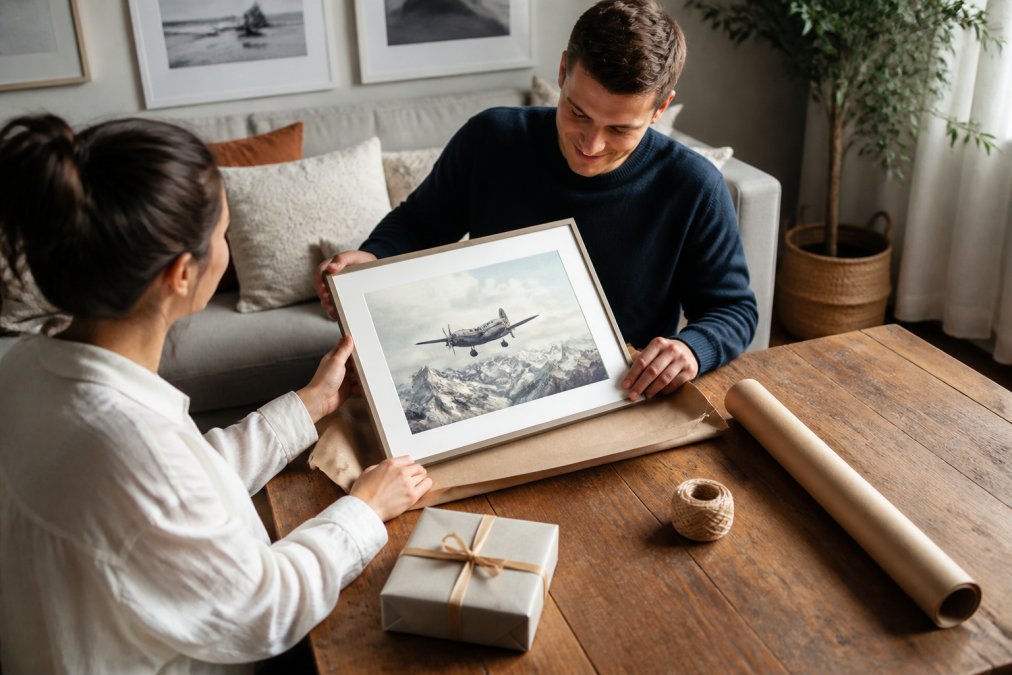
Buying art prints as gifts requires attention to detail that other gifts do not. The piece must be right, but so must the format, the size, and the presentation. Digital downloads are an increasingly popular option because they offer instant access and let the recipient print at a size that fits their space perfectly.
When you buy a digital download, you are essentially giving the recipient the freedom to choose their own framing and sizing, a thoughtful approach for people with specific decor needs. For those who prefer a ready-to-hang gift, a physical print that arrives framed and ready saves the recipient effort and ensures the presentation matches your vision. If the recipient is welcoming a new baby, a Watercolor Nursery Art piece can be a particularly meaningful choice that grows with the child.
Navigating Logistics, Returns, and Gifting Etiquette
Gifting fragile items introduces a layer of complexity that most gifts avoid. Check the seller's return policy before you purchase, not after. Many print shops will replace a damaged item, but you need to know the window for reporting issues and whether the replacement covers shipping.
Gifting etiquette matters here too. If you are giving art to someone whose taste you are unsure about, include the receipt or be upfront that an exchange is welcome. This is not a failure of the gift; it is a recognition that art is deeply personal. A gift card or a note saying "pick the size that fits best" can also smooth the process for digital downloads.
The Art of the Collaborative Gift and Provenance Check
One of the most effective ways to buy art for someone else is to involve them in the process. A collaborative gift, where you narrow down the options to two or three pieces and let the recipient make the final call, eliminates the risk of a mismatch while still feeling like a gift. This works especially well for housewarmings or milestone birthdays where the piece is meant to be a lasting fixture.
For higher-value purchases, provenance matters. Provenance is the documented history of an artwork, including its origin and chain of ownership. While this is less critical for affordable prints, knowing the artist and the edition size adds context and meaning to the gift. Research from SAGE Journals' study on art world vulnerabilities highlights how sophisticated forgeries can be, which is why buying from reputable sources with clear authentication is worth the peace of mind. Interestingly, studies from the University of Akron's corporate art collection research suggest that art is often acquired for aesthetic and cultural reasons rather than financial investment, a reminder that the best gifts are chosen for their meaning, not their market value.
Conclusion: Give a Story, Not Just a Decoration
The best art gifts are the ones that tell a story, whether it is a watercolor that introduces a child to a world of imagination or a historic aviation print that honors a lifelong passion. At RunwayandHeirloomArt, we believe artwork should recall another era, reflect a personal interest, or capture something that speaks directly to the recipient. Our curated collections span nursery art, aviation themes, art history, and nostalgic subjects, all designed to help you discover art with personality, pieces chosen not merely to decorate a space, but to become part of its story.
Getting the logistics right, from framing to delivery, ensures your gift arrives ready to be enjoyed. Start with the person, choose with intention, and let the art do the rest. Explore the RunwayandHeirloomArt collection and find a piece that becomes part of someone's story.
Frequently Asked Questions
What is the 70/30 rule in art?
The 70/30 rule is a common interior design guideline for displaying art. It suggests that 70 percent of your displayed art should be pieces you find visually pleasing and that fit your space, while up to 30 percent can be more experimental or challenging. When buying art for gifts, this rule helps you balance a recipient's established taste with a piece that introduces a new, exciting element to their home decor.
How do I know if an art print is high quality?
High-quality art prints are typically produced using archival inks and acid-free paper, which prevents fading and yellowing over time. Look for terms like 'giclée print,' which indicates a high-resolution digital print process that offers gallery quality. Also, check the paper's weight and texture, as heavier, quality materials feel more substantial. Reputable sellers will specify these details to assure you of the print's longevity.
Should I buy framed or unframed art for a gift?
Framed art is ready to hang and makes an immediate impact, which is ideal if you know the recipient's decor style. Unframed prints are easier to ship and offer more flexibility, allowing the recipient to choose a frame that matches their space perfectly. Consider giving an unframed print with a gift certificate for framing services, which is a thoughtful solution that ensures a perfect fit.
Is art a good gift for a housewarming?
Yes, art is a meaningful housewarming gift that adds character to a new home. It shows you put thought into their new space. To avoid guessing wrong, consider a piece that reflects their passions, like aviation or vintage travel, or choose a subject that complements their interior design aesthetic. If you are unsure, a digital download is a safe, flexible option they can print and frame themselves.
How do you choose art for someone else as a gift?
Start by observing their existing home decor, color palette, and the subjects they are passionate about. Think about the story you want the piece to tell and the feeling it should evoke in their space. If you are unsure about their taste, focus on timeless themes like landscapes or classic art history, or opt for a collaborative gift where they can select their favorite piece from a curated collection.
What are the best themes for gifting art to children?
For children, choose art that sparks imagination and matches their evolving interests. Popular themes include vintage transportation like trains and classic cars, whimsical animal illustrations, and aviation prints for future pilots. A thoughtful option is to select artwork that can grow with the child, moving from a nursery to a big-kid room. Look for pieces with a charming, story-driven quality that they will appreciate for years.