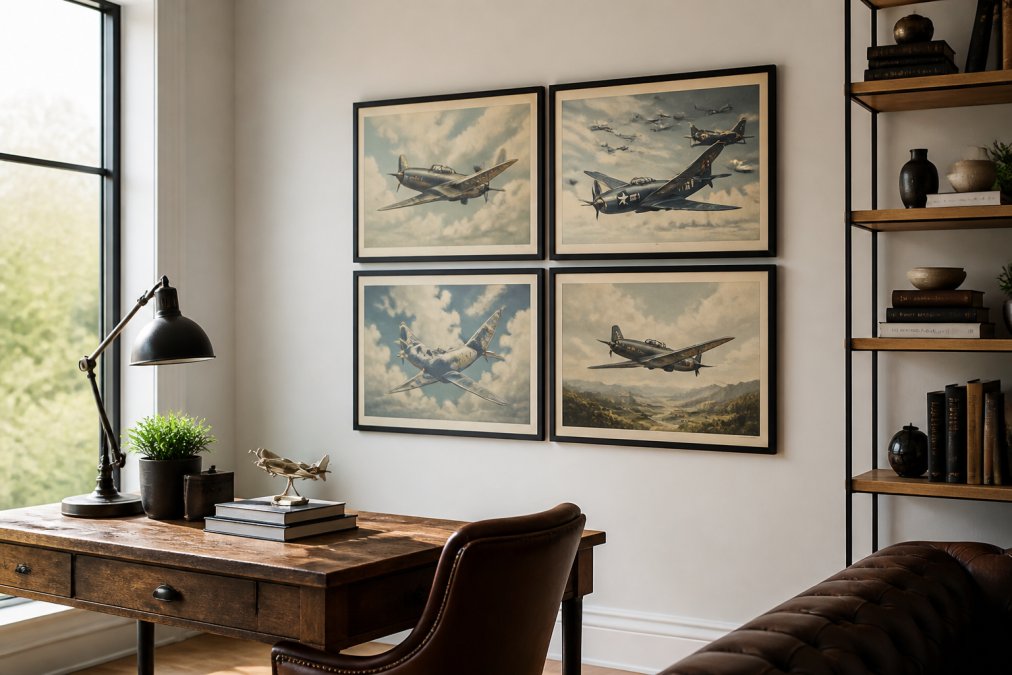
 how-to
Styling Vintage Aviation Art in Modern Homes
Table of Contents
- Understanding the Aviation-Inspired Aesthetic
- Selecting the Right Color Palette for Vintage Aviation Art
- Vintage Aviation Wall Art for Home Office Spaces
- How to Frame Vintage Aviation Prints for Maximum Impact
- Aviation Themed Office Decor Ideas and Integration
- Balancing Minimalism with Thematic Aviation Decor
- Sourcing Authentic Aviation Memorabilia and Preservation
- Frequently Asked Questions
Last Updated: August 22, 2026
Understanding the Aviation-Inspired Aesthetic
The aviation-inspired aesthetic goes beyond displaying propeller art or pilot logos. True aviation-inspired interiors weave aviation's rich heritage into modern design, creating spaces that tell a story of precision, performance, and prestige. What makes this approach distinctive is its foundation in authenticity. When done well, vintage aviation art becomes a focal point that reflects a broader appreciation for craftsmanship, history, and the golden era of flight.
The aviation-inspired aesthetic aligns naturally with minimalist decor trends. Airport maps, technical blueprints, and vintage photographs embrace clean lines, geometric precision, and purposeful restraint. This is why vintage aviation art integrates seamlessly into modern homes without fighting against current design sensibilities.
At Runway & Heirloom Art, the philosophy centers on curated authenticity. Rather than mass-produced airplane imagery, the focus is on pieces that carry genuine historical weight, whether aviation photography, blueprint reproductions, or technical drawings that speak to the precision and artistry of aircraft design.
Selecting the Right Color Palette for Vintage Aviation Art
The color palette you choose determines whether vintage aviation art feels sophisticated or childish. Muted aircraft grays, luxurious leather hues, and brushed aluminum create subtle allusions to aviation without heavy-handed theming.
Start with a neutral foundation. Warm whites, soft grays, and taupe walls provide the backdrop that allows vintage aviation prints to command attention. Layer in warm accents to prevent the space from feeling cold or sterile. Reclaimed wood shelving, leather furniture, and warm brass or bronze hardware add richness that balances the precision of aviation imagery.
Consider the specific tones within your aviation art itself. Black-and-white aircraft studies read clean and contemporary, while sepia-toned vintage photographs pair beautifully with warm wood and leather. Color photography from the mid-century period often features muted greens, blues, and browns that coordinate naturally with earthy, neutral palettes.
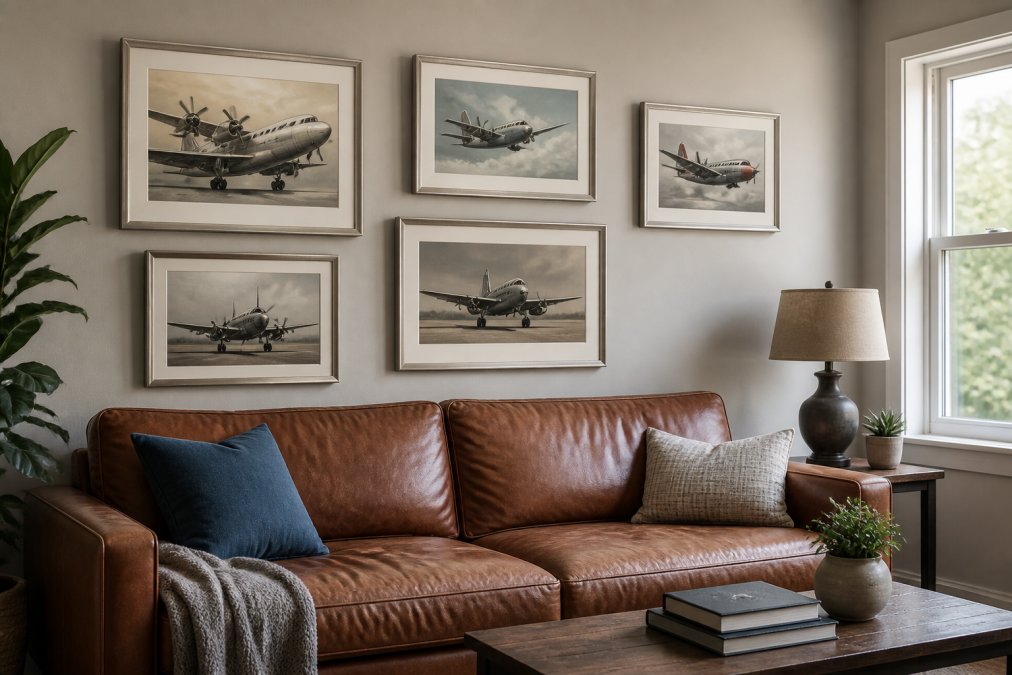
Avoid matching every element to your aviation theme. A space decorated entirely in aviation colors becomes a museum exhibit rather than a home. Use aviation art as an anchor and build a restrained color story around it.
Vintage Aviation Wall Art for Home Office Spaces
Your home office is the natural home for vintage aviation wall art. The space demands focus, precision, and visual clarity, all qualities that aviation design embodies.
Positioning matters enormously. Place your primary aviation artwork directly in your line of sight when seated at your desk, but not so close that it becomes a distraction. A piece mounted on the wall across from your desk creates a visual anchor that grounds the space without pulling focus from work.
The scale of your artwork should match your wall space and viewing distance. A general rule: your primary aviation artwork should occupy roughly 25-35% of the wall space where it's mounted. This proportion feels intentional without dominating the room.
Consider layering multiple pieces rather than relying on a single large print. A gallery wall of aviation photography, technical drawings, and vintage prints creates visual depth and tells a more complete story. This approach works particularly well in home offices because it suggests research, curation, and thoughtfulness.
Position secondary pieces at eye level when standing, creating a visual hierarchy that guides the viewer's attention. Smaller technical drawings or aviation photography work well flanking a larger central piece, creating a balanced composition that feels curated rather than random.
How to Frame Vintage Aviation Prints for Maximum Impact
Framing transforms vintage aviation prints from loose papers into gallery-quality pieces. The frame itself becomes part of the aesthetic, so the choice matters significantly. For vintage aviation art, the frame should enhance without overwhelming.
Matting serves a dual purpose: it protects the print and creates visual breathing room. A neutral mat (white, cream, or soft gray) works universally with aviation imagery. The mat width typically ranges from 2 to 3 inches, though this depends on print size and wall space.
Glass selection impacts how your art is perceived. Standard glass is affordable but reflects light. Museum-quality UV-protective glass prevents fading and reduces glare, a worthwhile investment for authentic vintage aviation memorabilia. Anti-reflective glass offers better clarity than standard glass at moderate cost.
Frame material should complement your room's aesthetic. Natural wood frames (oak, walnut, or reclaimed finishes) pair beautifully with vintage aviation prints. Metal frames in brushed aluminum, matte black, or warm bronze work equally well in contemporary spaces. Avoid ornate frames that distract from the work.
For preservation, use acid-free mounting board and archival adhesive. For reproductions from sources like Runway & Heirloom Art, quality framing still elevates the presentation and ensures longevity.
Consider the spacing between multiple framed pieces. In a gallery wall arrangement, maintain consistent spacing (typically 2-3 inches) between frames. Use a level and measuring tape during installation, precision in hanging reflects the precision that aviation design celebrates.
Aviation Themed Office Decor Ideas and Integration
Styling vintage aviation art in modern homes extends beyond wall art into the broader office environment. The most successful aviation-themed spaces integrate multiple elements that reinforce the aesthetic without overwhelming the room.
Start with your primary focal point, typically your largest or most striking aviation print. Build secondary layers around it. Vintage aviation photography, technical drawings, or blueprint reproductions work well as supporting pieces. These secondary elements should feel curated rather than collected.
Incorporate three-dimensional aviation artifacts strategically. A small vintage model airplane on a shelf, a brass compass on your desk, or a collection of vintage aviation badges displayed in a shadow box adds tactile dimension. These pieces should feel authentic and period-appropriate, suggesting a passion for aviation history rather than creating a themed environment.
Furniture and materials anchor the aesthetic. A desk with reclaimed wood or a leather chair references the craftsmanship and durability that aviation celebrates. Shelving in natural wood or metal supports both the visual theme and the functional needs of a home office.
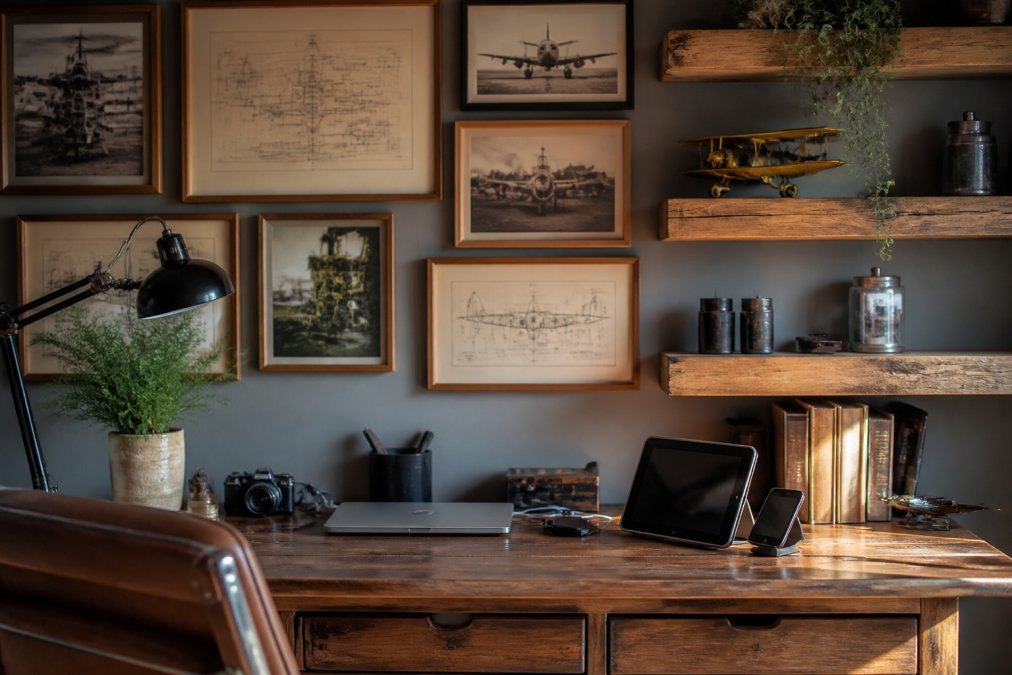
Lighting deserves careful attention. Warm, adjustable lighting highlights the details in vintage aviation prints and creates an inviting atmosphere. Avoid harsh overhead lighting, which can wash out vintage imagery. Instead, use desk lamps with warm bulbs and consider wall-mounted picture lights for significant artwork.
According to Houzz's 2026 Decorating Trends Survey, 84% of homeowners named personal taste as the biggest driver of their decorating decisions, and 75% prioritized comfort. This means your aviation-themed office should reflect genuine passion rather than following generic design rules.
Balancing Minimalism with Thematic Aviation Decor
The tension between minimalism and thematic decor creates the most interesting challenge when styling vintage aviation art in modern homes. The solution lies in disciplined curation.
Minimalism in aviation design means choosing fewer, higher-quality pieces rather than many mediocre ones. A single exceptional vintage aviation photograph beats five generic prints. A carefully selected collection of three technical drawings carries more impact than a wall covered in aviation imagery.
The minimalist approach also emphasizes negative space. Don't fill every wall or shelf. Leave breathing room around your artwork and artifacts. This empty space allows the eye to rest and gives each piece room to command attention.
Thematic consistency matters more than quantity. All your aviation pieces should feel like they belong to the same visual family. Mixing wildly different eras, styles, or color palettes creates visual chaos. Instead, choose a thread, perhaps mid-century aviation photography, technical blueprints from a specific era, or aviation art from a particular region.
Avoid cluttering surfaces with aviation-themed objects. A single well-chosen vintage compass or model airplane makes a statement. A shelf crowded with aviation memorabilia dilutes the impact. Consider the principle of "one strong statement per room." In your home office, that might be a gallery wall of aviation prints. Each object should earn its place through authenticity or significance.
Sourcing Authentic Aviation Memorabilia and Preservation
Finding genuine vintage aviation art requires knowing where to look and what to evaluate. Authentic pieces carry historical weight and craftsmanship that reproductions cannot replicate.
Reputable sources matter. Established galleries specializing in aviation art, museum shops, and curated online platforms like Runway & Heirloom Art offer pieces vetted for authenticity and quality. When evaluating any aviation artwork, examine paper quality, printing techniques, and aging patterns. Genuine vintage prints show consistent aging across the entire piece, while reproductions often appear artificially distressed.
Art serves as a powerful tool for personal expression and significantly influences interior design, creating focal points that enhance spatial dimensions (peer-reviewed research). This means investing in authentic pieces is foundational to creating a meaningful space.
Preservation extends the life of your collection. Store unframed prints in acid-free portfolios, away from direct sunlight and moisture. Display pieces should be protected with UV-filtering glass or acrylic. Maintain stable temperature and humidity conditions in your home. For genuinely valuable vintage pieces, consult a paper conservator before framing.
Budget-conscious sourcing requires patience and strategic searching. Estate sales, antique shops, and online marketplaces sometimes offer authentic pieces at reasonable prices. Develop an eye for quality and authenticity by learning to recognize printing techniques, paper types, and aging patterns.
The global vintage retro decor market was valued at $79.5 billion in 2025 and is expected to reach $119.53 billion by 2032, growing at a CAGR of 6.0% (according to Stratistics MRC) (strategistsmrc.com). This growth reflects genuine consumer interest in authentic, historically significant pieces, making this an ideal time to build a thoughtful collection.
Styling vintage aviation art in modern homes transforms spaces into personal galleries that reflect genuine passion and refined taste. The process requires thoughtful curation, strategic placement, and respect for both the art and your living environment. Whether you're furnishing a home office with aviation photography, creating a gallery wall of technical drawings, or incorporating a single statement piece, prioritize authenticity, maintain visual restraint, and let the art tell its story.
At Runway & Heirloom Art, we understand that aviation enthusiasts deserve more than generic wall decor. Our curated collection of historic aviation prints, technical drawings, and aviation-inspired artwork combines authenticity with contemporary design sensibility. Each piece is selected to bring character and meaning to your space. Explore our Historic Aviation Prints collection and discover pieces that transform your walls into a personal tribute to aviation's rich heritage.
=== FAQ ANSWERS (audit these too, same rules) ===
[1] Q: How do you style vintage aviation art without making a room look like a museum? A: The key is mixing aviation pieces with everyday furnishings and personal objects. Pair vintage aviation prints with contemporary furniture, modern lighting, and neutral backgrounds. Use 2-3 aviation pieces as focal points rather than covering entire walls. Add books, plants, leather accessories, and travel mementos around them to create a curated, lived-in feel. This approach tells a story without feeling overly themed or institutional.
[2] Q: What color palettes work best with vintage aviation wall art? A: Muted aircraft grays, warm earth tones, navy accents, and cream backgrounds create sophisticated backdrops for vintage aviation prints. Avoid harsh whites or primary colors, which can make the space feel childish. Incorporate warm wood tones, leather hues, and brushed aluminum finishes to complement aeronautical imagery. Neutral walls allow the artwork to stand out while keeping the overall aesthetic modern and refined rather than retro-focused.
[3] Q: How do I preserve vintage aviation prints so they last as heirlooms? A: Store prints away from direct sunlight, which causes fading over time. Use UV-protective glass or acrylic when framing to block harmful rays. Keep prints in stable temperature and humidity conditions, avoiding damp basements or hot attics. Handle original pieces with clean hands and acid-free materials. Digital reproductions from quality sources offer durability without conservation concerns, making them practical for everyday display while maintaining the aesthetic of authentic aeronautical artwork.
[4] Q: Where should I hang aviation art in a home office? A: Position aviation prints at eye level above a desk or on the wall behind your workspace to create an inspiring focal point. Gallery walls work well on side walls, allowing them to frame your work area without blocking sight lines. Ensure proper lighting, task lighting or natural light highlights details in blueprints and technical drawings. In smaller offices, a single statement piece above a credenza or filing cabinet anchors the space without overwhelming it. Balance aviation pieces with functional office elements to maintain professionalism.
Frequently Asked Questions
Q: How do you style vintage aviation art without making a room look like a museum?
A: The key is mixing aviation pieces with everyday furnishings and personal objects. Pair vintage aviation prints with contemporary furniture, modern lighting, and neutral backgrounds. Use 2-3 aviation pieces as focal points rather than covering entire walls. Add books, plants, leather accessories, and travel mementos around them to create a curated, lived-in feel. This approach tells a story without feeling overly themed or institutional.
Q: What color palettes work best with vintage aviation wall art?
A: Muted aircraft grays, warm earth tones, navy accents, and cream backgrounds create sophisticated backdrops for vintage aviation prints. Avoid harsh whites or primary colors, which can make the space feel childish. Incorporate warm wood tones, leather hues, and brushed aluminum finishes to complement aeronautical imagery. Neutral walls allow the artwork to stand out while keeping the overall aesthetic modern and refined rather than retro-focused.
Q: How do I preserve vintage aviation prints so they last as heirlooms?
A: Store prints away from direct sunlight, which causes fading over time. Use UV-protective glass or acrylic when framing to block harmful rays. Keep prints in stable temperature and humidity conditions, avoiding damp basements or hot attics. Handle original pieces with clean hands and acid-free materials. Digital reproductions from quality sources offer durability without conservation concerns, making them practical for everyday display while maintaining the aesthetic of authentic aeronautical artwork.
Q: Where should I hang aviation art in a home office?
A: Position aviation prints at eye level above a desk or on the wall behind your workspace to create an inspiring focal point. Gallery walls work well on side walls, allowing them to frame your work area without blocking sight lines. Ensure proper lighting, task lighting or natural light highlights details in blueprints and technical drawings. In smaller offices, a single statement piece above a credenza or filing cabinet anchors the space without overwhelming it. Balance aviation pieces with functional office elements to maintain professionalism.
This article was written using GrandRanker