 how-to
How to Curate a Gallery Wall for Gifts That Feel Personal
Last Updated: November 8, 2026
Quick Summary
To curate a gallery wall as a personal gift, start with the recipient's interests and home colors rather than your own taste, then measure the wall and plan the layout before buying prints. Choose frames that match their existing decor, and include hanging hardware, a layout sketch, and a handwritten note so the gift feels complete.
- Write down three interests and two colors from the recipient's home before browsing prints.
- Keep art about two-thirds the width of the furniture below it and leave two to three inches between frames.
- Thin black or natural-wood frames with a white mat are the safest default for a gift.
- Framing typically costs as much as or more than the print itself, so buy fewer pieces and frame them well.
- Place the layout sketch on top of the frames so it is the first thing the recipient sees.
Table of Contents
- Start With the Recipient, Not the Wall
- Gallery Wall Ideas That Tell the Recipient's Story
- Measure the Wall Space Before You Buy a Single Print
- Use a Gallery Wall Layout Generator to Plan the Composition
- How to Create a Gallery Wall With Family Photos
- Gallery Wall Ideas for Small Spaces
- Choose Frames, Matting, and Hanging Hardware as Part of the Gift
- Package and Present the Gallery Wall Gift
- Frequently Asked Questions
Start With the Recipient, Not the Wall
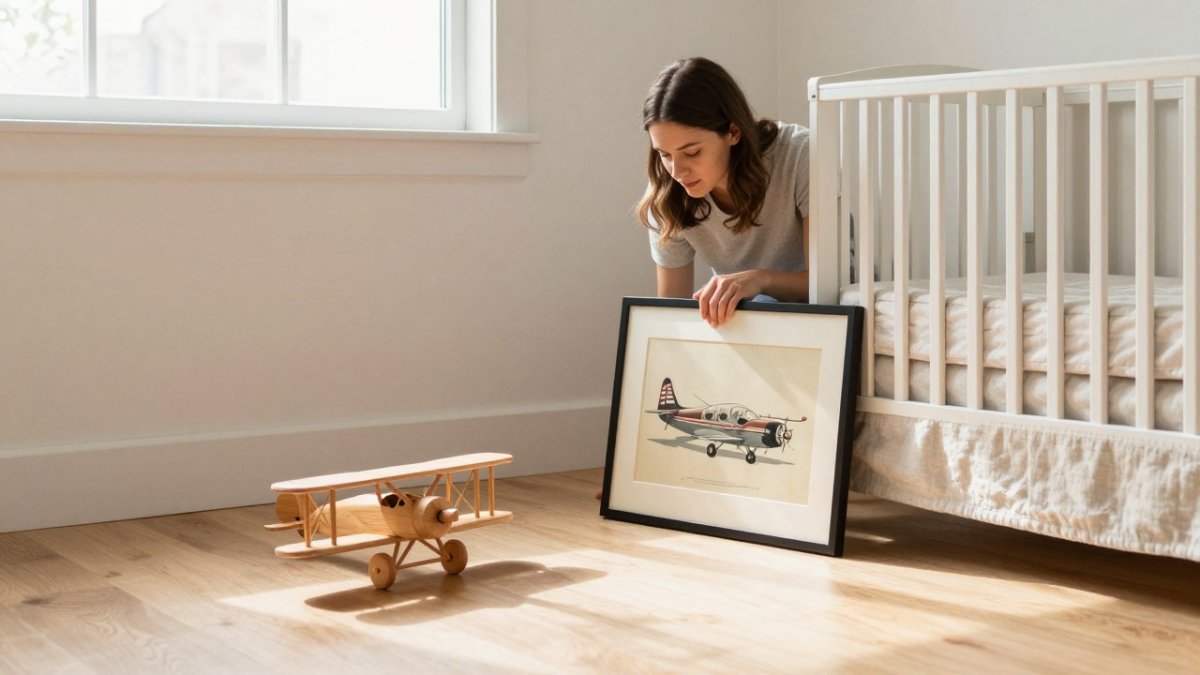
A gallery wall is a collection of framed art arranged as one visual unit, and when you're giving one as a gift, the recipient's taste matters more than your own. The best gift walls start with a person, not a color scheme. Before you shop, answer three questions: What does this person love? A new parent might treasure watercolor nursery art with soft animals.
Gallery Wall Ideas That Tell the Recipient's Story
The strongest gift walls read like a short biography. Mix meaningful pieces rather than matching ones. Try these combinations:
- A childhood photo beside a print of their hometown
- A hobby print, like trains or classic cars, paired with a candid photograph
- One large anchor piece surrounded by smaller collected prints
If you're building a nostalgic, story-driven wall, our guide on art prints that tell a story walks through pairing pieces by theme. The goal is a wall that feels collected over time, not purchased in one afternoon.
Measure the Wall Space Before You Buy a Single Print
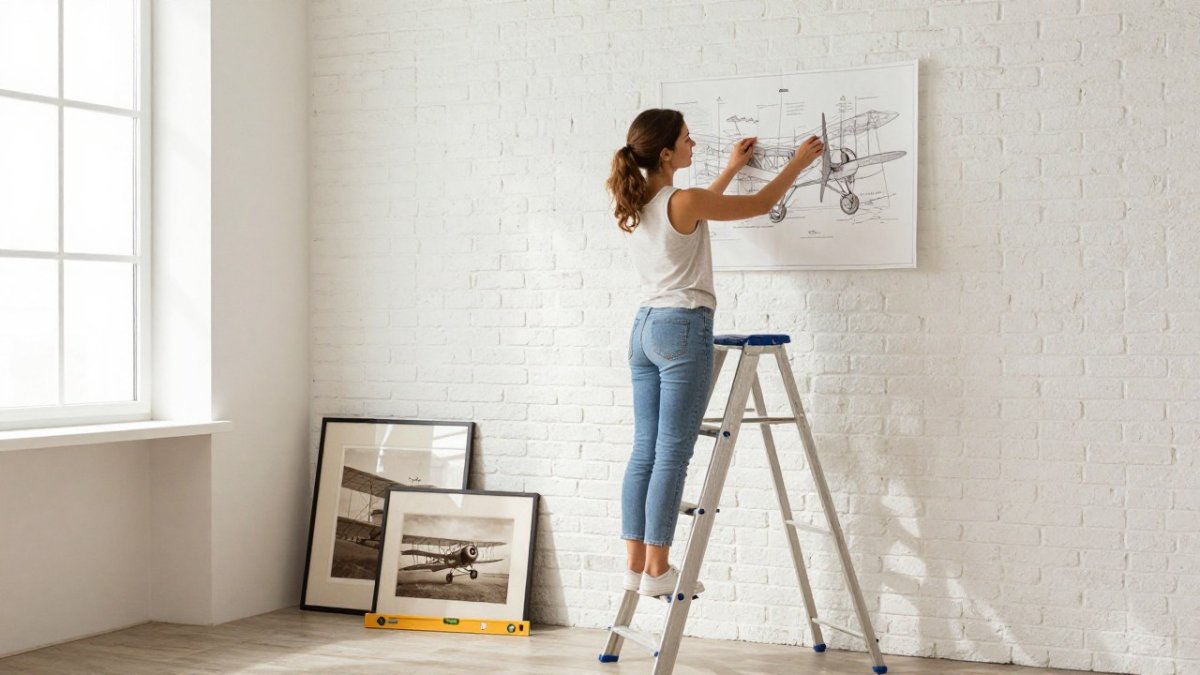
Measure first, buy second. This one step prevents the most common gift-wall mistake: art that's too small for the wall. Grab a tape measure and note the width and height of the open space. For a sofa wall, keep art about two-thirds the width of the furniture below it. If you're unsure about proportions, our guide on how to choose frame size for wall art covers standard sizes and measuring tips.
Use a Gallery Wall Layout Generator to Plan the Composition
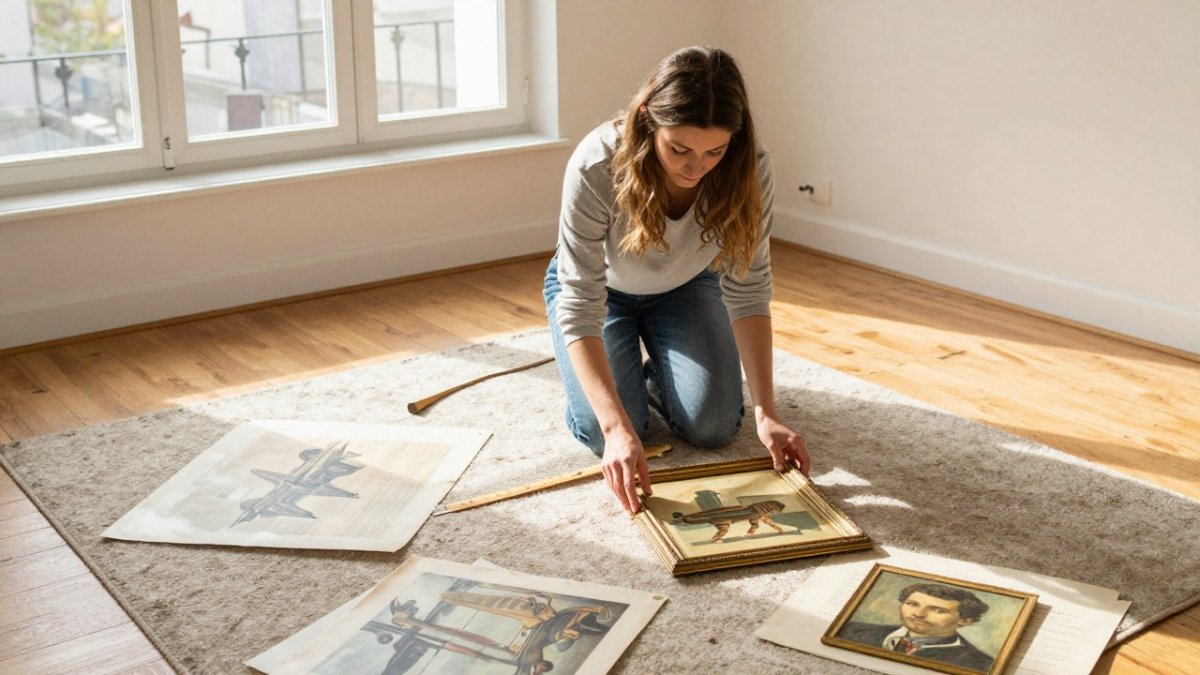
A gallery wall layout generator is an online tool that lets you arrange frames on a screen before anything goes on the wall. For a deeper walkthrough, see how to curate an art gallery wall at home.

How to Create a Gallery Wall With Family Photos
Family photo walls work best with a clear structure. Choose one hero photo, usually the largest and most recent, then group older photographs around it. Print everything in consistent finishes so the wall feels unified. Mix vertical and horizontal orientation for rhythm, but keep spacing even. Black-and-white photos beside color prints add contrast without clutter.
Gallery Wall Ideas for Small Spaces
Small walls need fewer, bolder pieces. Three medium frames in a row often beat eight tiny ones. Stack frames vertically to draw the eye upward in a narrow spot. Above a desk or dresser, a single large anchor piece with two small companions works well. Keep the color palette tight, two or three tones, so the arrangement feels intentional rather than busy.
Choose Frames, Matting, and Hanging Hardware as Part of the Gift
Frames are half the gift, and they are also where a well-intentioned gallery wall gift most often goes wrong. A print the recipient loves can feel like a mismatch if the frame fights their furniture, their wall color, or the other pieces already in the room. Before you buy a single frame, do a little quiet reconnaissance.
Discreetly learn the recipient's frame preferences
You do not need to interrogate anyone. A few low-effort moves surface most of what you need:
- Look at the frames already in their home the next time you visit. Note the finish (warm wood, black metal, white, brass, natural oak) and the profile (thin, wide, ornate, flat). Most people repeat what they already own.
- Ask a neutral question: "I'm redoing a wall in my place, do you think thin black frames or warm wood looks better?" Their answer tells you their eye, not your project.
- Check their saved or pinned inspiration if they share it publicly. A single screenshot of a room they admire reveals palette and frame style faster than a conversation.
Write down two frame finishes and one metal tone before you shop. If you cannot confirm anything, choose a thin black or natural-wood frame with a white mat; those two combinations read as neutral in almost every room style and are the safest default for a gift.
Match frame style to the room, not to the print
The print is the content; the frame is the context. Warm wood frames settle into traditional, farmhouse, and transitional rooms. Thin black metal frames suit modern, industrial, and minimalist spaces. White frames disappear against light walls and let colorful art carry the composition.
Matting matters as much as the frame. A mat gives a print breathing room and makes a small piece read as intentional rather than undersized.
Scale the gift to your budget
A gallery wall gift does not require a coordinated set of eight frames. Match the scope to what you can spend without stretching:
- Single-piece gift: One well-framed anchor print with a mat and a handwritten note. This is the most common entry point and often the most appreciated, because one good piece is easier to hang than a collection.
- Three-piece starter wall: One larger anchor and two smaller companions, framed consistently. This reads as a gallery wall without requiring a full set.
- Build-your-own collection: Give two or three framed pieces plus a printed layout sketch and hardware, and let the recipient add to it over time. This is the most gift-like option because it invites future contributions.
A useful rule of thumb: framing typically costs as much as or more than the print itself. If your total budget is fixed, buy fewer pieces and frame them well rather than buying many prints and skimping on frames. A single archival print in a solid frame will outlast a crowded wall of thin, warping ones.
Include the hardware that makes hanging painless
Hanging hardware is part of the gift, not an afterthought. Include the following in the package:
- Picture hooks rated for the weight of each frame (most small and medium frames need a hook rated for 5 to 10 pounds; larger frames need more)
- A small bubble level
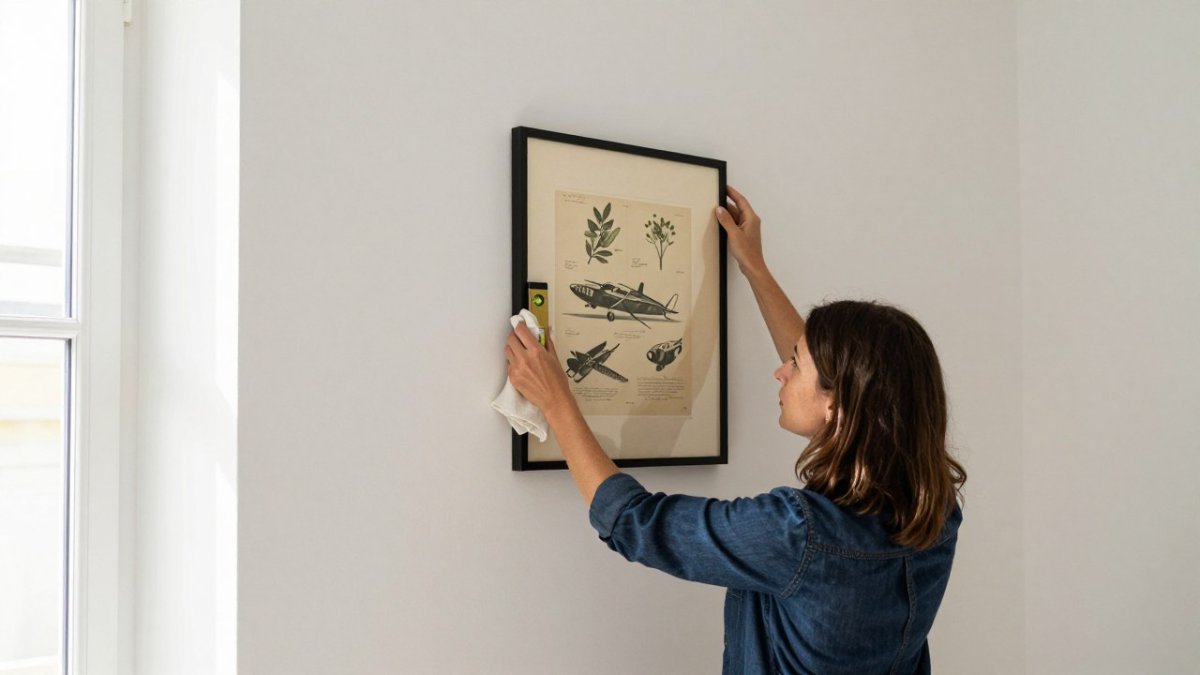
- Painter's tape or paper templates cut to each frame's size
- Damage-free hanging strips for renters or for recipients who may move soon
Watch out: frames sold without hardware often use a sawtooth hanger that sits flush to the wall, which makes leveling difficult.
If you want the gift to last, our explanation of why archival prints are worth the investment covers longevity and materials.
Match the scope of the gift to your budget, keeping in mind that framing often costs as much as or more than the print.
| Gift scope | What it includes | Best for |
|---|---|---|
| Single-piece gift | One well-framed anchor print with mat and handwritten note | Most common entry point |
| Three-piece starter wall | One larger anchor and two smaller companions, framed consistently | Reading as a gallery wall without a full set |
| Build-your-own collection | Two or three framed pieces plus printed layout sketch and hardware | Most gift-like option; invites future contributions |
| Full coordinated set | Five to nine pieces planned as one composition | Milestone gift or group contribution |
Package and Present the Gallery Wall Gift
Presentation turns prints into an occasion, but for a gallery wall gift the packaging is also protection. Framed art is fragile, glass breaks, and a gift that arrives chipped undercuts the thought behind it. Plan the handoff as carefully as you planned the composition.
Decide what you are actually giving
There are two valid ways to give a gallery wall, and they lead to different packaging:
- Give the finished arrangement. You choose the pieces, frames, and layout, and the recipient hangs it as designed. This is the more impressive gift, but it only works if you are confident about their taste and their wall.
- Give the curated starting point. You provide the anchor piece or a small set, a printed layout sketch, and hardware, and the recipient chooses the final arrangement and adds pieces over time. This is the safer gift when you are unsure about their space, and it is often the more personal one because it invites them into the process.
If you are giving a finished arrangement, include a layout sketch with each frame labeled and a note explaining why each piece was chosen. If you are giving a starting point, say so in the note, "Here is the anchor; the rest is yours to build", so the recipient does not feel they have received an incomplete gift.
Pack framed art so it survives the trip
Framed art shipped or carried needs more than tissue paper. A common approach for shipping framed art:
- Leave the frame in its protective corner pieces if it came with them.
- Wrap each frame in bubble wrap or foam, with extra padding on the corners, which take the most impact.
- Stack frames face-to-face or face-to-back with padding between them, never glass-to-glass.
- Place the stack in a rigid box with at least 2 inches of padding on every side.
Watch out: glass can crack even in a well-packed box if the frame flexes. If you are shipping, ask the framer whether acrylic glazing is an option, since it is lighter and more shatter-resistant than glass.
Handle shipping, timing, and gift receipts
If the gift is traveling, ship framed pieces separately from any loose prints, and send them early enough to arrive before the occasion rather than on the day.
Include a gift receipt in the package, folded separately from the note, so the recipient can exchange a frame size or finish if needed.
For a local gift, hand-deliver the frames if you can.
Make the unwrapping part of the gift
A gallery wall gift has a natural reveal: the layout sketch. Print the sketch on a single sheet, roll it or fold it flat, and place it on top of the frames so it is the first thing the recipient sees.
If you are giving the gift in person and the recipient is willing, offer to help hang the wall.
Curating a gallery wall for gifts takes a little detective work, but the payoff is a present that hangs on the wall for years.
Frequently Asked Questions
How do you choose art for a gallery wall gift?
Start with the recipient's interests and the room where the gallery wall will hang. Look for clues in their bookshelves, travel photos, or the colors they already use. Then choose three to five pieces that share a theme, such as aviation history or nursery watercolors, and confirm sizes against the wall measurements. A gallery wall gift works best when the art reflects the person, not your own taste.
What is the rule for arranging a gallery wall?
Most designers keep 2 to 3 inches between frames and hang the center of the arrangement at eye level, roughly 57 to 60 inches from the floor. Treat the whole group as one large shape, balance visual weight across the layout, and leave breathing room at the edges. For a gift, sketch the plan on paper first so the recipient can hang it without guessing.
How many pieces should a gallery wall have?
A gallery wall usually holds 5 to 7 pieces, though small spaces may need only 3. Recent design guidance favors fewer, larger pieces over crowded arrangements of 10 or more. For a gift, three to five prints give the recipient a complete look without overwhelming a single wall or your budget.
Are gallery walls still in style?
Yes, gallery walls remain a popular way to display collected art, but the style has shifted toward curated, less cluttered arrangements. Instead of filling every inch, designers now group fewer pieces with wider spacing and a clear focal point. A gift gallery wall built around a shared theme fits that more edited approach.