 ultimate-guide
Why Archival Quality Paper Matters for Art Prints
Table of Contents
- What Makes Paper Archival Quality
- Acid-Free Paper vs Archival Paper: Understanding the Difference
- Archival Pigment Inks vs Dye Inks: Which Lasts Longer
- Factors That Determine Print Longevity
- How to Store Art Prints for Longevity
- ISO Standards and Certification: What Buyers Should Know
- The Cost-Benefit Analysis: Why Archival Quality Matters for Your Investment
- Frequently Asked Questions
Last Updated: August 29, 2026
What Makes Paper Archival Quality
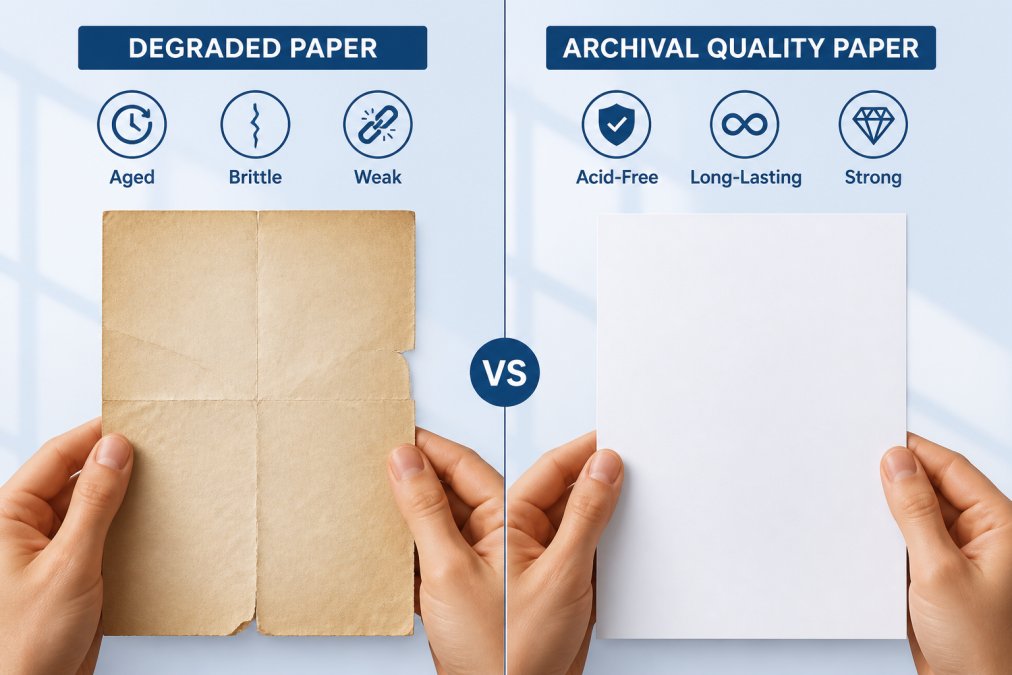
Archival quality paper is engineered to resist chemical deterioration over time, remaining vibrant and structurally sound for a century or more. The difference between archival and standard paper comes down to composition: archival paper is acid-free, lignin-free, and often buffered with alkaline reserves to neutralize environmental acids that cause yellowing and brittleness.
When you print on archival quality paper, you're investing in longevity. Research on pigment-based inkjet print longevity shows that pigment-based inkjet prints on acid-free, cotton rag papers can last 200 to 400 years under proper storage or framed display conditions. That's not marketing hyperbole, that's documented permanence tested under rigorous conditions.
The catch? Most people assume archival paper alone guarantees a 100-year lifespan. A 2026 study revealed that 68% of online art shoppers incorrectly believe that using archival paper by itself ensures century-long durability. True longevity results from a precise technical ecosystem: pigment-based inks, acid-free substrates, proper framing, and controlled environmental conditions working together.
Acid-Free and Lignin-Free Composition
Acid is the enemy of paper longevity. Standard papers contain lignin, a natural binding compound in wood pulp that breaks down over time, releasing acids that cause yellowing and deterioration. Acid-free paper eliminates this problem by removing lignin entirely or using alternative pulp sources.
Lignin-free paper resists the chemical breakdown that turns bright whites into dingy yellows. When manufacturers remove lignin, they're essentially removing the timer on paper degradation. The cellulose that makes up the majority of paper is demonstrably stable enough to persist for many hundreds of years in archival collections, though it remains susceptible to acid-catalyzed hydrolysis, which can be accelerated by byproducts of decomposition.
The difference is measurable: Comparison of acid-free and archival paper longevity notes that acid-free paper can last up to 40 years without degradation, but archival paper can last for 100 years or longer if stored correctly. For serious collectors and artists who want their work to endure, this distinction matters.
pH Levels and Alkaline Buffering
pH is the measure of acidity or alkalinity in paper. Neutral pH (around 7) is the baseline; archival papers often test at pH 8 or higher thanks to alkaline buffering, the addition of calcium carbonate or magnesium carbonate reserves that neutralize acids from the environment.
This buffering system works like a chemical shield. As environmental acids drift into the paper over decades, the alkaline buffer neutralizes them before they can damage the cellulose fibers. It's preventative chemistry at work.
Professional standards demand this precision. Archival paper manufactured to resist chemical deterioration meets strict specifications for pH levels and alkaline reserves. Many archival papers are buffered with an alkaline reserve to neutralize environmental acids, creating a protective chemical environment that extends the print's life well beyond what unbuffered paper can achieve.
When artists at Runway & Heirloom Art select papers for their aviation prints, watercolor reproductions, and nursery artwork, they prioritize these technical specifications. The goal isn't just a beautiful print today, it's a print that will look virtually identical 50 years from now.
Acid-Free Paper vs Archival Paper: Understanding the Difference
Here's where confusion sets in: acid-free and archival are not synonymous. Acid-free paper is a baseline requirement, but archival paper demands more.
Acid-free paper meets the standard of being free from acid content, which prevents some deterioration. However, it doesn't guarantee the full suite of protections that true archival paper offers. Archival paper is acid-free AND lignin-free AND buffered with alkaline reserves AND manufactured to meet specific permanence standards (like ISO 9706).
Think of it this way: all archival paper is acid-free, but not all acid-free paper is archival. A print on acid-free but non-archival paper might look fine for 20 or 30 years, then begin to show yellowing and fading. An archival print under proper conditions will remain virtually unchanged for a century.
The practical implication: if you're buying prints as heirlooms or long-term investments, verify the specific materials. Look for papers that explicitly state they meet archival standards, not just acid-free claims. The difference in cost is minimal compared to the difference in longevity.
Archival Pigment Inks vs Dye Inks: Which Lasts Longer
The ink matters as much as the paper. Pigment-based inks and dye-based inks behave differently over time.
Pigment-based inks are particles suspended in a liquid carrier. They sit on top of the paper surface, don't absorb as deeply, and resist fading significantly longer than dye inks. Dye-based inks dissolve into the paper, which allows for richer color saturation initially but makes them vulnerable to light exposure and chemical breakdown.
The longevity gap is substantial. Pigment-based systems, like Epson UltraChrome, Canon LUCIA, and similar professional-grade formulations, deliver prints that can last 200 to 400 years on archival substrates. Dye-based inks typically fade noticeably within 10 to 20 years under normal display conditions, especially with exposure to light.
For fine art prints, photography, and gallery-quality reproductions, pigment-based inks are the industry standard. They're more expensive, which is why budget printers often rely on dye inks. But if you want a print that will look the same in 2076 as it does in 2026, pigment-based is non-negotiable.
Factors That Determine Print Longevity
Archival quality paper and pigment inks form the foundation, but the environment where your print lives determines whether that potential is realized or squandered.
Light Exposure and UV Protection
Light is the primary threat to print longevity. UV radiation and visible light both fade pigments over time, a process called photodegradation. Prints framed with standard clear glass can show significant fading in under 30 years, according to research from framing standards and print longevity. That's not because the print is poor quality, it's because standard glass offers zero UV protection.
UV-protective glazing filters out wavelengths that cause fading. Museum-quality framing uses UV-blocking glass or acrylic that reduces light-induced deterioration by 95% or more. The difference is visible: a print displayed behind UV glass remains vibrant while an identical print behind standard glass fades noticeably.
Placement matters too. Direct sunlight accelerates fading dramatically. North-facing walls with indirect light are ideal. If your print must hang where it receives direct sun, UV protection becomes critical.
Humidity, Temperature, and Environmental Conditions
Paper responds to moisture like a living thing. High humidity causes paper to expand; low humidity makes it contract. Constant fluctuations stress the fibers, leading to warping, buckling, and accelerated deterioration.
Stable conditions are what archival paper demands. The ideal environment maintains 40-50% relative humidity and temperatures between 60-70°F. Basements with fluctuating moisture, attics with temperature swings, and bathrooms with steam are all hostile environments for prints.
Even more damaging: repeated cycling. A print that experiences daily humidity swings will degrade faster than one in a stable but slightly imperfect environment. Consistency beats perfection.
Framing Materials and Archival Standards
The frame itself can destroy an archival print. Acid-laden cardboard, standard wood pulp matting, and non-archival adhesives leach acid into the print over time, undoing all the protection that archival paper provides.
True archival framing uses acid-free matting, lignin-free backing, and UV-protective glazing. The mat should be 100% cotton rag or similar acid-free material. Adhesives must be archival-grade. Even the tape holding the print in place matters, standard masking tape will damage the edges over decades.
This is where the "chemical ecosystem" concept becomes real. You can buy the finest archival paper and pigment inks, then destroy it all with a $5 frame from a big-box store. The complete system, paper, ink, matting, glazing, adhesives, and environment, determines whether your print becomes an heirloom or fades into obscurity.
How to Store Art Prints for Longevity
Proper storage extends the life of prints dramatically. If you're not displaying a print, how you store it matters as much as how you frame it.
Storage best practices:
- Use acid-free storage boxes or archival sleeves. Standard cardboard and plastic will degrade your prints.
- Store prints flat rather than rolled. Rolling creates stress lines and creases that weaken the paper.
- Maintain stable temperature and humidity. A climate-controlled closet beats a damp basement or hot attic.
- Avoid direct contact with wood, cardboard, or non-archival materials. Interleave prints with acid-free tissue.
- Keep prints away from light. A dark storage area prevents fading even for stored work.
- Never use rubber bands, standard tape, or plastic wrap. These damage the paper and trap moisture.
For prints you do display, the framing standards above apply. The difference between a print that lasts 30 years and one that lasts 300 years often comes down to these details.
Artists who work with archival materials understand that the print is just the beginning. Guidance on proper storage and display is part of the commitment to creating work that endures.
ISO Standards and Certification: What Buyers Should Know
The term "archival" lacks a single universal regulated definition for consumer products. Manufacturers can apply the label to almost anything without meeting a specific threshold. This is where standards come in.
ISO 9706 is the international standard for permanent paper. It specifies permanence requirements and testing protocols that ensure paper will remain stable for centuries. Papers meeting ISO 9706 have undergone accelerated aging tests and demonstrated resistance to yellowing and brittleness.
ISO 18937-3:2026 is a more recent standard indicating that archival prints maintain color stability even when exposed to modern LED lighting systems. This matters because LED light distribution differs from incandescent or fluorescent light, and newer standards account for that.
When you see these certifications on paper or print products, you're looking at material that has been tested and verified to meet specific permanence criteria. It's not a marketing claim, it's a measurable standard.
However, certification is not universal in the consumer market. Many excellent archival papers and inks don't carry formal ISO certification, either because the manufacturer doesn't pursue it or because certification is more common in professional and archival markets. What matters is looking for specific fiber content and pH information rather than just the "archival" label.
The professional standard for paper weight in archival printing is generally 300gsm or higher. This thickness ensures the print feels substantial and resists physical stresses during mounting and framing. Heavier papers also tend to have better color saturation and longevity.
The Cost-Benefit Analysis: Why Archival Quality Matters for Your Investment
Here's the practical reality: archival printing costs more upfront. Premium cotton rag papers, pigment-based inks, and proper framing add expense. For some buyers, that's a dealbreaker.
But consider the math. Most paper restoration projects range from $200 to $1,000, and that's if restoration is even possible. Paper conservation can cost $85 to $150 per hour. If you have a print worth restoring, you're already deep into expensive territory.
Archival quality is insurance. You pay more now to avoid catastrophic loss later. A $50 print on standard paper that fades to illegibility in 20 years is a total loss. A $150 print on archival paper that remains pristine for 100 years is an investment that appreciates in meaning and condition.
For collectors, artists, and anyone buying prints as heirlooms, the choice is straightforward: archival quality is worth it. For casual decoration that you might replace in a few years anyway, standard paper is fine.
The 2026 market shift tells the story. Buyers are becoming more selective, investing in fewer, higher-quality pieces that feel intentional and well-made. This trend benefits artists and print studios that prioritize archival materials and refined presentation. When you choose archival quality, you're choosing to create something that lasts.
At Runway & Heirloom Art, this philosophy drives every print. Whether you're selecting watercolor nursery art, aviation prints, or art-history-inspired pieces, the goal is the same: to create work that becomes part of your home's story for decades to come.
Archival quality paper isn't a luxury, it's the foundation of prints that endure. When you invest in artwork, you're investing in something meant to outlast trends, moves, and life changes. By choosing prints created with archival-grade materials, proper framing, and storage guidance, you ensure that the art you love today will look virtually identical 50 years from now. Discover how Runway & Heirloom Art combines archival materials with distinctive watercolor and aviation designs to create prints that feel both beautiful today and built to last forever.
=== FAQ ANSWERS (audit these too, same rules) ===
[1] Q: What does it mean for a print to be archival quality? A: Archival quality means a print is engineered to last 100 years or more without significant fading, yellowing, or deterioration. This requires three elements working together: acid-free, lignin-free paper; pigment-based inks; and proper storage or framing with UV protection. The term refers to a complete chemical ecosystem, not just the paper alone. According to Wilhelm Imaging Research, pigment-based inkjet prints on acid-free cotton rag paper can last 200 to 400 years under proper conditions.
[2] Q: How is archival paper different from regular paper? A: Archival paper is acid-free and lignin-free, with a pH-neutral composition and alkaline buffer to resist yellowing and brittleness. Regular paper often contains lignin and acids that cause deterioration within 5 to 20 years. Acid-free paper lasts up to 40 years, while archival paper lasts 100 years or longer if stored correctly. The difference lies in the fiber content, chemical composition, and manufacturing standards that meet ISO 9706 specifications.
[3] Q: What is the difference between acid-free paper and archival paper? A: Acid-free paper has no acidic compounds but may still contain lignin, which causes yellowing over time. Archival paper is both acid-free and lignin-free, with additional alkaline buffering and higher-quality fiber content like cotton rag. Acid-free paper can last 40 years, while archival paper lasts 100+ years. For prints intended as heirlooms or gallery-quality pieces, archival paper offers superior longevity and color stability.
[4] Q: Why do pigment-based inks matter for archival quality? A: Pigment-based inks are particles suspended in liquid, making them more stable and resistant to fading than dye-based inks, which are absorbed into paper and fade faster under light exposure. Pigment inks maintain color saturation and lightfastness for decades, even with UV exposure. When combined with archival paper and proper framing, pigment-based prints achieve the 200 to 400-year lifespan that collectors and galleries expect. Dye inks typically fade noticeably within 5 to 10 years.
Frequently Asked Questions
Q: What does it mean for a print to be archival quality?
A: Archival quality means a print is engineered to last 100 years or more without significant fading, yellowing, or deterioration. This requires three elements working together: acid-free, lignin-free paper; pigment-based inks; and proper storage or framing with UV protection. The term refers to a complete chemical ecosystem, not just the paper alone. According to Wilhelm Imaging Research, pigment-based inkjet prints on acid-free cotton rag paper can last 200 to 400 years under proper conditions.
Q: How is archival paper different from regular paper?
A: Archival paper is acid-free and lignin-free, with a pH-neutral composition and alkaline buffer to resist yellowing and brittleness. Regular paper often contains lignin and acids that cause deterioration within 5 to 20 years. Acid-free paper lasts up to 40 years, while archival paper lasts 100 years or longer if stored correctly. The difference lies in the fiber content, chemical composition, and manufacturing standards that meet ISO 9706 specifications.
Q: What is the difference between acid-free paper and archival paper?
A: Acid-free paper has no acidic compounds but may still contain lignin, which causes yellowing over time. Archival paper is both acid-free and lignin-free, with additional alkaline buffering and higher-quality fiber content like cotton rag. Acid-free paper can last 40 years, while archival paper lasts 100+ years. For prints intended as heirlooms or gallery-quality pieces, archival paper offers superior longevity and color stability.
Q: Why do pigment-based inks matter for archival quality?
A: Pigment-based inks are particles suspended in liquid, making them more stable and resistant to fading than dye-based inks, which are absorbed into paper and fade faster under light exposure. Pigment inks maintain color saturation and lightfastness for decades, even with UV exposure. When combined with archival paper and proper framing, pigment-based prints achieve the 200 to 400-year lifespan that collectors and galleries expect. Dye inks typically fade noticeably within 5 to 10 years.
This article was written using GrandRanker