 how-to
Smart Tips for Preserving Antique Art in Modern Homes
Last Updated: November 6, 2026
Quick Summary
Preserving antique art in modern homes means keeping pieces out of direct sunlight, holding rooms at 65-70°F with 45-55% relative humidity, and using acid-free conservation framing. Keep art away from vents, fireplaces, kitchens, and bathrooms, and dust only with a soft dry brush.
- Keep antique art off sun-facing walls and add UV-filtering window film or glazing.
- Target 65-70°F and 45-55% relative humidity, avoiding big swings.
- Ask your framer whether everything is acid-free and whether the art touches the glass.
- Store oil paintings upright on a padded rack, never flat.
- Call a conservator for flaking paint, tears, mold, or active pests.
Table of Contents
- Why Modern Homes Are Harder on Antique Art Than You Think
- How to Protect Artwork From Sunlight and UV Damage
- Artwork Humidity and Temperature: The Numbers That Keep Antiques Stable
- Art Conservation Framing: Materials That Don't Damage Antique Pieces
- Room-by-Room Placement That Protects Your Collection
- How to Store Fine Art at Home Without Causing Harm
- Cleaning, Emergencies, and When to Call a Conservator
- Choosing New Prints That Live Safely Beside Antique Pieces
- Frequently Asked Questions
Why Modern Homes Are Harder on Antique Art Than You Think
Preserving antique art faces more threats in a modern home than most owners realize.
At RunwayandHeirloomArt, we think about this constantly. We make prints inspired by art history, and we want every piece, old or new, to outlast the room it hangs in.
Here is why.
- Sealed, heated air dries out wood frames and canvas. Older pieces were made for drafty rooms with steady moisture.
- Big windows let in UV light that fades pigment and yellows paper.
- Open layouts put art near kitchens, fireplaces, and traffic paths.
- Central HVAC pushes dry, dusty air across every surface.
The good news: small, consistent choices fix most of this. Below, we walk through light, climate, framing, placement, storage, and when to call in a professional.
How to Protect Artwork From Sunlight and UV Damage
Direct sunlight is the fastest way to ruin antique art. UV exposure fades pigments, yellows paper, and weakens canvas fibers.
So start here: keep art off sun-facing walls. Move pieces to interior walls or spots where light lands indirectly.
- UV-filtering window film blocks most UV rays without darkening the room.
- UV-filtered glazing on the frame adds a second layer of defense.
- Low-UV LED lighting is the safest choice for display.
- Curtains or blinds limit light exposure during peak hours.
Rotation helps too. For a deeper walkthrough, see our guide on how to prevent art print fading.
Watch out: even indirect sunlight adds up over years.
Artwork Humidity and Temperature: The Numbers That Keep Antiques Stable
Antique art likes a stable environment. The target range is 65-70°F with 45-55% relative humidity.
Why the fuss? Wood frames expand and contract with humidity. Canvas tightens and loosens. Paper cockles. Over time, these small movements crack paint and split frames.
- Keep art away from air vents, radiators, and fireplaces.
- Avoid kitchens and bathrooms, where steam spikes humidity.
- Use a hygrometer to monitor relative humidity in each room.
- Run a dehumidifier in damp basements or a humidifier in dry winters.
Temperature stability matters as much as the number. A piece near a door that opens all day feels constant drafts. Move it.
Here are the target conditions and habits that keep antique pieces stable.
| Item | Value | Note |
|---|---|---|
| Temperature | 65-70°F | Big swings do more damage than a steady number |
| Relative humidity | 45-55% | Wood frames expand and contract with humidity |
| Air vents, radiators, fireplaces | Keep art away | Avoid direct exposure |
| Kitchens and bathrooms | Avoid | Steam spikes humidity |
| Hygrometer | Use in each room | Monitor relative humidity |
| Dehumidifier | Damp basements | Or humidifier in dry winters |
| Doors that open all day | Move art away | Constant drafts |
Art Conservation Framing: Materials That Don't Damage Antique Pieces
Art conservation framing uses museum-grade, acid-free materials so the frame never harms the art it holds. Standard framing materials contain acids that stain paper and burn canvas over time.
This is where cheap framing quietly destroys value. The frame looks fine. The damage happens underneath.
Here is what proper conservation framing includes:
- **
- Archival tape only at the edges, never across the face of a work.
- Spacers so the art never touches the glazing. Contact traps moisture and can stick to the surface.
- UV-filtered glazing for light protection.
- A rigid backboard to stop warping.
Ask your framer one question: "Is everything acid-free and will the art touch the glass?" If the answer is vague, walk away. For antique pieces, this is not optional.
Room-by-Room Placement That Protects Your Collection
Placement is the easiest lever you control. The right wall protects a piece for decades. The wrong one ages it in a season.
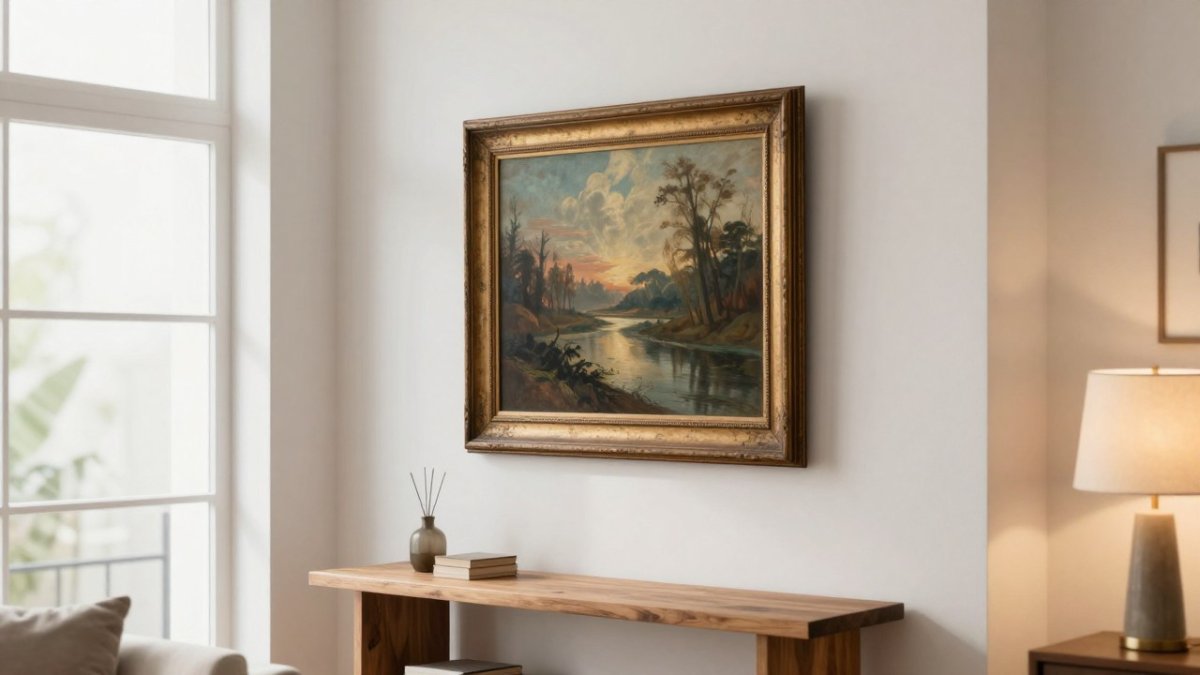
A few rules we follow:
- Living rooms: interior walls, away from windows and fireplaces.
- Studies and offices: safe from steam and sun, ideal for aviation and art history prints.
- Bedrooms: low light, stable air, a good home for delicate paper works.
- Hallways: fine for sturdy pieces, but keep them clear of door swings and elbows.
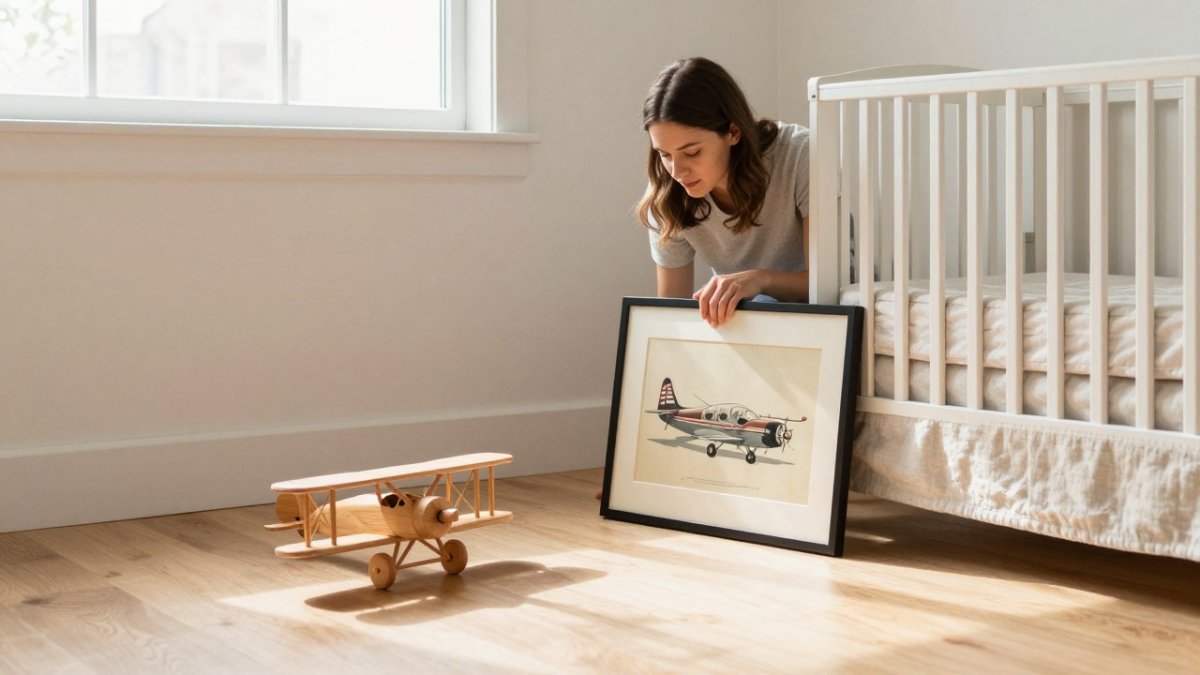
- Nurseries: high on the wall, out of reach, away from the crib and humidifier.
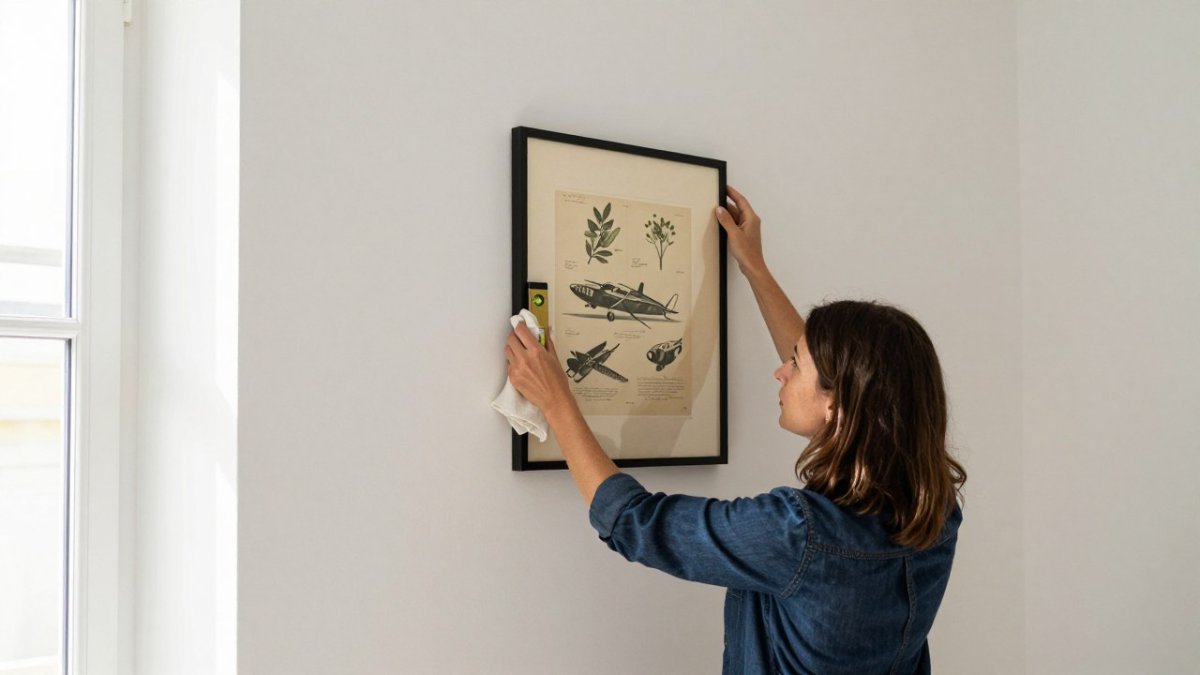
Hang securely with a professional art hanger rated for the weight. A falling frame does more damage than a decade of light. For more display ideas, read our guide on how to display art history prints at home.
How to Store Fine Art at Home Without Causing Harm
Storing fine art at home safely means controlling three things: climate, contact, and pests. Attics, garages, and basements are the worst spots because they swing between hot, cold, damp, and dry. But the right storage method also depends on what the object is made of.
Material-specific storage:
- Oil paintings: Store upright, never flat, on a padded rack. Flat storage puts pressure on the canvas and can distort the stretcher. Keep the painted surface from touching anything.
- Works on paper: Store flat in acid-free folders or boxes, fully supported, with interleaving tissue between sheets. Never roll a print that has been flat for decades.
- Photographs: Store in acid-free enclosures, separated from other materials. Do not stack heavy objects on top.
- Textiles: Roll large pieces on acid-free tubes, interleave with tissue, and never fold along the same crease for years. Folds become breaks.
- Wood and mixed-media objects: Store upright and supported, away from direct contact with concrete floors, which wick moisture.
Measurable environmental targets:
Suitable ranges vary by material and object, so treat these as starting points, not absolutes. A common pattern is that most antique materials prefer a stable environment over a perfect number.
- Temperature: roughly 65-70°F, with minimal fluctuation.
- Relative humidity: roughly 45-55% for most mixed collections; paper and textiles often prefer the middle of that range, while wood objects can tolerate slightly wider swings if the change is slow.
- Light: store in the dark. Light damage is cumulative and irreversible.
Monitoring tools:
- Hygrometer: an inexpensive digital hygrometer in each storage area gives you a humidity reading at a glance.
- Data logger: a small logger records temperature and humidity over time, so you can see swings you would miss with a single reading.
- Light meter: useful in display areas to confirm that light levels stay low and consistent.
Check readings monthly and after any season change.
Step-by-step storage:
- Pick an interior closet or conditioned room with stable temperature and low humidity, away from exterior walls.
- Wrap in acid-free tissue, never plastic, which traps moisture and can stick to surfaces.
- Store flat or upright, fully supported, never leaning on a corner.
- Keep off the floor on a shelf or rack to avoid floods and pests.
- Check every few months for dust, warping, insect activity, and changes in the frame.
Watch out: plastic wrap and bubble wrap feel protective but trap moisture against the surface. Use acid-free materials and let the piece breathe.
Cleaning, Emergencies, and When to Call a Conservator
Safe cleaning is minimal cleaning, and what counts as safe depends on the material.
Material-specific routine care:
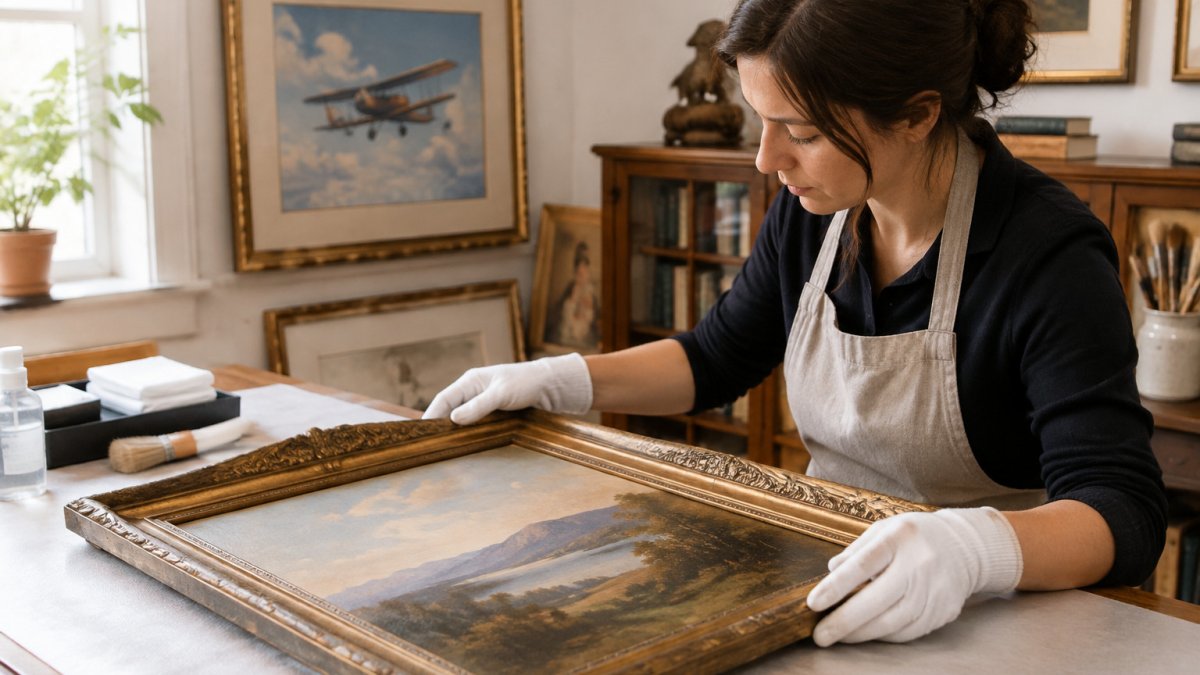
- Oil paintings on canvas: Dust with a soft, dry brush held at a shallow angle so you never press into the paint film. Never rub, never use a cloth, and never apply moisture. A common pattern is that a light surface clean is all an oil painting needs for years.
- Works on paper (prints, watercolors, drawings): Keep them framed and glazed. Do not dust the surface directly; dust the frame and glazing with a dry microfiber cloth. Paper tears and cockles the moment it is handled.
- Photographs: Handle by the edges only, with clean cotton or nitrile gloves. Oils from fingers etch emulsions permanently. Dust the glazing, not the print.
- Textiles (tapestries, samplers, flags): Vacuum only through a screen with low suction, or skip vacuuming entirely and use a soft brush. Never wash, never wring, never hang wet.
- Wood and mixed-media objects: Dust with a dry brush; avoid polishes and waxes, which can migrate into finishes and attract dust.
Safe cleaning versus conservation treatment is a real line. You can dust and you can control the room.
Call a professional conservator when you see:
- Flaking, cracking, lifting, or tenting paint
- Tears, holes, punctures, or water staining
- Mold, foxing, or a persistent musty smell
- Active pests: frass, webbing, or live insects near the frame
- A loose frame, failing hinges, or a canvas pulling off its stretcher
- Fading or color shift you cannot explain
Emergency response and disaster planning:
Plan before anything happens. Photograph every piece for insurance, know where your water shutoff valve is, and keep acid-free tissue and a rigid board on hand.
- Water leak or flood: Do not dry a wet antique with heat, a hair dryer, or direct sun. Move it to a dry, stable room, blot standing water from the frame only, and call a conservator. Wet paper and canvas are fragile, and mold can begin within days.
- Fire or smoke: Soot is acidic and abrasive. Do not wipe it. Get the piece to a conservator for surface cleaning.
- Accidental damage (dropped frame, torn paper): Do not attempt repairs with tape, glue, or household adhesive. Store the piece flat and protected, keep every fragment, and call a conservator.
- When not to handle: If paint is actively flaking or an object is wet, do not move it more than necessary. Support it from the bottom and call for help.
For a deeper walkthrough on protecting pieces during a move or storm, see our guide on how to prevent art print fading.
Choosing New Prints That Live Safely Beside Antique Pieces
New prints can sit happily beside antiques if you choose materials that match the standards of the old pieces. The goal is harmony, not contrast that ages badly.
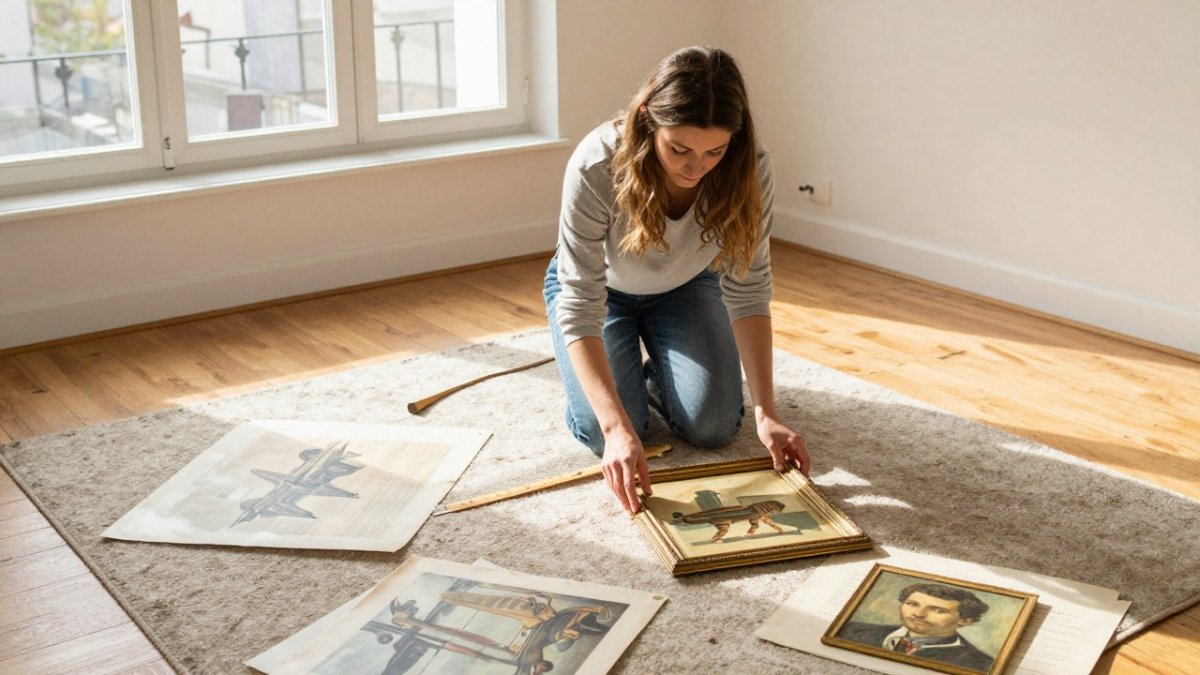
Our collection spans art deco prints, historic aviation prints, and watercolor nursery art, so a modern room can hold old and new side by side.
To weigh quality before you invest, see our guide on why to invest in heirloom-quality art, and browse the best archival prints for a living room to match your space.
Frequently Asked Questions
What humidity and temperature are best for storing antique art?
Aim for 45-55% relative humidity and 65-70°F, held as steady as possible. Fluctuation does more damage than a slightly off reading, because wood, canvas, and paper expand and contract with every swing. Keep pieces off exterior walls, away from vents and radiators, and use a hygrometer to monitor the room. Basements and attics swing too widely to be safe for long-term storage.
How can I protect antique art from sunlight and fading?
Keep pieces out of direct sunlight entirely and limit overall light exposure. Use UV-filtering window film or UV-filtered glazing, and choose low-UV LED lighting for display. Rotate pieces on and off display so nothing sits in bright light year-round. Even indirect daylight carries UV, so a wall that never gets a sunbeam can still fade watercolors and textiles over time.
How do you clean antique artwork safely?
Dust frames and glazing only, using a soft dry cloth or a gentle brush, and never touch the surface of a painting, print, or textile. Skip household cleaners, water, and compressed air, which can drive debris into the surface or lift fragile pigment. Anything beyond light dusting, including spots, stains, or flaking, belongs with a professional conservator rather than a DIY attempt.
When should antique art be assessed by a professional conservator?
Call a conservator if you see flaking, cracking, mold, water stains, insect damage, or a piece that has been stored in an attic, garage, or basement. Also get an assessment before reframing anything valuable, since old mounts and backing boards can be part of the damage. A conservator can stabilize a piece and advise on art conservation framing materials suited to its age and medium.
Your antiques deserve a home that protects them, and so do the pieces you add beside them. Preserving antique art in modern homes comes down to light, stable climate, acid-free framing, smart placement, and knowing when to call a pro. RunwayandHeirloomArt can help you build a collection that tells a story and lasts. Explore our archival prints, choose acid-free framing, and hang each piece with care. Get started with RunwayandHeirloomArt and give your walls art worth keeping.