 how-to
How to Personalize Wall Art with RunwayandHeirloomArt
Table of Contents
- Start with Your Story: Choosing Personal Wall Art
- How to Arrange Art Prints for Balance and Flow
- Gallery Wall Layout Ideas That Feel Collected, Not Cluttered
- Art Prints for Nursery: Building a Room That Grows With Them
- Unique Art Prints for Living Room: Making the Main Space Yours
- Framing, Lighting, and Placement: The Finishing Details
- How to Personal Wall Art with RunwayandHeirloomArt: A Step-by-Step Recap
- Conclusion
- Frequently Asked Questions
Last Updated: October 18, 2026
Start with Your Story: Choosing Personal Wall Art
Personal wall art is the practice of selecting and arranging prints that reflect your own history, passions, and taste rather than following a generic decorating formula. At RunwayandHeirloomArt, we build every collection around that idea: art should tell your story, not someone else's.
Here is the tension most guides skip. A room can look expensive and still feel anonymous. Matching sets and mass-produced prints create a polished shell with nothing of you inside it. The fix is not more art. It is better-chosen art.
Start with three questions:
- What do you want the room to remember? A place you lived, a hobby you love, a person you miss.
- Which era or mood fits the space? Art Deco lines read very differently from soft watercolor.
- Who will actually look at it? A study is for you. A hallway is for guests.
Answer those honestly and the selection gets easy. A family with a lifelong love of flight might hang historic aviation prints; a new parent might start with gentle watercolor nursery art. Both are personal. Neither is random.
How to Arrange Art Prints for Balance and Flow
The fastest way to arrange art prints well is to work from a single focal point outward. Hang the largest or most meaningful piece first, then let smaller prints support it.
Balance does not mean symmetry. It means visual weight. A dense, dark print carries more weight than a pale, airy one, so a heavy piece on one side can be offset by two lighter pieces on the other.
A simple method that works in most rooms:
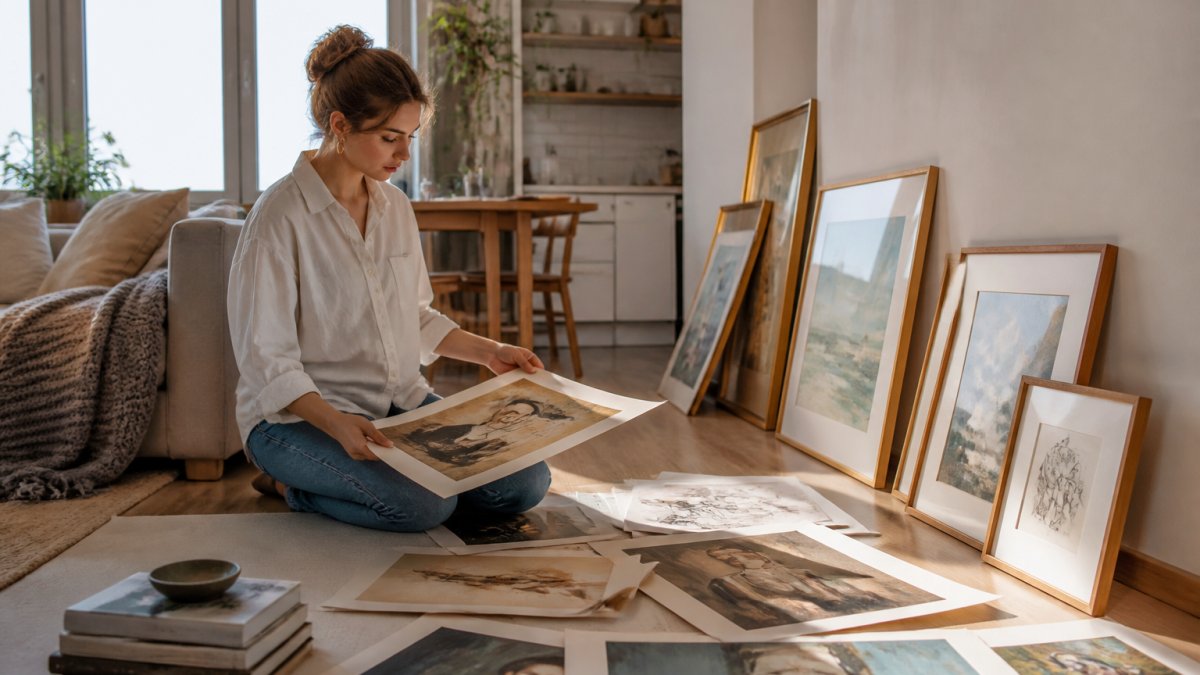
- Lay every print on the floor and shuffle until the group feels calm.
- Measure the total width and keep it to roughly two-thirds of the furniture below.
- Keep the center of the arrangement at eye level.
- Leave space between frames so each piece can breathe.
That last point matters more than people expect. Tight spacing looks like a jigsaw. Loose spacing looks intentional.
Gallery Wall Layout Ideas That Feel Collected, Not Cluttered
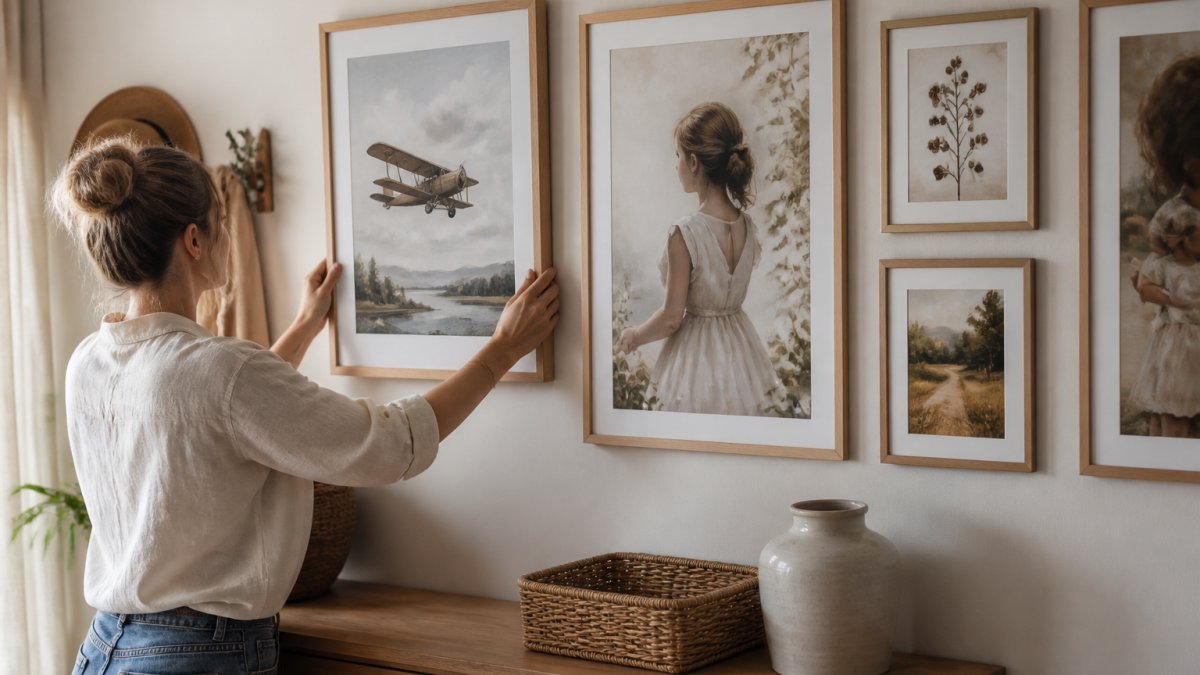
Gallery wall layout ideas work best when they follow one rule: shared rhythm, varied sizes. Pick a consistent frame color and spacing, then let the print sizes differ. That combination reads as collected over time rather than bought in one afternoon.
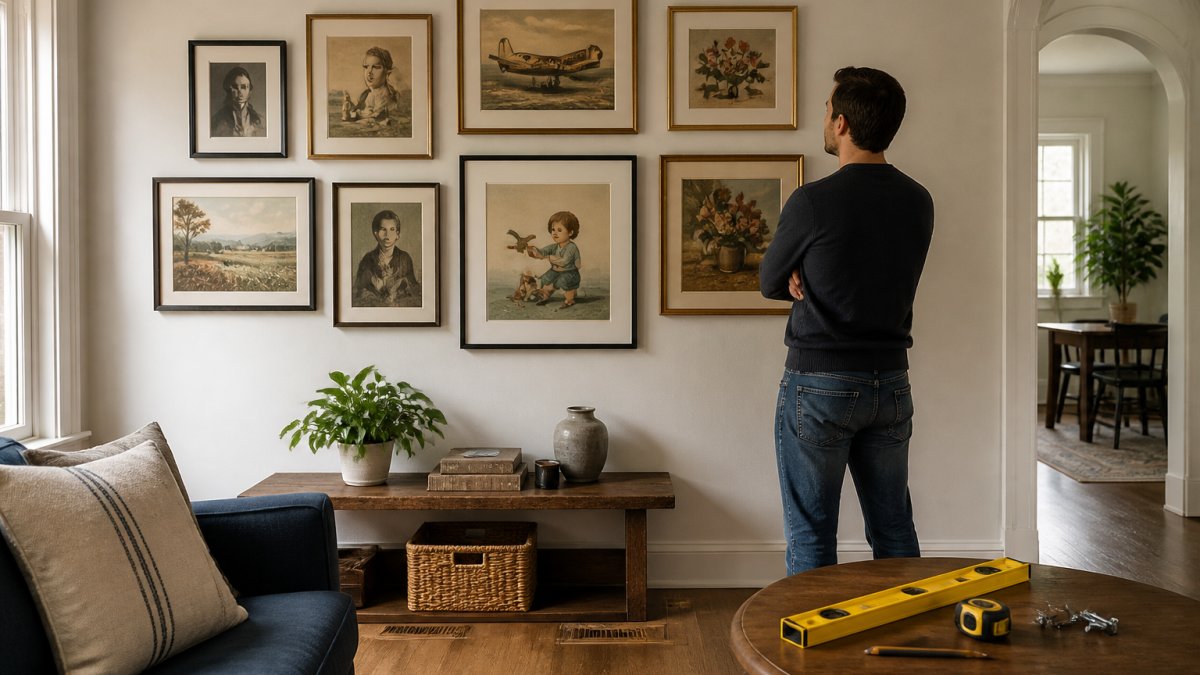
Three layouts cover most spaces:
- The grid: same-size frames in even rows. Calm, modern, best for tight walls.
- The salon: mixed sizes packed closely. Rich and historic, best for tall walls.
- The staircase: frames following the angle of the stairs. Best for hallways and landings.
What most guides miss is the content mix. A gallery wall of six prints from the same series looks like a showroom display. Mix subjects instead: an Art Deco print beside a landscape beside a portrait. The variety is what makes it feel like you.
Art Prints for Nursery: Building a Room That Grows With Them
Art prints for nursery walls should survive the toddler years and still suit a ten-year-old. That means choosing subject matter a child can grow into, not just out of.
Skip anything tied to a single phase. A trend-driven character print dates fast. A soft animal study or a gentle watercolor scene does not. We suggest sticking to a calm palette of three or four colors, then letting the frames do the work of tying the room together.
Practical choices that hold up:
- Keep frames above crib height and out of reach.
- Group two or three prints rather than one large piece, so the wall can change as the child does.
A nursery does not need to be decorated twice. Choose well once and add to it.
Unique Art Prints for Living Room: Making the Main Space Yours
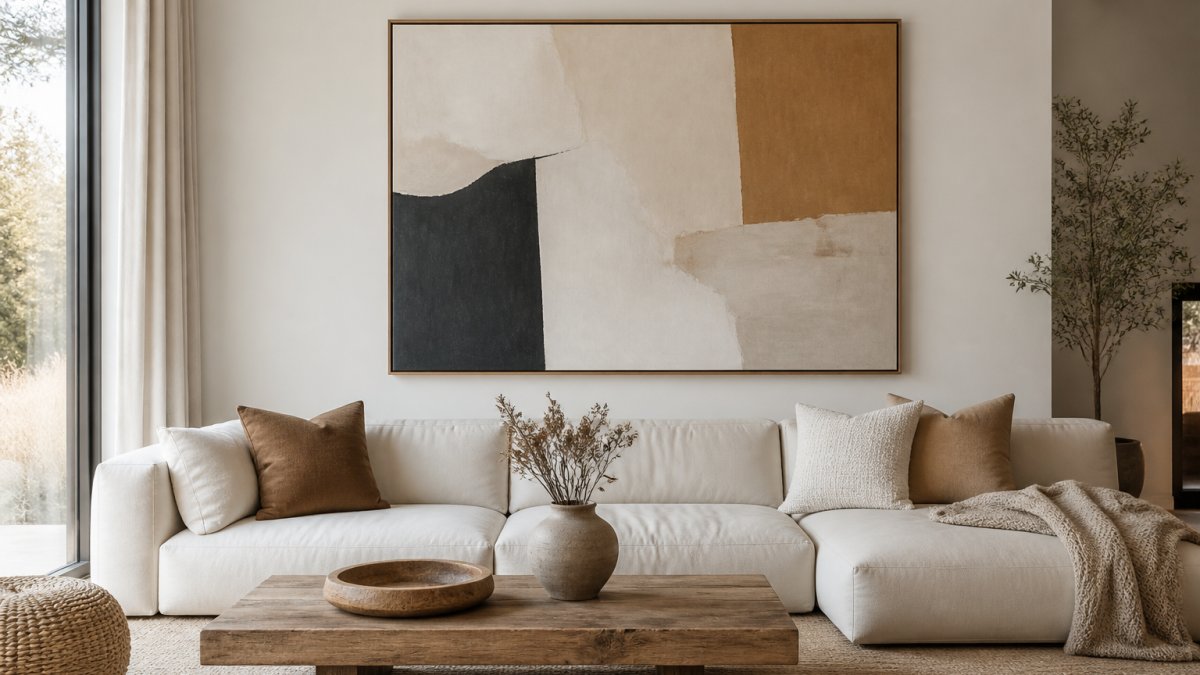
Unique art prints for living room walls do one job: they tell a guest something true about you within a few seconds of walking in. That is a higher bar than "looks nice."
The living room is where personal taste should be loudest. This is the space for the passion piece, the oil painting print or the classic car study you would not put in a hallway. Pair it with one or two quieter pieces so it can lead.
A common mistake is treating the living room as a showroom. Matching sets above the sofa look tidy and say nothing. One strong, specific piece with two supporting prints will always feel more like a home.
Framing, Lighting, and Placement: The Finishing Details
Framing and lighting decide whether a print looks like art or like a poster. A good frame adds visual weight, and the right light keeps colors true for years.
Match the frame to the room, not the print. Warm wood suits traditional spaces, thin black suits modern ones. Keep matting generous, since a wide mat makes even a small print feel considered.
On placement:
- Hang at eye level for standing rooms, lower for rooms where people sit.
- Keep art out of direct sun to slow fading.
- Use two hooks per frame on larger pieces so they stay level.
For longevity, check the product details before you buy. The Smithsonian Institution's guidance on caring for art is a useful reference for light, humidity, and handling. Buy once, hang well, and the piece becomes an heirloom rather than a replacement.
How to Personal Wall Art with RunwayandHeirloomArt: A Step-by-Step Recap
Here is the whole method in one place. Use it as a checklist before you hang anything.
| Step | Action | Why It Matters |
|---|---|---|
| 1 | Define your story and mood | Keeps every choice on-theme |
| 2 | Choose one anchor print | Gives the wall a center of gravity |
| 3 | Pick a layout: grid, salon, or staircase | Prevents clutter before it starts |
| 4 | Mix sizes, unify frames | Creates a collected look |
| 5 | Test with paper templates | Saves the wall from extra holes |
| 6 | Frame and light with care | Protects color and adds weight |
That is how to personal wall art without guesswork: story first, anchor second, layout third, details last. Most people do it in reverse and wonder why the wall feels off.
Conclusion
The hardest part of personalizing a wall is trusting your own taste over a trend. RunwayandHeirloomArt exists for exactly that moment, with prints drawn from art history, aviation, childhood, and nostalgia so the piece you choose actually means something. Browse the collections, start with your anchor print, and build the wall around your own story.
Frequently Asked Questions
How do I choose wall art that feels personal?
Start with subjects that already mean something to you: a childhood hobby, a place you have lived, a historical era you love. Personal wall art works best when it reflects a real interest rather than a trend. At RunwayandHeirloomArt, collections are organized around themes like aviation, art history, and nostalgia, so you can pick a piece that matches your story. Mix one or two statement prints with quieter supporting pieces, and let the room tell a single, coherent story instead of a random assortment.
How do I arrange art prints on a wall without making mistakes?
Lay the prints on the floor first and photograph the arrangement before you hang anything. Center the group at eye level. Keep space between frames for a cohesive look. Use painter's tape to mark the footprint on the wall, then hang from the center outward. This approach works for any how to arrange art prints project, from a single row to a full gallery wall.
What kind of art prints work well in a nursery?
Nursery art should feel calm, personal, and safe. Choose art prints for nursery walls that match the room's color palette and add a storytelling element, such as watercolor animals, classic storybook scenes, or soft art-history-inspired motifs. Hang pieces above the crib only if they are lightweight and securely fastened, and keep frames out of direct sunlight to prevent fading. RunwayandHeirloomArt's watercolor nursery art collection offers gentle, heirloom-quality options that grow with a child rather than feeling babyish in a few years.
How can I make a gallery wall feel cohesive when mixing different art styles?
Cohesion comes from repetition, not sameness. Repeat frame color and mat width across all pieces, keep a consistent gap between frames, and choose a limited color palette that ties the artwork together. Mixing a vintage aviation print with a modern abstract works when the frames match and the colors echo each other. For gallery wall layout ideas, start with a grid or a centered large piece, then build outward with smaller prints. RunwayandHeirloomArt's curated collections make it easier because the pieces already share a historical and artistic thread.
A wall of art that says nothing about you is just decoration. RunwayandHeirloomArt helps you choose prints with history, personality, and staying power, from watercolor pieces to women in aviation prints. Start with one piece that speaks to you, then let the rest follow.