 how-to
How Long Does Art History Decor Trend Last? 2026 Guide
Table of Contents
- How Long Does Art History Decor Trend Last? A Realistic Timeline
- How Often Should You Change Your Decor? A Room-by-Room Schedule
- How to Mix Vintage Art With Modern Decor Without Clashing
- How to Preserve Antique Art at Home: Light, Mounting, and Framing
- Timeless Wall Art Ideas That Outlast Any Trend Cycle
- Room-by-Room: Where Art History References Work Best
- A Low-Cost Way to Refresh the Look Without Replacing Meaningful Art
- Conclusion: Buying for the Long Run, Not the Trend Cycle
- Frequently Asked Questions
Last Updated: October 6, 2026
How Long Does Art History Decor Trend Last? A Realistic Timeline
Most art-history-inspired decor stays fashionable for about a year before search interest cools, and then it tends to return in cycles rather than disappear.
Art history decor is a decorating approach that draws on styles, motifs, and subjects from past eras, from Art Deco geometry to classical landscape painting. It shows up in framed prints, textiles, and objects that reference a specific period.
The catch: an average lifespan is not an expiration date.
What Counts as Art-History-Inspired Decor
Art-history-inspired decor borrows directly from a documented period or movement: Art Deco prints with stepped lines and gold accents, watercolor landscapes in the style of 19th-century painting, or aviation and railroad posters rooted in early-20th-century advertising.
The category is broader than most people assume. It includes:
- Framed prints of paintings from a named era
- Vintage or thrifted pieces with clear historical roots
- Reproductions of classic motifs, from botanical studies to portraiture
- Decorative objects that echo a period, such as brass frames or patterned ceramics
What it is not: generic mass-produced art with no era behind it. The historical reference is the whole point.
Why the Trend Cycle Runs Months to Years, Not Decades
Estimate ranges vary widely, and that spread is useful. Level Frames puts average favor at just over 10 months based on search interest; other sources cite windows of one to three years, two to five years, or a full 10-year cycle. All are right, depending on the trend.
A few forces decide how long a look holds on:
- Historical precedent. Designer Kate Pearce told Apartment Therapy's guide to spotting lasting decor trends that many trends are modern versions of designs that keep coming back through history. Pieces with deep roots tend to return.
- Search interest. Fast-rising looks can fade just as fast once the algorithm moves on.
- Personal attachment. A piece tied to a memory or a passion outlasts any trend clock.
How Often Should You Change Your Decor? A Room-by-Room Schedule
A practical rhythm is twice a year for small swaps and every five years for a fuller refresh.
Here is how we would pace it:
| Room | Light refresh | Full refresh | What to swap | Art-history pieces that hold longest |
|---|---|---|---|---|
| Living room | Twice a year | Every 5 years | Pillows, throws, one wall piece | Large classical landscapes, architectural prints |
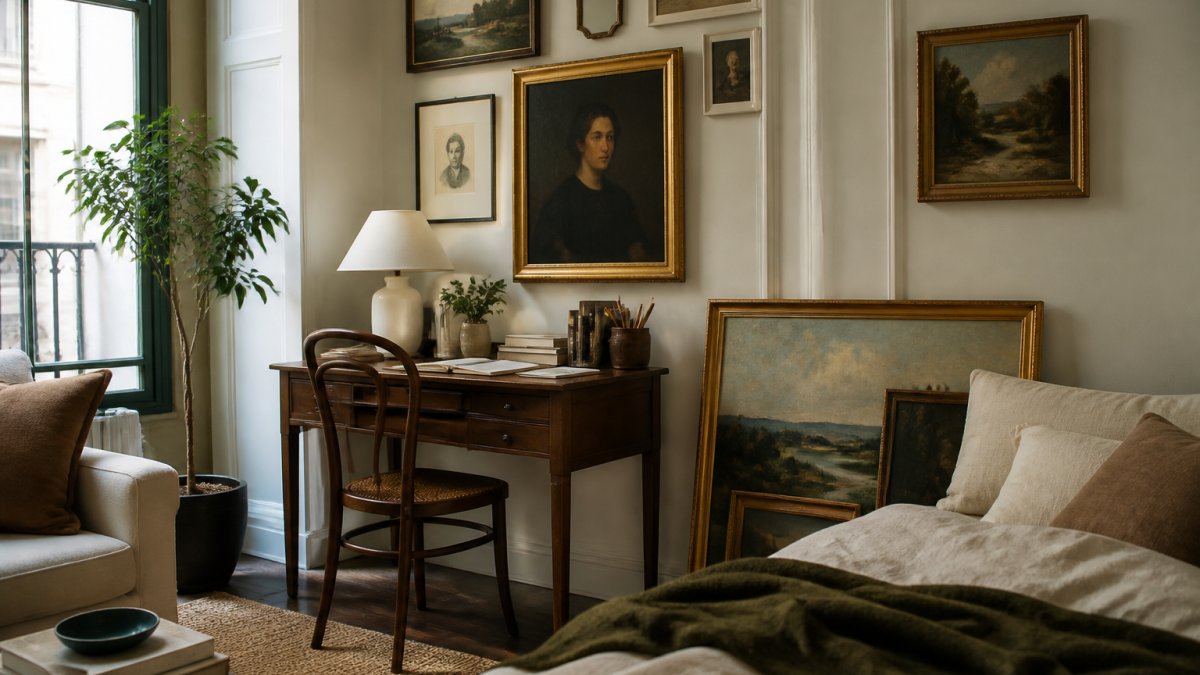
| Bedroom | Twice a year | Every 5 years | Linens, bedside art, lamp | Portraits, botanical studies, quiet seascapes |
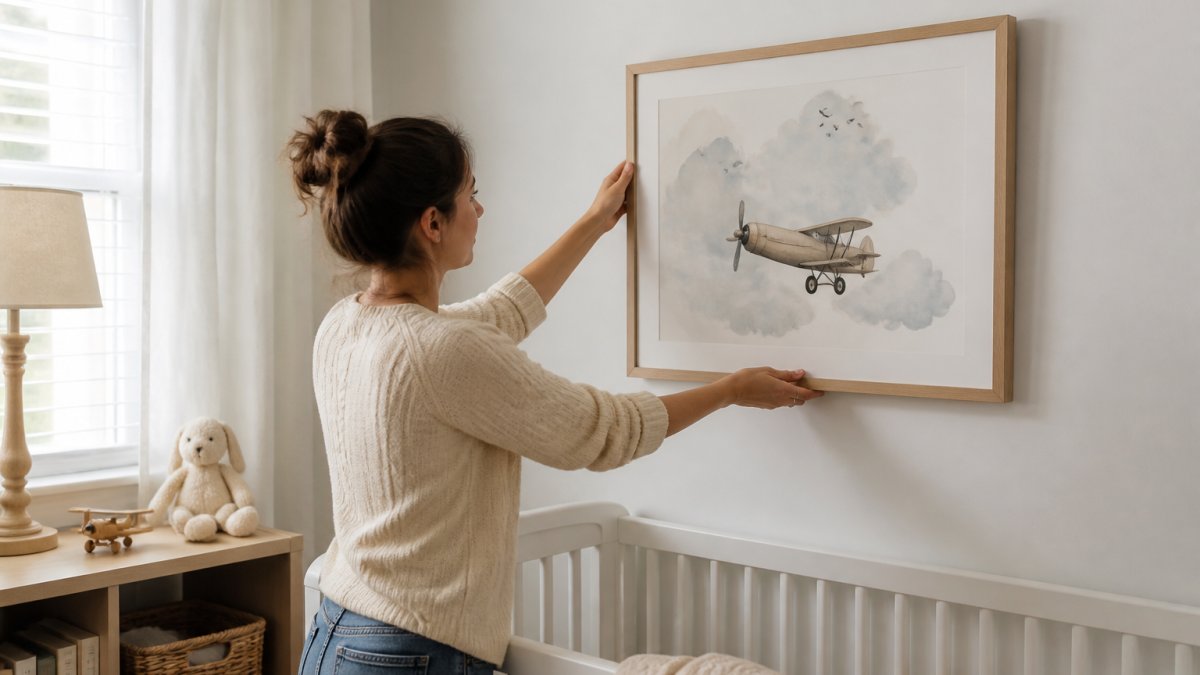
| Nursery | Seasonally | Every 3-4 years | Wall art as the child grows | Gentle watercolor pieces with story-driven subjects |
| Home office | Twice a year | Every 5 years | Desk art, shelf objects | Aviation, railroad, and architectural prints |
| Entryway | Seasonally | Every 5 years | Runner, small framed print | A single anchor piece that sets the tone |
The light refresh is where most of the value sits. Rotating seasonal wall art between spring/summer and autumn/winter changes a room's feel for very little money.
The full refresh is where the trend question bites.
A simple rule: if you can name the era a piece references and the subject still interests you after a year, it belongs in the five-year tier.
How to Mix Vintage Art With Modern Decor Without Clashing
The trick to mixing vintage art with a modern room is to let one piece lead and keep everything around it quiet. A single antique-style print against a clean, neutral backdrop reads as intentional; five read as clutter.
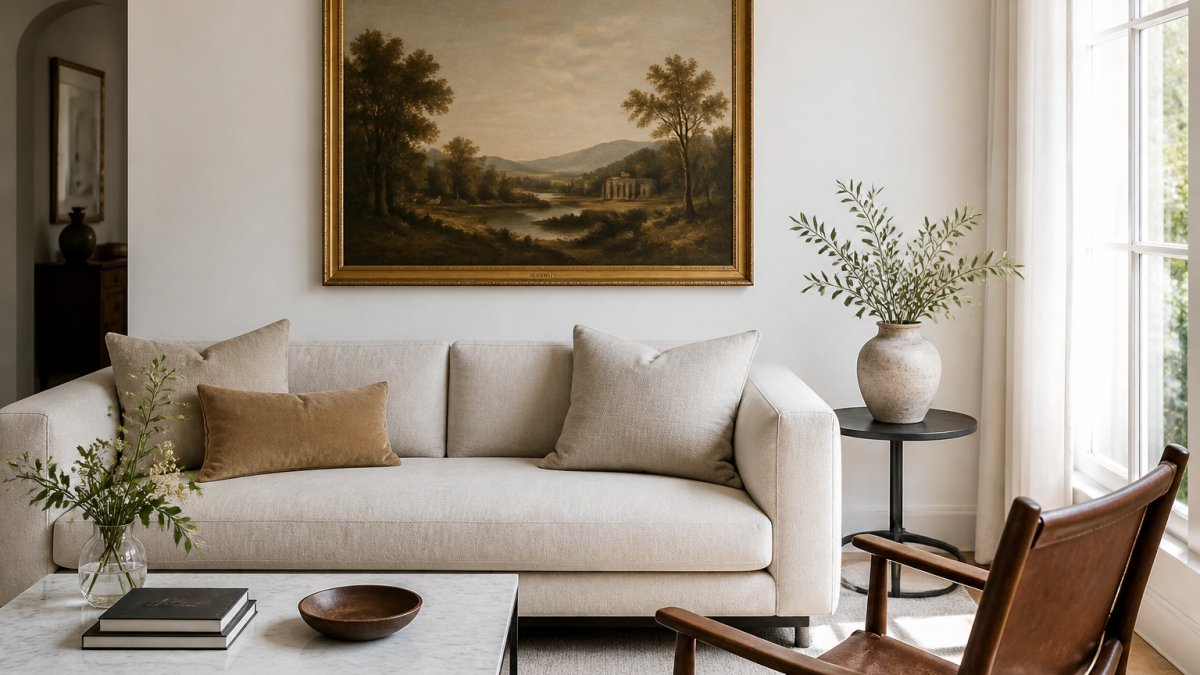
Start with these moves:
- Pick one anchor piece and center it on the wall
- Keep the surrounding palette neutral so the art carries the color
- Repeat one material, such as brass or dark wood, to tie eras together
- Leave generous empty wall space around the frame
- Match frame weight to furniture scale, not to the art's age
A common mistake is a frame that fights the art: a heavy ornate frame next to sleek modern furniture looks like two rooms collided. A simple frame lets a historical print sit comfortably in a contemporary space.
How to Preserve Antique Art at Home: Light, Mounting, and Framing
Antique and vintage art lasts longest when you control three things: light, mounting, and framing. Get those right and a print can stay vivid for decades.
Work through this checklist:
- Hang away from direct sun and move pieces off south-facing walls
- Use UV-filtering glass to slow fading
- Ask for acid-free matting and backing
- Avoid taping or gluing art to a backing board
- Keep frames off damp exterior walls
- Dust with a dry, soft cloth, never a wet one
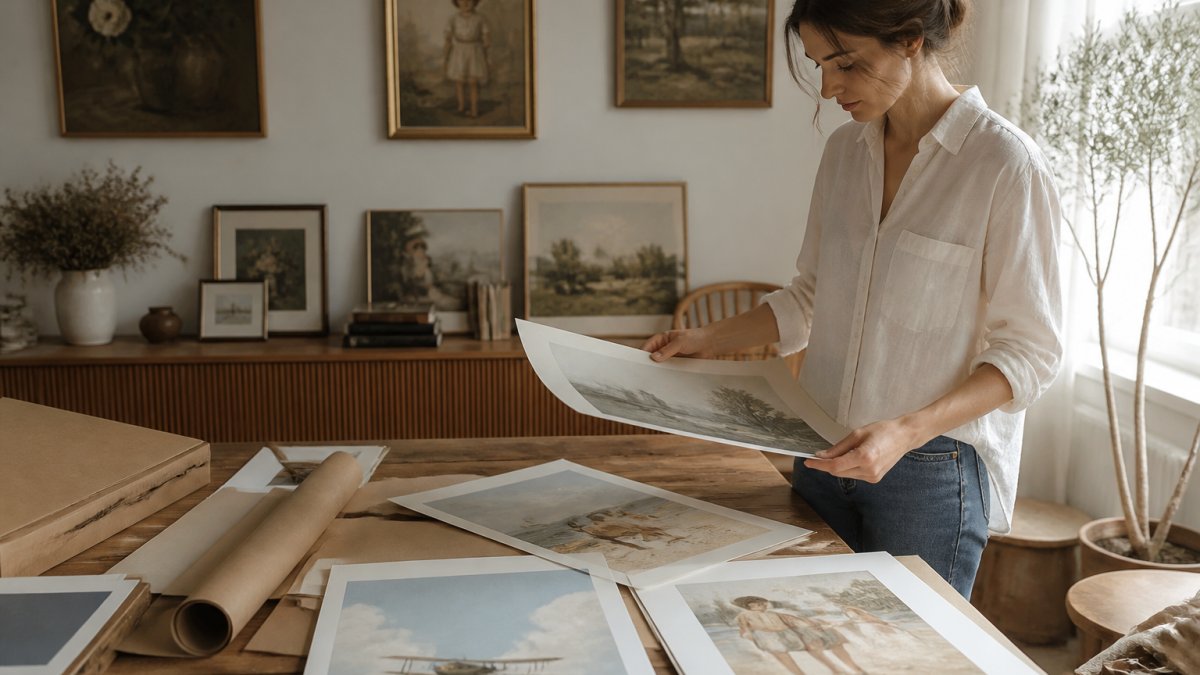
- Store spare prints flat, between acid-free sheets
- Keep a written record of what you paid, where you bought it, and any condition notes
Mounting matters more than most people realize. Acidic boards and tapes stain paper over time, and the damage cannot be undone. If a piece is meaningful, spend extra on proper materials, they also protect its value if you ever sell or insure it.
Reproduction, Original, or Revival: Know What You Own
Most art-history-inspired decor sold today is a reproduction or revival piece, not an original. That is not a problem, it is a category. What matters is knowing which one you have, because care, framing, and value differ.
- Original works on paper (etchings, lithographs, watercolors from the period) usually carry a signature, a plate mark, or a publisher's line. They benefit most from UV glass, acid-free materials, and climate-stable walls.
- Vintage reproductions from the mid-20th century are often printed on acidic paper that has already begun to yellow. Reframing with acid-free backing slows further damage.
- Modern reproductions of historical motifs are typically printed on archival or semi-archival stock. Ask the seller which, because it determines how long the colors hold.
- Revival pieces borrow a period's look without claiming to be from it. These are the most common and the easiest to rotate when a trend cools.
A quick authenticity check: look for a plate mark (a faint indentation around the image), a pencil signature below the image, a publisher's stamp, or a watermark in the paper held up to light. None of these guarantee an original, but their absence usually means a reproduction.
Sourcing and Display Conditions
Where a piece came from affects how you treat it. Estate sales, antique shops, and online marketplaces carry different risks. Paper stored in a damp basement may already have foxing, small brown spots from mold and acidic breakdown, which no reframing will reverse.
Display conditions matter as much as the piece. Hanging a favorite print on the sunniest wall is the fastest way to fade it.
For guidance on materials and display, the Library of Congress preservation guidance is a solid starting point for caring for works on paper.
Timeless Wall Art Ideas That Outlast Any Trend Cycle
Timeless wall art leans on subject and composition, not the season's trend. Landscapes, botanical studies, portraiture, and architectural prints have held their place for generations.
Themes that tend to stay relevant:
- Classical landscapes and seascapes
- Botanical and natural history studies
- Aviation and railroad history
- Architectural and city views
- Portraits and figure studies
Notice what these share: a clear subject and a real story. That is the difference between a piece you keep and a piece you replace. Our Art Deco Prints collection and historic aviation prints are built around that idea, and they are the kind of pieces that read as classic years later.
Room-by-Room: Where Art History References Work Best
Historical art references work best where the room already has a story to tell, a study, office, or nursery gives a period piece a natural home.
Where each reference earns its place:
- Nursery: soft watercolor pieces with gentle historical themes
- Home office or study: aviation, railroad, or architectural prints
- Living room: one large landscape or portrait as the anchor
- Bedroom: smaller framed prints on a quiet wall
- Entryway: a single piece that sets the tone for the home
In a nursery, the goal is different: art that grows with the child rather than ages out in two years. Gentle, story-driven pieces hold up far better than character-of-the-moment themes.
A Low-Cost Way to Refresh the Look Without Replacing Meaningful Art
You can refresh a room for very little by changing what surrounds your art, not the art itself. New matting, a different frame, or a new wall position can make the same piece feel new.
Try these first, in order of cost:
- Move the piece. A new wall changes how a print reads.
- Swap the mat. A wider, brighter mat modernizes an older frame.
- Change the frame. A thin black or natural wood frame updates a classic print.
- Rotate your collection. Store half your prints and bring them out seasonally.
- Add lighting. A small picture light makes an old piece feel intentional.
Rotating seasonal wall art is the cheapest move of all: box up autumn and winter pieces when spring arrives, hang the lighter ones, and the room feels redecorated without a single new purchase.
Conclusion: Buying for the Long Run, Not the Trend Cycle
The honest answer to how long art history decor lasts is that it depends on the piece and on you. Search interest may fade in under a year, but designs with real historical roots keep returning.
That is the whole idea behind RunwayandHeirloomArt. Our prints span art-history-inspired pieces, watercolor nursery art, and historic aviation work, all chosen to bring character and personality to a space, distinctive and enduring rather than disposable.
Get started with RunwayandHeirloomArt and find art that becomes part of your home's story.
Frequently Asked Questions
How long do art history decor trends usually last?
Estimates vary by source and by trend. Level Frames reports that Google search interest in interior themes stays favorable for just over 10 months on average, while other interior-design estimates run from one to three years, two to five years, or a 10-year cycle. Art-history-inspired decor often sits at the longer end because many trends are modern iterations of designs that have reappeared throughout history, as designer Kate Pearce told Apartment Therapy.
How often should you change your decor?
A practical rhythm is twice a year for small seasonal swaps (spring and summer, then autumn and winter) and a fuller refresh roughly every five years. Level Frames cautions that trend lifespans are not linear and include peaks and troughs, so treat any average as a guide rather than an expiration date. Rotate textiles, wall art, and accessories first; leave furniture and paint colors for the five-year reset.
How do you mix art history prints with contemporary decor?
Repeat one element across the room so the styles read as intentional. If you hang an Art Deco print above a modern sofa, echo its frame finish in a lamp base or mirror, and keep the surrounding palette quiet. Group art-history pieces in odd numbers on one wall rather than scattering them, and leave breathing room around each frame so the reference reads as a deliberate focal point instead of clutter.
How can you preserve antique art at home?
Keep pieces out of direct sunlight, since UV exposure fades inks and paper faster than any other factor. Use acid-free matting and backing, hang away from kitchens and bathrooms where humidity swings, and dust with a dry soft brush rather than a damp cloth. For anything genuinely valuable, a conservator can advise on UV-filtering glazing, which slows fading without changing how the piece looks.