 how-to
How Do You Style Heirloom Nursery Decor?
Last Updated: October 24, 2026
Quick Summary
Style heirloom nursery decor by starting with a timeless palette of soft, muted tones like blush, cream, sage, and warm wood, then map the room into three zones before hanging anything. Pick one hero pattern and keep the rest quiet, and mix roughly two-thirds classic pieces with one-third contemporary so the room feels warm rather than like a museum.
- Map the room into a crib wall, reading corner, and display shelf, and sketch the layout on paper first.
- Choose one hero pattern such as toile, small checks, stripes, or faded florals and keep everything else quiet.
- Mix vintage and modern decor at roughly two-thirds classic and one-third contemporary to avoid a museum feel.
- Hang heavy or fragile framed prints well above the crib, anchored to a stud or with a proper wall anchor.
- Spend first on anchor art, a safe crib, and one good chair, and buy one meaningful piece at a time.
Table of Contents
- Start with a Timeless Color Palette and Layout
- Vintage Nursery Ideas: Patterns, Textiles, and Wallpaper
- Nursery Wall Art Ideas: Hanging and Displaying Heirloom Prints
- How to Mix Vintage and Modern Decor Without Clutter
- Family Heirlooms in Nursery Design: Sourcing, Safety, and Restoration
- Step-by-Step Styling Sequence for Heirloom Nursery Decor
- Budget Tiers and Prioritizing Heirloom Nursery Decor
- Choosing Art with Personality for Your Heirloom Nursery
- Frequently Asked Questions
Start with a Timeless Color Palette and Layout
Learning how to style heirloom nursery decor starts with the palette, not the pieces. Choose soft, muted tones, then map where each item will live before you hang a single frame.
A timeless color palette is a small set of soft, low-contrast colors that stay calm as a child grows. Think blush, cream, sage, and warm wood.
Map the room in three zones:
- Crib wall: one large anchor piece, kept high and out of reach
- Reading corner: a low shelf for books and small framed prints
- Display shelf: decorative objects and inherited pieces, above waist height
Sketch the layout on paper first. If you are still settling on shades, our guide to nursery art color palettes can help you match prints to your scheme before you finalize the layout.
Vintage Nursery Ideas: Patterns, Textiles, and Wallpaper
Vintage nursery ideas work best when you pick one hero pattern and let everything else stay quiet. Traditional nursery style rewards restraint here.
Start with textiles, since they soften a room fast:
- Curtains: light-filtering fabrics in linen or cotton, hung high and wide
- Bedding: one patterned quilt over a plain sheet set
- Rug: a muted, low-pile option that hides spit-up well
Wallpaper is the bigger commitment. A small-scale traditional print on one accent wall adds charm without overwhelming a baby room.
Watch out: busy wallpaper plus busy bedding plus busy art is a common styling mistake. Pick one to carry the pattern and keep the rest solid.
Sourcing and Assessing Vintage Textiles
When you shop for vintage textiles, quilts, curtains, rugs, or fabric yardage, check condition before charm. Hold the piece up to light: small holes, thin spots, and faded fold lines are common in older cotton and linen. A quilt with loose stitching can often be repaired; one with dry rot or extensive staining may not be worth the effort. Look for labels or selvage marks that indicate fiber content, since natural fibers like cotton and linen clean more predictably than early synthetics.
Cleaning and Adapting Older Textiles for a Nursery
Most vintage textiles need gentle care, not a washing machine. For quilts and curtains, start with a vacuum on low suction using a brush attachment, then spot-clean with a mild detergent and cool water. Test any cleaner on an inconspicuous corner first. Sunlight fades old dyes, so dry pieces flat in indirect light rather than hanging them wet. If a textile is structurally sound but the color feels too strong for a nursery, layer it, drape a quilt over a neutral chair or fold it at the foot of the crib, rather than cutting it up.
Balancing Pattern with Practicality
A nursery has to be cleanable. Keep the most precious vintage textiles out of the crib and off the floor where spit-up and diaper changes happen. Use them on adult surfaces, a chair back, a shelf, a wall hanging, and choose washable reproductions for anything that will be laundered often. That way the heirloom pieces stay intact and the room still functions day to day.
Nursery Wall Art Ideas: Hanging and Displaying Heirloom Prints
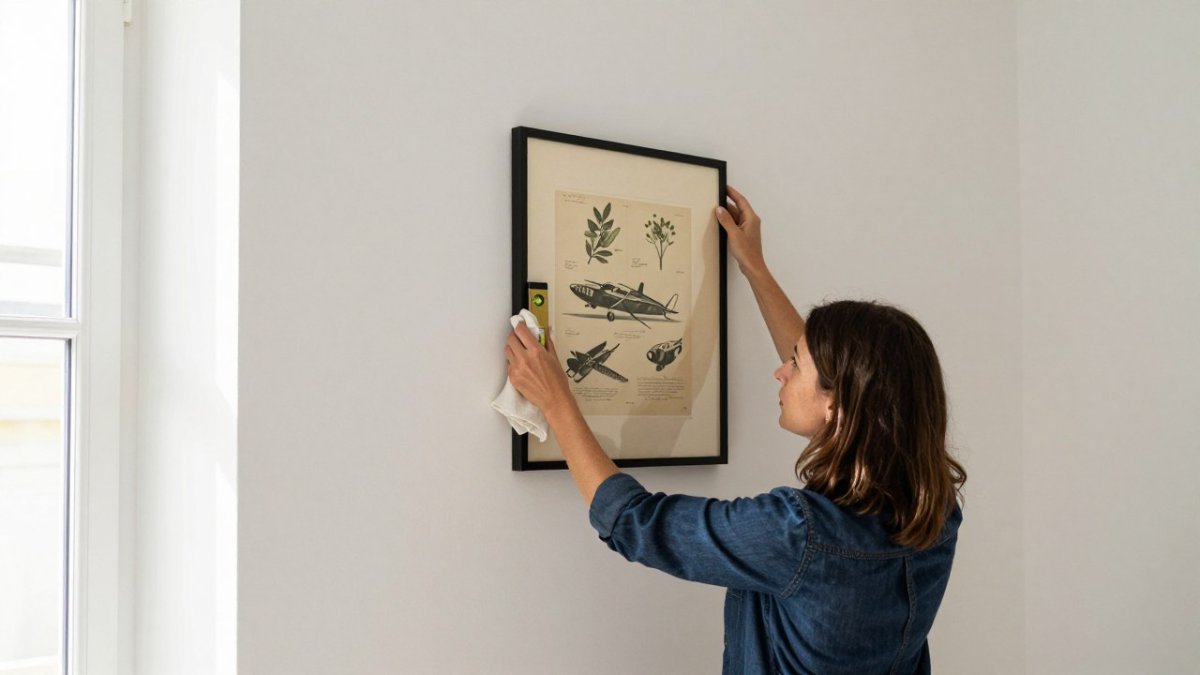
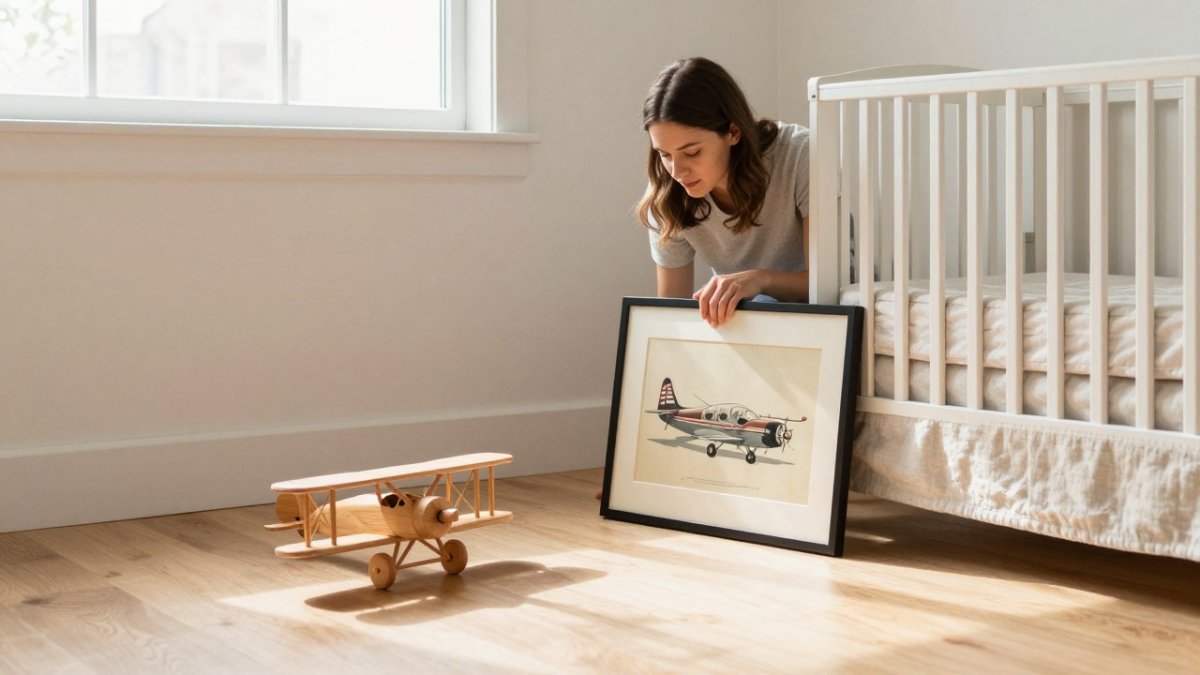
Nursery wall art ideas should start with safety, then beauty. Hang heavy or fragile framed prints well above the crib and out of a standing toddler's reach, and anchor every frame to a stud or with a proper wall anchor.
Here is a simple display approach that works in almost any room:
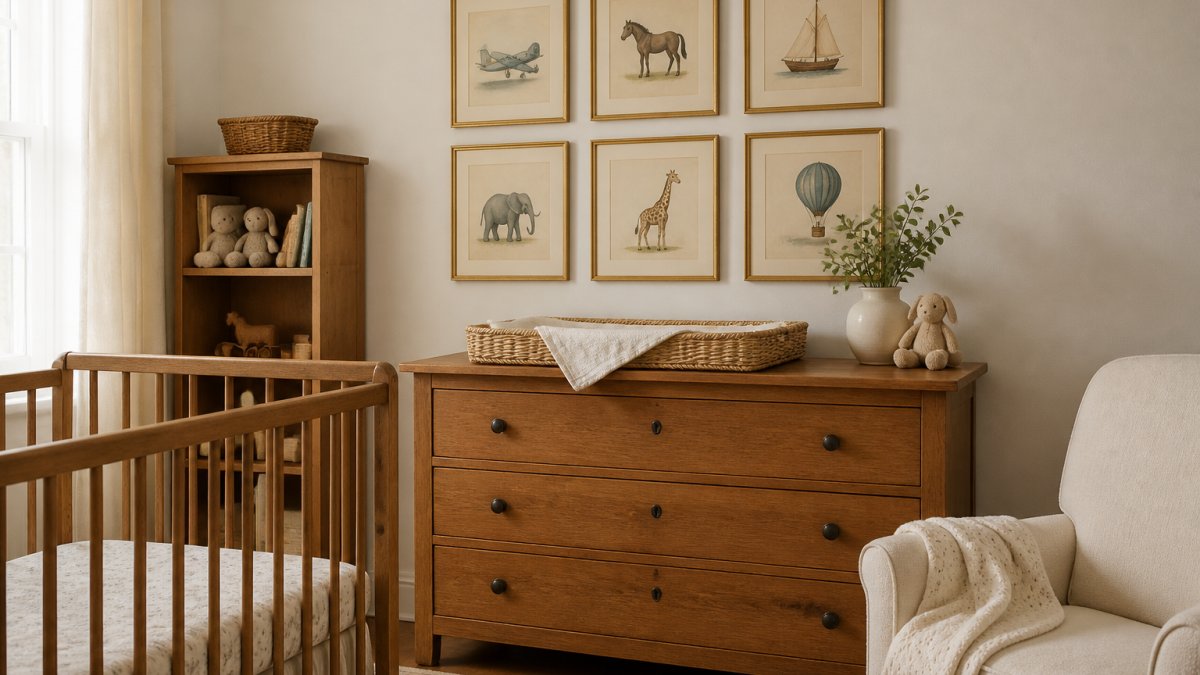
- Anchor piece: one larger framed print centered over the crib, hung high
- Flanking pair: two smaller prints at equal height on either side
- Low shelf: small framed prints and decorative objects on a secured shelf
- Nursery signs: one personalized sign or name print as the finishing touch
Keep frames consistent in finish so a mix of eras still reads as one collection. Our step-by-step guide on how to hang nursery art safely covers anchor types, height, and crib clearance in detail, which matters most with heavy or fragile family pieces.
How to Mix Vintage and Modern Decor Without Clutter
Mixing vintage and modern decor comes down to a ratio: roughly two-thirds classic, one-third contemporary.
Try these pairings:
- A vintage dresser beside a clean-lined modern crib
- Antique framed prints above a simple modern shelf
- An old quilt draped over a contemporary rocking chair
Clutter creeps in through small objects. Group decorative objects in odd numbers on one tray, and leave empty space around them.
If you want art that transitions from nursery to big-kid room, our roundup of nursery art collections that grow up shows how vintage pieces stay relevant for years.
Family Heirlooms in Nursery Design: Sourcing, Safety, and Restoration
Family heirlooms in nursery design need three checks before they go on a wall: condition, safety, and cleanability. A piece can be gorgeous and still be wrong for a baby's room.
Sourcing and Assessing Genuine Heirloom Pieces
Start with family. Ask relatives whether any framed prints, small furniture, or textiles are available before you shop. When you look at estate sales, antique shops, and print studios, evaluate each piece on four criteria:
- Condition: Check frame joints for wobble, glass for cracks, and paper for fading, foxing (brown spots), or tears. A stable frame with minor surface wear is usually fine; a warped frame or active mold is not.
- Materials: Solid wood, cotton, linen, and wool age better than particleboard, early plastics, and synthetic fabrics. Look for dovetail joints in drawers and solid brass hardware as signs of durable construction.
- Provenance: A signature, date, or maker's mark adds interest but not necessarily value. For a nursery, the story matters more than the resale price, a piece with family history can be worth restoring even if it is not rare.
Safety and Restoration Basics
Replace old glass with acrylic in any frame near the crib. Old wire and nails fail; swap them for rated hardware and anchor every heavy piece to a stud.
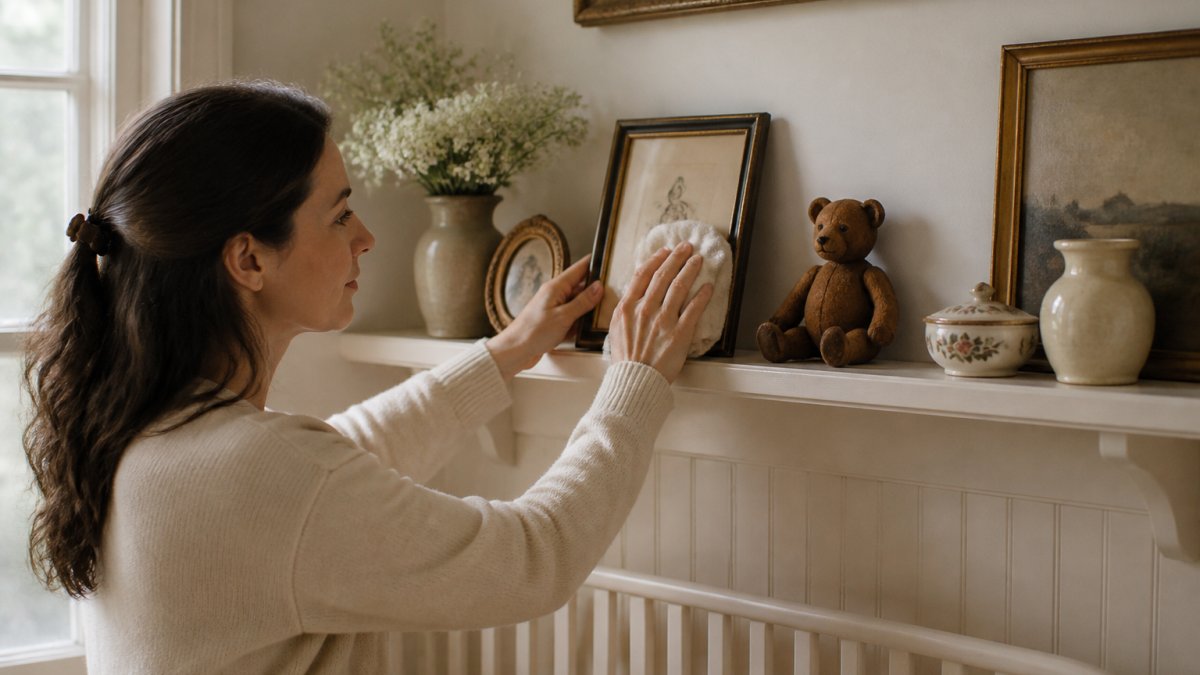
Restoration should be minimal. Light dusting with a soft cloth handles most frames and objects. Skip harsh cleaners on antique paper and painted surfaces. For water damage, loose joints, or active mold, a professional conservator is worth the cost on a sentimental piece.
Adapting Older Items for Everyday Use
Not every heirloom belongs in the nursery at full strength. A fragile quilt can become a wall hanging; a small framed print can go on a high shelf; a vintage dresser can serve as a changing table if it is the right height and anchored to the wall.
If you are weighing whether to restore an inherited piece or invest in a new heirloom-quality print, our buyer's guide to heirloom art walks through the trade-offs.
Step-by-Step Styling Sequence for Heirloom Nursery Decor
The styling sequence matters as much as the pieces. Follow this order and the room comes together without rework.
- Set the palette. Choose three to four muted tones and stick to them.
- Place the furniture. Crib, chair, and dresser first, since everything else works around them.
- Hang curtains and textiles. These soften walls and set the light.
- Install the anchor art. One large piece over the crib, hung high and anchored.
- Add secondary art. Flanking prints, a shelf, and nursery signs.
- Layer decorative objects. Trays, small toys, and inherited pieces last.
- Do a safety pass. Check every anchor, cord, and reachable object.
| Step | Task | Time | Why It Comes Here |
|---|---|---|---|
| 1 | Set the palette | 30 min | Everything else follows color |
| 2 | Place furniture | 1 hour | Defines wall and floor space |
| 3 | Hang textiles | 1 hour | Sets light and softness |
| 4 | Install anchor art | 45 min | Fixes the focal point |
| 5 | Add secondary art | 1 hour | Fills around the anchor |
| 6 | Layer objects | 30 min | Finishing touches last |
| 7 | Safety pass | 20 min | Catches what styling missed |
Budget Tiers and Prioritizing Heirloom Nursery Decor
Spend first on the pieces your child will touch and see daily, and last on small decorative objects.
- Priority one: anchor art, a safe crib, and one good chair
- Priority two: curtains, a rug, and a second framed print
- Priority three: decorative objects, nursery signs, and oversized toys
Heirloom nursery decor is a long game. Buy one meaningful piece at a time rather than filling the room in a weekend.
Pricing on our prints depends on size and format, so check the shop for current details before you plan the art budget.
Choosing Art with Personality for Your Heirloom Nursery
Art with personality turns a styled room into a room that feels like your family. The best nursery decor carries a story: a shared passion, a nod to an era, or a subject your child will grow curious about.
Ask three questions before you buy:
- Does this reflect something we love?
- Will it still fit when the crib becomes a bed?
- Does it feel like us, not a catalog page?
At RunwayandHeirloomArt, our prints range from Watercolor Nursery Art to Art Deco Prints and other art-history-inspired work, so a room can hold a soft childhood print and a piece with real character side by side. For a parent-focused framework on picking pieces that fit your child's personality, our guide on how to choose art for a nursery is a good next read.
Frequently Asked Questions
How do you safely display family heirlooms in a nursery?
Mount shelves and frames into wall studs using furniture straps or museum putty for small items, and keep anything heavy or fragile above the crib line and out of reach. Avoid hanging art directly over the crib; place it on an adjacent wall instead. For textiles like quilts or christening gowns, use shadow boxes with UV-filtering glass and rotate them out of direct sunlight. Check the Consumer Product Safety Commission recalls for any vintage furniture before use, and secure tall pieces with anti-tip straps.
How can you mix heirloom pieces with modern nursery decor?
Choose one or two anchor heirlooms, such as a vintage dresser or framed print, and build the rest of the room around a clean, modern base: simple crib, neutral rug, and streamlined storage. Repeat a color from the heirloom in a new textile or wall paint to tie the eras together. Keep patterns to two scales, and let negative space do the work. The goal is contrast, not competition, so give each old piece room to breathe.
What colors work well in a vintage-inspired nursery?
Soft, muted tones tend to work best: sage green, dusty rose, cream, pale blue, and warm ochre. These shades echo the faded quality of vintage textiles and prints without feeling dark. Use a neutral base on walls and larger furniture, then bring in two or three muted accent colors through bedding, curtains, and art. Avoid saturated primary colors if you want a timeless feel; they can date the room quickly and overpower delicate heirloom pieces.
How can nursery wall art grow with a child?
Choose framed prints that reflect interests rather than a single baby theme, and hang them at a height you can adjust as the child grows. Start with a gallery wall of two or three pieces, then add or swap prints over time. Art with classic subjects, such as vintage aviation, botanical studies, or art-history-inspired prints, tends to stay relevant through the toddler and school years. Keep the frames consistent so new pieces blend in easily.
Your nursery deserves art that means something, not filler that fades. RunwayandHeirloomArt curates prints inspired by art history, aviation, childhood, and nostalgia, each made to become part of your family's story. Browse the collection, pick the piece that speaks to you, and start building a room your child will remember. Get started with RunwayandHeirloomArt and find art with personality for your heirloom nursery.